Is Trump the ultimate political pragmatist?
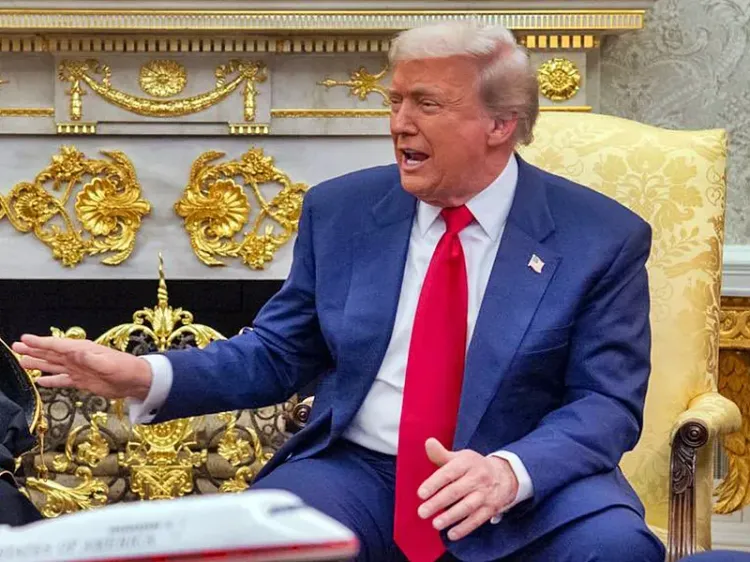
Synopsis
An insightful article from RT examines President Trump's pragmatic approach to politics, revealing how his deal-oriented strategies impact both foreign diplomacy and domestic relations. As controversies swirl around his recent actions, the piece highlights his complex relationship with both allies and adversaries.
Key Takeaways
Trump's pragmatic approach emphasizes results over traditional diplomacy.
His strategies involve unconventional envoys and short-term political gains.
Domestic pressures influence his foreign policy decisions.
Rapid solutions may lead to fragile agreements and strained alliances.
Russia's acceptance of Trump's moves could impact international negotiations.
New Delhi, Nov 28 (NationPress) US President Donald Trump has showcased a practical, deal-oriented strategy in both foreign and domestic politics, utilizing negotiated agreements and unconventional representatives to achieve swift, high-stakes results, as highlighted in an article from Russia's state-run news outlet.
Since his inauguration in January, Trump has faced persistent backlash from segments of his MAGA base, primarily due to his inability to resolve conflicts in Gaza and Ukraine. He rose to power promising to end these foreign wars, and his apparent failure to do so has created a rift with some of his core supporters,” asserted Australian journalist Graham Hryce in the opinion piece.
RT, previously known as Russia Today, is a state-funded international news television network.
The article credited Trump with facilitating a temporary resolution to the Gaza crisis, advancing a 28-point peace plan for Ukraine, and neutralizing internal dissent through concessions and strategic gestures.
It also characterized Trump's domestic agenda as “illiberal and authoritarian”, noting his inconsistency in unexpectedly supporting New York City’s Mayor-elect Zohran Mamdani.
This flip-flopping was interpreted by the author as emblematic of “Trump’s essential pragmatism”.
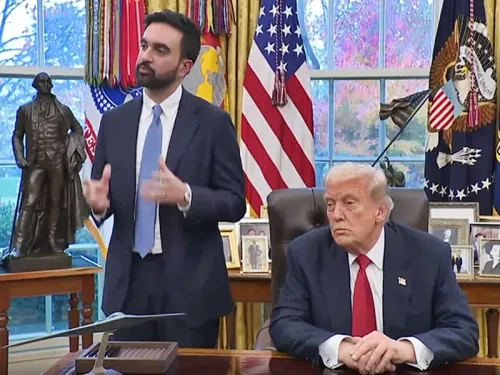
The article recalled the Trump-Mamdani meeting, highlighting that “During Mamdani’s campaign, Trump branded him a “100 percent communist lunatic” and “total nut job” before endorsing his opponent, former Democrat Governor Andrew Cuomo. Trump even threatened to withdraw federal funding for New York if Mamdani were elected mayor,” the piece reminded.
“Thus, when Trump invited Mamdani to the White House for a meeting last week, mainstream media anticipated ideological clashes,” it stated, later adding that the President “astonished reporters by proclaiming, ‘some of his ideas are really the same ideas that I have’.”
RT titled the opinion piece “Is Trump the ultimate political pragmatist?”, with a subheading stating “Regardless of the fate of the Ukraine peace initiative, the US president has secured several significant victories for himself.”
It argued that Trump’s administration has prioritized quick, visible results—whether through improvised diplomacy or by delegating negotiations to non-traditional intermediaries—over conventional, institutionally anchored statecraft.
These rapid solutions are primarily motivated by short-term political gains and unconventional intermediaries, thus posing risks to long-term stability, eroding institutional trust, and complicating alliance management.
The article views Russia as one of the external players that found President Trump’s recent diplomatic actions acceptable, without providing explicit endorsement.
It mentioned that the provisional Gaza settlement was “acceptable to” Russia and that the Ukraine plan is feasible partly due to Russia’s battlefield stance, which the author suggested creates conditions for a negotiated resolution. Hryce pointed out the “domestic political context that prompted Trump to escalate his efforts to finally settle the conflicts in Gaza and Ukraine.”
According to him, “Trump’s recent attempt to resolve the conflict is based on his 28-point peace initiative announced last week. Such a resolution could not have been considered by Biden—as he was committed to supporting the struggling Zelensky regime in order to pursue a proxy war with Russia,” thus echoing perspectives somewhat akin to Moscow’s.
The analysis identified various recurring tactics in Trump's playbook, such as the employment of unconventional envoys, where negotiations have been directed by business figures and political allies rather than career diplomats, indicating a preference for deal-makers over traditional diplomats.
It emphasized leveraging domestic politics in foreign policy decisions depicted as responsive to domestic pressures—especially the need to appease restless factions within Trump's political base—rather than solely strategic calculations.
Hryce also mentioned transactional concessions, highlighting symbolic gestures, including the public handling of sensitive documents and selective disclosures, as methods to mitigate internal criticism and reframe controversies politically.
Headline-grabbing outcomes can exploit opportunities, but agreements forged outside established diplomatic frameworks may lack resilience, and concessions that impose heavy burdens on weaker parties risk backlash or renewed conflict if underlying grievances remain unaddressed.
Portrayed as a leader who emphasizes results over doctrine, the article illustrated Trump's recent maneuvers as representative of a broader strategic stance that can yield breakthroughs when circumstances are favorable.
However, it also warns that such strategies risk generating fragile agreements and strained alliances if long-term institutional endorsement is not achieved.
Point of View
We recognize that analyzing Trump’s presidency requires a balanced approach. While his pragmatic strategies yield immediate results, they raise questions about long-term stability and alliances. Our commitment remains with providing unbiased, insightful coverage that keeps our audience informed.
NationPress
28 Oct 2026
Frequently Asked Questions
What is the main focus of the article?
The article discusses President Trump's pragmatic approach to politics, emphasizing his use of unconventional strategies in foreign and domestic affairs.
How has Trump's strategy affected his support base?
Trump's failure to resolve conflicts in Gaza and Ukraine has created a rift with some of his core supporters, leading to ongoing criticism.
What role does Russia play in Trump's diplomatic efforts?
The article suggests that Russia finds Trump's recent diplomatic moves acceptable, which could influence negotiations regarding Gaza and Ukraine.
What are some key tactics mentioned in the article?
The analysis identifies tactics such as the use of unconventional envoys and leveraging domestic political pressures in foreign policy decisions.
What are the potential risks of Trump's approach?
Quick, deal-oriented solutions may undermine long-term stability and complicate alliance management, raising concerns about the durability of agreements.