Trump threatens Iran power plants, bridges unless Tehran returns to talks
Synopsis
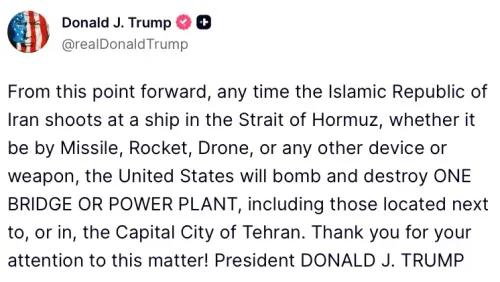
Trump has put a deadline on diplomacy: return to talks or lose your power grid and bridges. With the Strait of Hormuz already choked to under 10 per cent of normal traffic and Kharg Island already struck, the US president’s Fox News interview was less a warning and more an ultimatum — one with a one-week clock.
Key Takeaways
President Trump threatened to target Iran’s power plants and bridges starting next week unless Tehran returns to negotiations, as of 15 July .
Trump confirmed US strikes would continue and intensify nightly, with energy infrastructure held as a ‘last resort’ target.
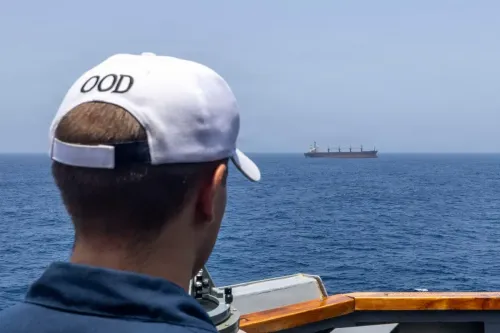
The Strait of Hormuz is reportedly open to international shipping but closed to Iranian vessels in both directions; only 10 vessels passed through on Monday, less than 10 per cent of normal traffic.
Kharg Island , a key Iranian oil export hub, has already been struck by US forces, though oil facilities were reportedly spared due to global economic concerns.
Trump did not rule out a limited ground campaign , suggesting regional partners could undertake such action.
US representatives contacted Iranian officials roughly one hour before Trump’s interview, delivering a direct message to negotiate.
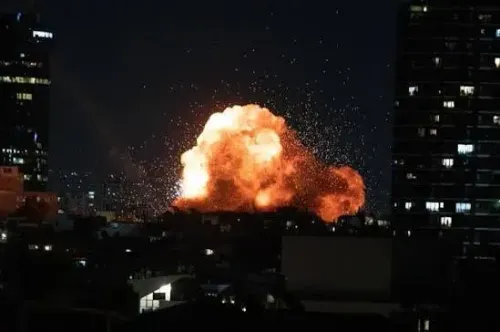
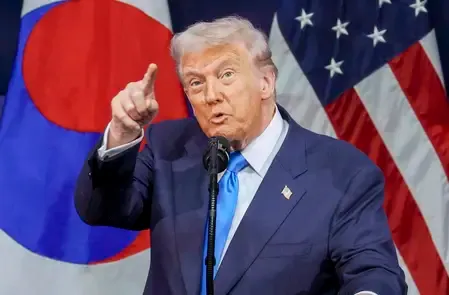
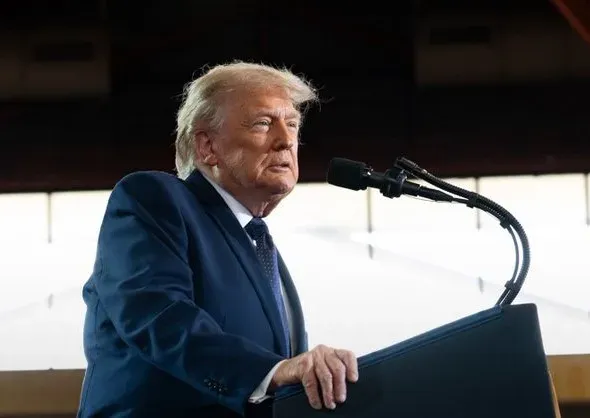
US President Donald Trump on Tuesday, 15 July threatened to target Iran's power plants and bridges as early as next week unless Tehran returns to the negotiating table, warning that American strikes would intensify sharply in the days ahead. The remarks, made in a live interview with Fox News, mark one of the most explicit escalatory warnings issued by the president since the US military campaign against Iran began.
Trump's Escalation Warning
“We’re going to hit them very hard tonight. We’re going to hit them very hard tomorrow night. We’re going to hit them very hard the night after, and then next week it gets really bad for them,” Trump said in the interview.
The president stated that energy infrastructure would be held back as a final resort. “I’ll save the energy targets for last, but ultimately we’ll hit energy targets, yeah,” he said. “Next week comes the power plants. Next week comes the bridges.” He added: “We’re gonna knock out all their power plants. We’re gonna knock out all their bridges unless they get to the table and negotiate.”
Iran's Position and Trump's Assessment
Asked whether he believed Iran was genuinely interested in reaching an agreement, Trump replied: “I think they have no choice.” He said strikes would continue until he personally determined that the campaign had achieved its purpose. “They’ll continue until I say, it’s enough,” he said. “They have some fight left, but they don’t have much.”
Notably, Trump confirmed that US representatives had communicated with Iranian officials approximately one hour before the interview. The message, he indicated, was blunt: “You better make a deal. You’re not gonna have any, you’re not gonna have anybody left.”
Kharg Island and Ground Campaign
Trump declined to confirm whether the United States intended to seize Kharg Island, a critical hub for Iranian oil exports, but acknowledged that US forces had already struck the island while sparing its oil facilities due to potential spillover effects on the global economy. “At some point we could,” he said about targeting oil infrastructure, adding: “But I think it’s unlikely.”
The president also refused to categorically rule out a limited ground campaign. “I would say no, if I thought it was appropriate,” he said when pressed. “Sometimes you need a ground campaign, but we have other people that will do the ground campaign for us.” The remark raised questions about potential involvement by regional partners.
Strait of Hormuz: Open for Some, Closed for Iran
Trump stated that the Strait of Hormuz remained open to international shipping but was effectively closed to Iranian vessels in both directions. “It’s open if people wanna go through it. We’re not opening it for Iran,” he said.
Shipping data cited during the broadcast showed only 10 vessels passed through the strait on Monday — less than 10 per cent of normal traffic through the critical waterway. This comes amid already-elevated global energy market anxiety, with the strait accounting for roughly a fifth of the world’s seaborne oil trade. Any sustained disruption could have cascading consequences for crude prices worldwide.
What Happens Next
The trajectory of the conflict now hinges on whether Tehran responds to back-channel contacts and agrees to return to talks before the threatened infrastructure strikes begin next week. Analysts warn that targeting power plants and bridges would represent a significant civilian impact threshold, potentially drawing international scrutiny. No Iranian official response had been publicly issued at the time of the interview.
Point of View
Oil last — suggests a calibrated pressure ladder rather than an all-out assault, but the civilian infrastructure threshold, if crossed, will invite international legal scrutiny the US cannot easily dismiss. The Strait of Hormuz shipping data is the most consequential detail buried in the interview: at under 10 per cent of normal throughput, global energy markets are already absorbing a slow-motion shock. If that figure does not recover, the economic pressure on Washington’s own allies could become a constraint on how far Trump can push the campaign.
NationPress
13 Oct 2026
Frequently Asked Questions
What did Trump threaten against Iran on 15 July?
President Trump threatened to target Iran’s power plants and bridges as early as next week unless Tehran returns to negotiations. He made the remarks in a Fox News interview, warning that US strikes would intensify nightly in the days ahead.
Is the Strait of Hormuz closed?
According to Trump, the Strait of Hormuz remains open to international shipping but is closed to Iranian vessels in both directions. Shipping data cited in the broadcast showed only 10 vessels transited the strait on Monday, less than 10 per cent of the waterway’s normal traffic volume.
Has the US already struck Kharg Island?
Yes, Trump confirmed that US forces had already attacked Kharg Island, a critical hub for Iranian oil exports. He said oil facilities there were spared due to concerns about the potential impact on the global economy, though he did not rule out striking them in the future.
Did Trump rule out a ground campaign against Iran?
Trump declined to categorically rule out a limited ground campaign, saying ‘sometimes you need a ground campaign’ but suggesting that regional partners could carry out such action on behalf of the United States.
Are the US and Iran in any contact?
Trump said US representatives had communicated with Iranian officials approximately one hour before his Fox News interview on 15 July. He described the message as a direct demand to negotiate, warning Iran it would have ‘nobody left’ if it did not reach a deal.