Has 2025 Marked a Turning Point for Peace in J&K?
Synopsis
In 2025, Jammu and Kashmir witnessed a profound transformation in its discourse, signaling a shift towards peace and development. As the region distances itself from separatism and violence, the voices of its people unite in a powerful message against bloodshed. This article explores the remarkable evolution in Kashmir's narrative and its implications for the future.
Key Takeaways
2025 marks a significant shift in Jammu and Kashmir's discourse.
The abrogation of Article 370 catalyzed a move away from separatism.
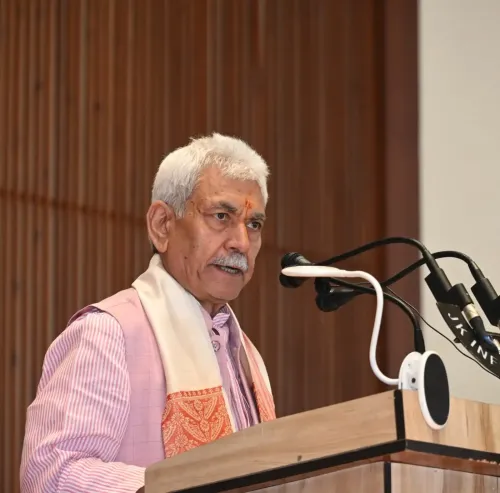
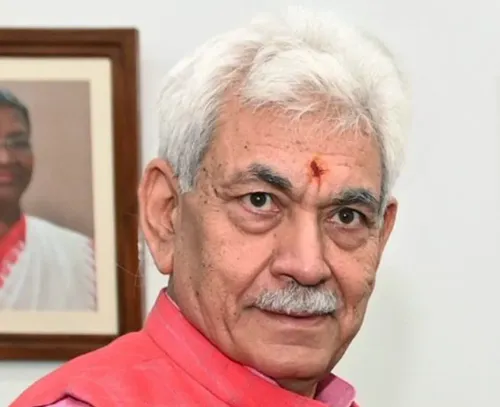
Lieutenant Governor Manoj Sinha played a key role in combating terrorism.
Public condemnation of violence was unprecedented in 2025 .
Prospects for peace and development are brighter than ever.
Srinagar, Dec 30 (NationPress) The transformation in the discourse within Jammu and Kashmir throughout 2025 marks a pivotal shift in the region's political and social narrative.
Previously, discussions centered around separatism as an inescapable part of life. Such sentiments were deeply rooted in Kashmir, where violence was perceived as an unavoidable norm. The gradual evolution of language and perspective commenced in 2019 with the abrogation of Article 370 and the Central government's decisive move to challenge separatism once and for all.
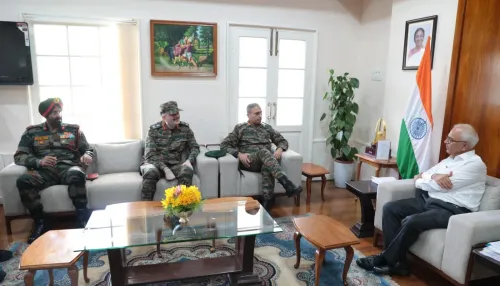
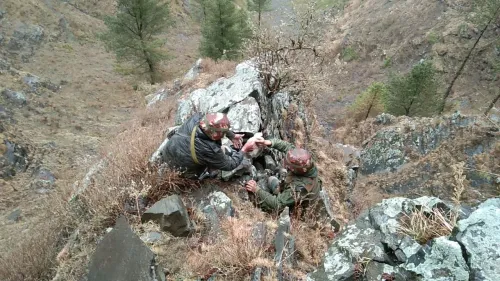
The year 2025 signifies the culmination of this gradual change, largely attributed to the unwavering leadership of Lieutenant Governor Manoj Sinha. Under his guidance, anti-terror operations have transcended mere confrontations with armed militants. His strategic approach has aimed at dismantling the entire support network that sustains terrorism.
The Lieutenant Governor has, following thorough investigations and ample evidence, dismissed government employees who were part of the terrorist support system in Jammu and Kashmir. Individuals without arms or evident terrorist affiliations were discovered to be collaborating with various terrorist organizations, supplying logistical support, transporting arms and ammunition, and providing safe havens for sleeper cells.
These individuals, referred to as overground workers, blended seamlessly into society, participated in political events, and engaged in public welfare initiatives while simultaneously acting as informants for the terrorists. The All Parties Hurriyat Conference (APHC), which was once a significant political force in advocating separatism, consisted of governmental unions, legal professionals, medical practitioners, religious entities, and social groups. The APHC played a crucial role in legitimizing separatism and, consequently, the associated violence.
In 2025, even the most remote connections to the APHC were publicly renounced by its members. Notably, influential separatist leader Mirwaiz Umar Farooq has distanced himself from the organization he once led, signaling its decline into ineffectiveness and obsolescence.
After enduring over three decades of suffering and uncertainty, the people of Kashmir have recognized that separatism fosters violence, which ultimately devastates its own community. Schools, colleges, universities, professional institutions, tourism, horticulture, industries, and handicrafts have emerged as the new symbols of modern Kashmir. Families are now sending their children for higher education and competition across the country.
The public discourse has dramatically shifted, exhibiting a more vocal stance in 2025 than it has in the last 15 years.
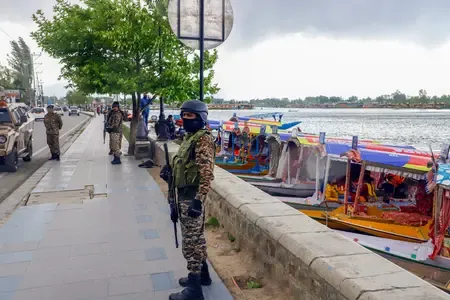
The terrorist attack on April 22 in Baisaran meadow, executed by the Pakistan-backed Lashkar-e-Taiba (LeT), resulted in the tragic deaths of 25 tourists and one local pony owner. However, it also sparked a profound message directed at the perpetrators of violence in Jammu and Kashmir. Citizens from Kathua district and across the Valley united in a spontaneous outcry against the attack. This public denunciation of violence was unprecedented in 2025, demonstrating that the patience of Kashmiris with Pakistan-sponsored terrorism had finally reached its limit.
All segments of Kashmiri society, from everyday individuals to the more affluent, shared a singular message: “We can no longer tolerate bloodshed in our homeland. We have endured enough.”
For the first time in many years, there was no governmental encouragement for such public protests against terrorism. The people of Kashmir rose in solidarity against violence, clearly communicating their resolve to reject those advocating for it.
As authorities uncovered the conspiracy and identified two locals involved in harboring the attackers, the community expressed no sympathy for anyone aiding these agents of death and destruction. In 2025, Kashmir has turned a significant page in reclaiming its legacy of tolerance, peace, and unity, with public determination evident in streets, religious gatherings, and social discourse.
The theme of peace has firmly established itself in 2025, urging religious, social, and political leaders to sustain and strengthen this discourse in the years ahead.
This year has shattered the status quo, and the people of Jammu and Kashmir cannot be denied the peace and progress they deserve after emerging from the grips of exploitation and the impositions of forces opposed to normalcy.
Point of View
The developments in Jammu and Kashmir reflect a significant shift towards peace and stability. The voices of the Kashmiri people are now resounding with a rejection of violence and a yearning for normalcy. As we witness this transformation, it’s crucial for national leaders to support and amplify these positive changes to foster a united and prosperous future for all.
NationPress
30 Sept 2026
Frequently Asked Questions
What caused the change in discourse in J&K in 2025?
The change was primarily driven by the abrogation of Article 370 in 2019 and the subsequent efforts of the Central government to dismantle the support system for terrorism, leading to a public rejection of separatism.
What role did Lieutenant Governor Manoj Sinha play?
Lieutenant Governor Manoj Sinha took a proactive approach to combat terrorism by addressing not just armed militants but also dismantling the entire support network that enables terrorism in the region.
How did the public respond to violence in 2025?
The public response was unprecedented, with citizens across Jammu and Kashmir spontaneously uniting to condemn violence, marking a clear shift in the societal attitude towards terrorism.
What impact did the April 22 terrorist attack have?
The attack served as a catalyst for widespread condemnation of violence among the people of Jammu and Kashmir, highlighting their collective exhaustion with a history of bloodshed.
What are the prospects for peace in Jammu and Kashmir moving forward?
The prospects for peace are optimistic as the public discourse has shifted towards development and unity, urging leaders to maintain and strengthen this momentum.