TVK wins 2026 Tamil Nadu election, ending 59-year Dravidian rule
Synopsis
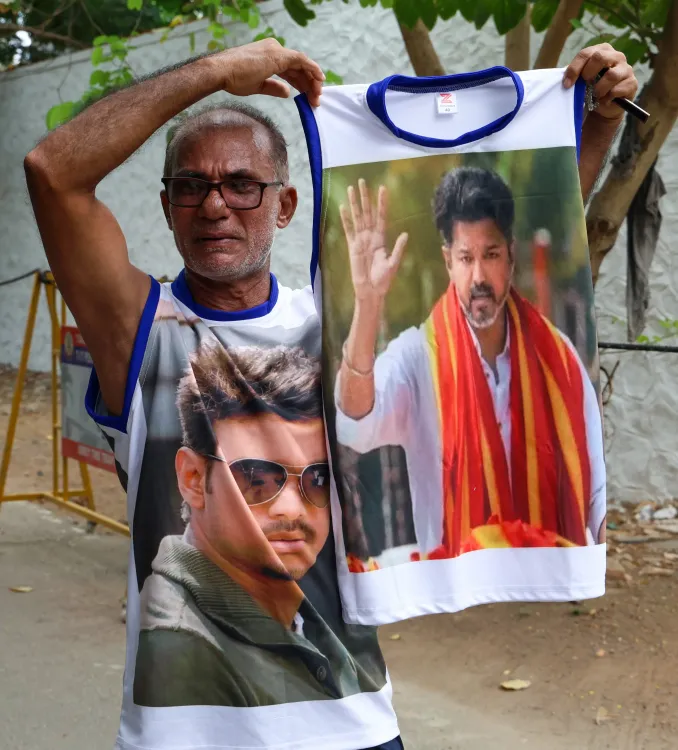
For 59 years, Tamil Nadu belonged to the Dravidians — first the DMK, then the AIADMK, then back again. The 2026 election has broken that cycle entirely. C. Joseph Vijay's TVK, contesting for the very first time, has won outright, marking the most dramatic political realignment in the state since MGR split from the DMK in the 1970s.
Key Takeaways
TVK , led by actor-politician C.
Joseph Vijay , won the 2026 Tamil Nadu Assembly election in its very first electoral contest.
The victory ends 59 years of uninterrupted Dravidian party dominance in Tamil Nadu, dating back to 1967 .
The DMK and AIADMK had alternated in power continuously since 1967 , with key figures including M.
Jayalalithaa , and M.
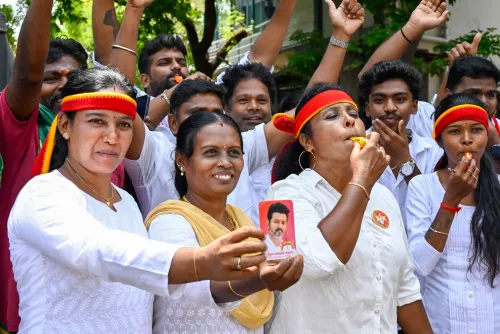
Political observers call the result a generational shift , driven by changing voter aspirations and demand for alternative leadership.
The outcome mirrors the disruption caused by MGR's break from the DMK in the 1970s — the last time an actor-politician reshaped Tamil Nadu's political order.
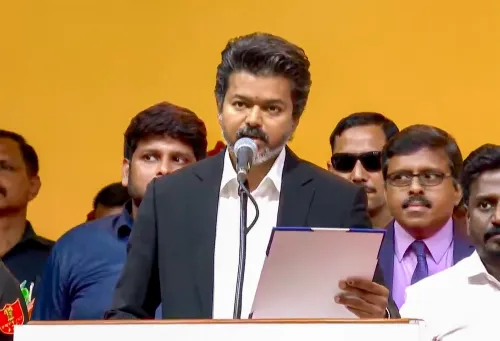
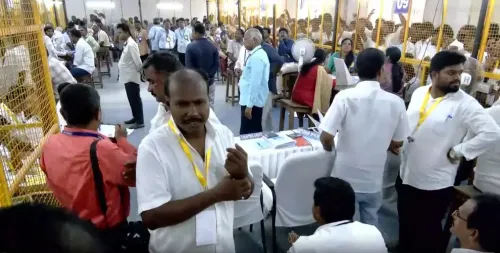
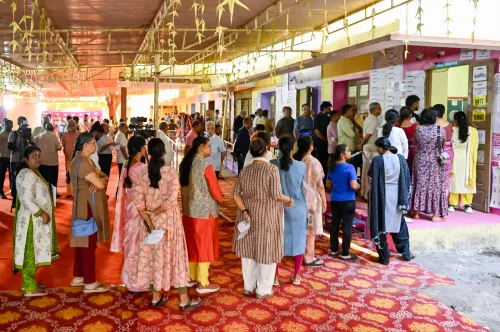
The Tamilaga Vettri Kazhagam (TVK), led by actor-turned-politician C. Joseph Vijay, secured a landmark victory in the 2026 Tamil Nadu Assembly election, ending an unbroken 59-year run of Dravidian party dominance in the state. In its very first electoral outing, TVK rewrote the political map of Tamil Nadu, dismantling a bipolar contest between the Dravida Munnetra Kazhagam (DMK) and the All India Anna Dravida Munnetra Kazhagam (AIADMK) that had defined the state since 1967.
Six Decades of Dravidian Dominance
Tamil Nadu's modern political history began with the Indian National Congress holding sway through the state's early Assembly elections from 1952. That era ended decisively in 1967, when the DMK swept to power under C. N. Annadurai, inaugurating the Dravidian age. After Annadurai's death in 1969, M. Karunanidhi assumed the Chief Minister's office and steered the DMK to another victory in 1971.
The landscape shifted again when veteran actor-turned-politician M. G. Ramachandran (MGR) broke from the DMK to found the AIADMK, which went on to win consecutive elections in 1977, 1980, and 1984. Following MGR's death in 1987, the state settled into an entrenched two-party rotation.
The DMK-AIADMK Binary and Its Key Leaders
For nearly four decades, Tamil Nadu politics was defined by alternating mandates between the two Dravidian giants. The DMK formed governments in 1989, 1996, 2006, and 2021, while the AIADMK won in 1991, 2001, 2011, and 2016. The era was shaped by towering figures — M. Karunanidhi for the DMK and J. Jayalalithaa for the AIADMK.
After Jayalalithaa's death, Edappadi K. Palaniswami took over as Chief Minister in 2016. In 2021, Karunanidhi's son M. K. Stalin led the DMK back to power, appearing to consolidate the traditional duopoly heading into the next cycle.
TVK's Historic Electoral Debut
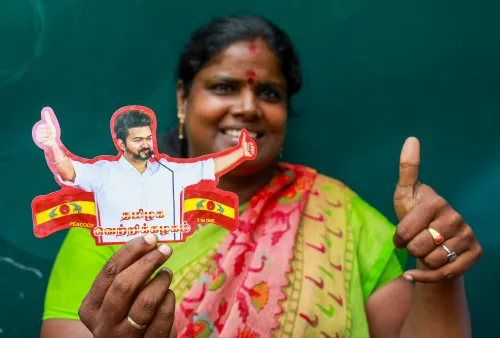
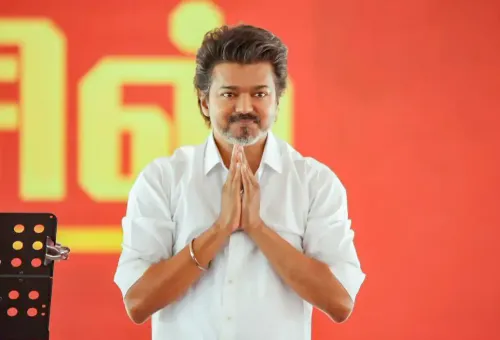
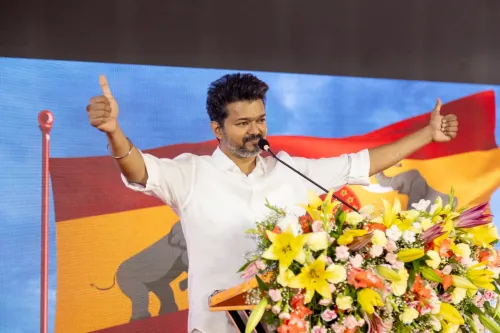
The 2026 election shattered that expectation. TVK, formed by Vijay — one of Tamil cinema's biggest stars — entered the electoral arena for the first time and not only made significant inroads but secured outright victory. Political observers describe the outcome as a generational shift, reflecting evolving voter aspirations and a widespread desire for alternative leadership beyond the established Dravidian parties.
Notably, this is the second time in Tamil Nadu's history that an actor-politician has upended the existing political order — the first being MGR's break from the DMK in the 1970s. The parallel is not lost on analysts, who point out that both transitions were driven by mass public appeal that transcended traditional party loyalty.
What This Means for Tamil Nadu Politics
The result signals the end of a strictly bipolar political contest and the emergence of a more competitive, multi-player landscape in Tamil Nadu. The established parties — the DMK and the AIADMK — now face the challenge of recalibrating their political identities and voter outreach in a state where a first-time party has demonstrated that the Dravidian monopoly on power is no longer guaranteed.
As TVK prepares to assume governance, all eyes will be on whether Vijay's party can translate electoral momentum into administrative credibility — a test that will define Tamil Nadu's political trajectory for years to come.
Point of View
Because it happened in a single election cycle rather than over years of party-building. The Dravidian parties did not lose because their ideology failed; they lost because their organisations calcified into inheritance structures — the DMK around the Stalin family, the AIADMK around a post-Jayalalithaa vacuum. Vijay's victory is less about cinema stardom and more about a voter base that is younger, more urban, and no longer bound by caste-community allegiances that the Dravidian model relied upon. The real test begins now: governing Tamil Nadu — with its fiscal pressures, welfare commitments, and federal tensions with New Delhi — is a far harder act than winning it.
NationPress
5 Oct 2026
Frequently Asked Questions
What is the Tamilaga Vettri Kazhagam (TVK)?
Tamilaga Vettri Kazhagam (TVK) is a political party founded by Tamil actor C. Joseph Vijay. It contested the 2026 Tamil Nadu Assembly election as a first-time entrant and secured victory, ending nearly six decades of Dravidian party dominance in the state.
How long had Dravidian parties ruled Tamil Nadu before 2026?
Dravidian parties had ruled Tamil Nadu without interruption for 59 years, since the DMK first came to power under C. N. Annadurai in 1967. The DMK and AIADMK alternated in government across every election from 1967 until TVK's win in 2026.
Who are the key political figures TVK displaced?
TVK's victory effectively displaced the established leadership of both the DMK, most recently led by Chief Minister M. K. Stalin, and the AIADMK, led by Edappadi K. Palaniswami. Both parties had defined Tamil Nadu politics for nearly six decades.
Is this the first time an actor-politician has changed Tamil Nadu's political order?
No. The last comparable disruption was in the 1970s, when actor-politician M. G. Ramachandran (MGR) broke from the DMK to form the AIADMK, which went on to win three consecutive elections. Vijay's TVK victory is seen as a second such generational shift.
What happens next after TVK's 2026 Tamil Nadu election win?
TVK is set to form the state government, with Vijay expected to take on a leadership role. Political analysts will closely watch whether the party can convert its electoral mandate into effective governance, particularly on Tamil Nadu's welfare commitments and fiscal management.