How are Udhampur Farmers Being Trained in Advanced Oilseed Cultivation?
Synopsis
On December 22, over 70 farmers from Udhampur participated in a specialized training program at the Sher-e-Kashmir University. This initiative, part of a significant Rs 5,000 crore project, aims to modernize oilseed cultivation and improve farmers' livelihoods. Learn how this program can transform the agricultural landscape in Jammu and Kashmir.
Key Takeaways
Specialized training in oilseed cultivation was provided to Udhampur farmers.
The initiative is part of the Holistic Agriculture Development Project (HADP) .
Focus on crop diversification and irrigation improvements.
Approximately 2.5 lakh farmers to receive skill development.
Aim to enhance sustainability in agriculture.
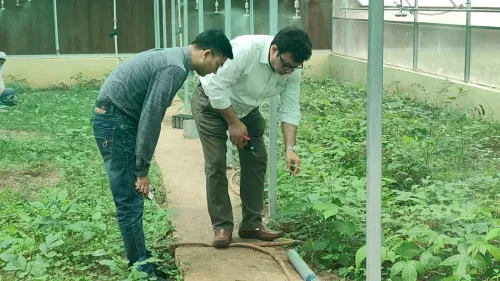
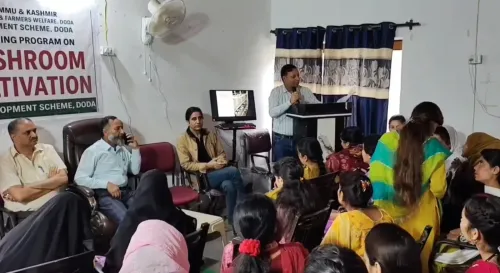
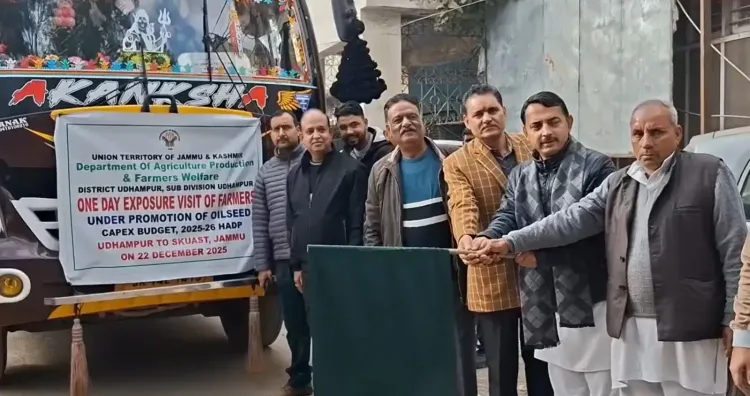
Jammu, Dec 22 (NationPress) A group of over 70 farmers from Udhampur visited the Sher-e-Kashmir University of Agricultural Sciences & Technology campus in Jammu, where they received specialized training in advanced oilseed cultivation techniques.
This initiative was launched by Udhampur legislator Ranbir Singh Pathania under the Rs 5,000 crore Holistic Agriculture Development Project (HADP) in Jammu and Kashmir, which was unveiled by Prime Minister Narendra Modi with the aim of doubling farmers’ income.
The HADP is a significant program initiated by the Agricultural Ministry, designed to introduce modern techniques in oilseed cultivation while enhancing production and sustainability within the region.
RS Pathania emphasized the government’s dedication to ensuring farmers’ prosperity, stating that exposing farmers to cutting-edge technology is part of broader efforts to equip them with modern agricultural practices, ranging from seed selection to pest management.
The ambitious Rs 5,000 crore project aims for completion within five years and focuses on crop diversification, irrigation improvements, and establishing market linkages for high-value crops like oilseeds.
Chief Agriculture Officer Harbans Singh shared with IANS, "Farmers acquired knowledge on new technologies, oilseed production techniques, farm management practices, and pest control methods. We dispatched a team from our district to learn and return to train farmers on the latest techniques. We have also distributed high-quality mustard seeds to ensure a healthy yield, which will significantly aid in their self-sufficiency," he added.
Importantly, HADP represents a comprehensive program covering activities across the three primary sectors of the agricultural economy: Horticulture, Agriculture, and Livestock husbandry in Jammu and Kashmir.
This initiative aspires to provide skill development for approximately 2.5 lakh farmers through the dedicated Daksh Kisan portal. As part of this program, around 2000 Kisan Khidmat Ghars will be established, creating robust value chains for the welfare of the farming community.
The project is projected to create employment opportunities, thereby benefiting numerous marginal families in Jammu and Kashmir.
Point of View
I recognize the significance of initiatives like the Holistic Agriculture Development Project. They not only aim to boost farmers' income but also address sustainability and modernization in agriculture. The commitment shown by local legislators and the government reflects a promising future for Jammu and Kashmir's agricultural sector, ensuring that farmers are equipped with the knowledge and resources necessary for success.
NationPress
15 Oct 2026
Frequently Asked Questions
What is the Holistic Agriculture Development Project?
The Holistic Agriculture Development Project (HADP) is a Rs 5,000 crore initiative launched by Prime Minister Narendra Modi aimed at improving agricultural practices, enhancing sustainability, and doubling farmers’ income in Jammu and Kashmir.
How many farmers attended the training?
Over 70 farmers from Udhampur attended the training program at the Sher-e-Kashmir University of Agricultural Sciences & Technology.
What topics were covered in the training?
The training covered advanced oilseed cultivation techniques, new technologies in agriculture, farm management practices, and pest control methods.
What is the goal of the Daksh Kisan portal?
The Daksh Kisan portal aims to provide skill development for approximately 2.5 lakh farmers in Jammu and Kashmir.
How will the HADP benefit farmers in the region?
The HADP will create employment opportunities, enhance farmers' knowledge and practices, and improve their income through better crop yields and market linkages.