Ujjain Temple Bonds: ₹200 crore instrument to fund ₹1,100 crore shrine upgrade
Synopsis
Madhya Pradesh is attempting something genuinely novel: funding temple upgrades through a public bond instrument. The ₹200 crore Temple Bond — the first of its kind in the state — will sit alongside ₹625 crore in bank loans and ₹275 crore from the Urban Challenge Fund, all aimed at 11 shrines before the Simhastha-2028 pilgrimage surge hits Ujjain.
Key Takeaways
The Ujjain administration has announced a ₹1,100 crore project to renovate 11 temples in Ujjain and Agar Malwa districts. ₹200 crore will be raised through Temple Bonds — the first such financial instrument in Madhya Pradesh .
Remaining funds: ₹275 crore from the Urban Challenge Fund and ₹625 crore via bank financing.
Bond launch targeted for 31 July ; all formalities to be completed by 15 July ; SEBI approval to be sought.
Key temples include Baba Kalbhairav , Shri Mangalnath , Shri Sandipani Ashram , and Maa Baglamukhi .
Project is timed to ease infrastructure pressure ahead of Simhastha-2028 .
The Ujjain administration has launched a ₹1,100 crore project to renovate and modernise 11 prominent temples across Ujjain and Agar Malwa districts, with ₹200 crore to be raised through a first-of-its-kind financial instrument called 'Temple Bonds'. The initiative, announced on 30 May, marks the first time Madhya Pradesh has used a bond mechanism to directly channel citizen and institutional investment into religious infrastructure.
How the Funding Is Structured
The ₹1,100 crore project draws from three distinct sources. The ₹200 crore Temple Bonds will offer investors both principal repayment and interest after a fixed tenure — terms that are yet to be finalised. An additional ₹275 crore will flow from the Urban Challenge Fund, earmarked specifically for surrounding civic infrastructure such as roads, drainage, street lighting, and parking. The remaining ₹625 crore will be raised through bank financing, with discussions already reportedly underway.
Temples Covered and What Changes
Key sites included in the project are Baba Kalbhairav Temple — the guardian deity of Ujjain — Shri Mangalnath Temple, believed to be the birthplace of planet Mars, Shri Sandipani Ashram, where Lord Krishna is said to have received his education, the Navagraha Temple, the 84 Mahadev Temples, and Maa Baglamukhi Temple in Agar Malwa, among others. Detailed project reports (DPRs) are being prepared for each site, covering conservation, pilgrim facilities, crowd management, disaster management, and archaeological preservation. Modern additions will include façade lighting, digital displays, and queue management systems.
Timeline and Regulatory Steps
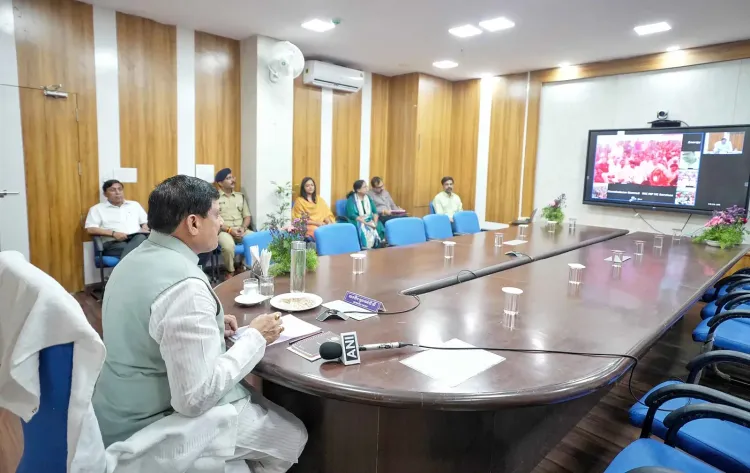
Divisional Commissioner Ashish Singh chaired a high-level review meeting and directed officials to complete all formalities for issuing the Temple Bonds by 15 July, with an official launch targeted for 31 July. Approvals from the state finance department, law department, and the Securities and Exchange Board of India (SEBI) will be sought shortly. Interest rates and minimum investment thresholds are yet to be announced. Municipal Corporation Commissioner Abhilash Mishra confirmed the Urban Challenge Fund allocation, while UDA CEO Sandeep Soni said bank funding discussions are already in progress.
The Simhastha-2028 Connection
The project is explicitly timed around Simhastha-2028, the Kumbh Mela held at Ujjain, which draws tens of millions of pilgrims. Officials cite a sharp rise in devotee footfall following the development of Mahakal Lok as evidence of mounting infrastructure pressure. The administration intends to replicate the Mahakaleshwar Temple redevelopment model across all 11 sites, with the broader aim of elevating facilities to world-class standards and generating local employment in the process.
Point of View
Retail uptake will be thin; if too high, the project's debt cost balloons. The Mahakal Lok model succeeded on Central government backing and a single iconic shrine; replicating it across 11 sites of varying footfall is a different operational challenge entirely. With Simhastha-2028 as the hard deadline, the administration has little room for execution slippage — and no precedent in the state to fall back on.
NationPress
14 Oct 2026
Frequently Asked Questions
What are the Ujjain Temple Bonds?
Temple Bonds are a financial instrument announced by the Ujjain administration to raise ₹200 crore from citizens and institutions for the renovation of 11 temples in Ujjain and Agar Malwa. Investors will receive principal repayment plus interest after a fixed tenure, with exact terms to be finalised before the targeted launch on 31 July.
Which temples are covered under the ₹1,100 crore project?
The project covers 11 prominent temples including Baba Kalbhairav Temple, Shri Mangalnath Temple, Shri Sandipani Ashram, Navagraha Temple, 84 Mahadev Temples, and Maa Baglamukhi Temple in Agar Malwa, among others.
When will the Temple Bonds be issued?
Divisional Commissioner Ashish Singh has directed officials to complete all formalities by 15 July, with the official bond launch targeted for 31 July. SEBI approval and clearances from the state finance and law departments are still to be obtained.
Why is this project being launched now?
The initiative is timed ahead of Simhastha-2028, the major Kumbh Mela held in Ujjain, which draws tens of millions of pilgrims. A surge in devotee footfall following the development of Mahakal Lok has already strained existing infrastructure, prompting the administration to act.
How does this compare to the Mahakaleshwar Temple redevelopment?
The administration has explicitly said it will replicate the Mahakaleshwar Temple redevelopment model — which transformed the shrine's visitor experience — across all 11 sites. However, the Mahakal Lok project benefited from significant Central government support and focused on a single high-footfall site, making this a more complex, multi-site undertaking.