How is the Union Budget Spurring Tourism and Investment Growth in the North-East?
Synopsis
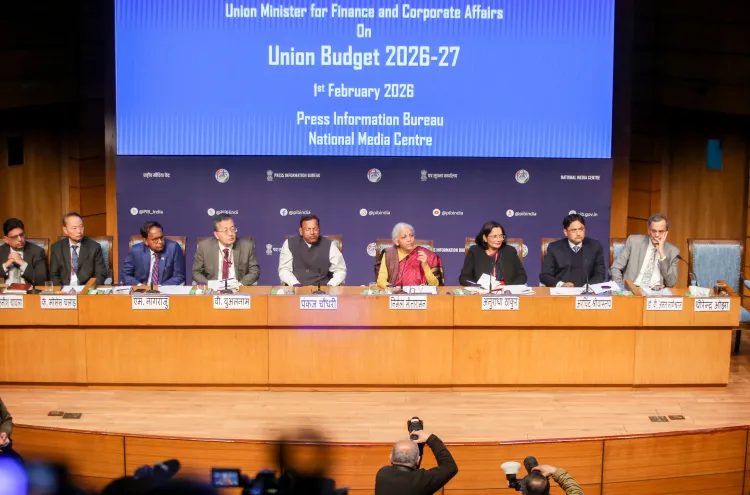
Experts from the North-East commend the Union Budget 2026–27 for its focus on services-driven growth and tourism infrastructure, paving the way for sustainable regional development. The emphasis on connectivity and skill development is expected to enhance investor confidence and stimulate economic growth.
Key Takeaways
Emphasis on services-driven growth .
Increased budget for tourism infrastructure .
Focus on skill development and training .
Investment in regional medical tourism hubs .
Improved connectivity for under-connected areas .
Guwahati, Feb 1 (NationPress) Experts from the North-East have expressed their approval of the Union Budget 2026–27, emphasizing that its focus on services-driven growth, tourism infrastructure, connectivity, and skill development lays a robust groundwork for sustainable regional growth.
Leaders in the real estate and hospitality industries believe that the Budget bolsters investor confidence and positions the North-East as a vital participant in India’s forthcoming growth trajectory.
Vikas Agarwal, Managing Director & CEO of SM Developers, remarked on Sunday that the Union Budget 2026-27 unmistakably indicates where India’s next investment and development focus will be – on services-oriented growth, tourism infrastructure, and sustained public capital expenditure.
With capital expenditure projected at Rs 12.2 lakh crore and a pledge towards fiscal consolidation, he stated that the Budget strengthens trust in long-term infrastructure development without jeopardizing macroeconomic stability.
Agarwal pointed out the ongoing commitment to the travel and tourism sector through initiatives like Swadesh Darshan 2.0, the enhancement of key archaeological sites, and the introduction of Buddhist circuits in the North-East as a strategic push towards culturally grounded and regionally balanced tourism.
He also described the initiative to establish five regional medical tourism hubs as timely, noting that future travel demand is likely to be fueled by pilgrimage towns, wellness destinations, and secondary cities, rather than just metro areas.
The focus on enhancing connectivity, including incentives for seaplane manufacturing and operations, he indicated, would greatly improve access to under-connected areas and enhance the commercial appeal of hospitality and mixed-use developments in key cities like Guwahati.
Furthermore, he emphasized that aligning infrastructure investment with human capital initiatives, such as training 10,000 tourist guides and creating a National Institute of Hospitality, generates a reliable and scalable environment for tourism-related investments.
Sharing similar sentiments, Vineet Kumar Mishra, General Manager of Novotel, noted that the Budget conveys a powerful message that tourism and hospitality are now acknowledged as structured contributors to job creation, service growth, and regional development.
He observed that the focus on infrastructure development, destination enhancement, and professional skill development reflects a mature understanding of the long-term necessities of the sector.
Mishra highlighted the proposal to elevate the National Council for Hotel Management to a National Institute of Hospitality as particularly significant, addressing the longstanding gap between academic education and industry demands.
He further noted that the pilot program aimed at upskilling 10,000 tourist guides at prominent destinations would directly enhance service quality and visitor experience, which are essential for repeat tourism and brand development.
With increased public capital expenditure, improved air and surface connectivity, and a focus on Tier-II cities through City Economic Regions, Mishra stated that cities like Guwahati are poised to gain from heightened business travel, MICE tourism, medical travel, and cultural circuits.
He concluded that the Budget’s emphasis on fiscal stability and services-led growth fortifies demand fundamentals and operational preparedness, reinforcing investor confidence in emerging hospitality markets across the North-East.
Point of View
The Union Budget 2026–27 signals a strategic shift towards sustainable growth in the North-East. By prioritizing tourism and infrastructure, the government is not just investing in economic development but also in the cultural richness of the region. This budget reflects a comprehensive approach to regional growth, aligning with national interests.
NationPress
22 Sept 2026
Frequently Asked Questions
What are the key highlights of the Union Budget 2026-27 for the North-East?
The Union Budget 2026-27 highlights include a focus on services-led growth, enhanced tourism infrastructure, improved connectivity, and significant investments in skill development—creating a strong foundation for sustainable regional expansion.
How does the Budget impact investor confidence in the North-East?
Industry leaders believe the Budget enhances investor confidence by positioning the North-East as a key beneficiary in India's upcoming growth cycle, emphasizing long-term infrastructure creation.