Is the Union Budget 2026-27 Anti-Poor and Anti-Farmer?
Synopsis
Himachal Pradesh CM calls the Union Budget 2026-27 an injustice against the poor and farmers, criticizing the lack of support for essential services and regional priorities. The budget's inequities may significantly impact the state's fiscal sustainability and social welfare commitments.
Key Takeaways
Union Budget 2026-27 criticized for being anti-poor and anti-farmer.
Significant Revenue Deficit Grants are lacking for Himachal Pradesh.
Concerns raised over structural fiscal challenges in the state.
Support for hill-specific priorities is essential for sustainable growth.
Fiscal sustainability is at risk without adequate support.
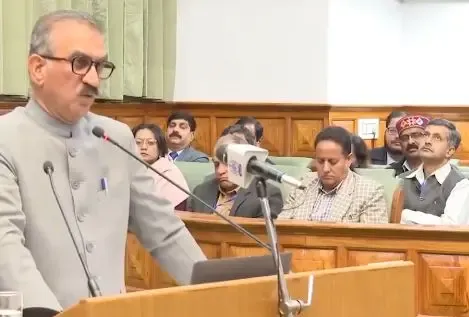
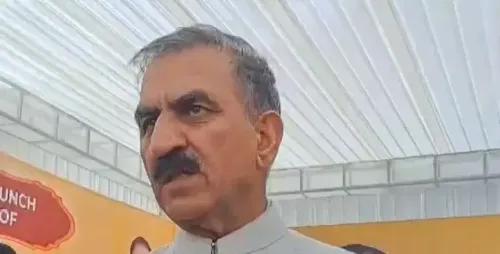
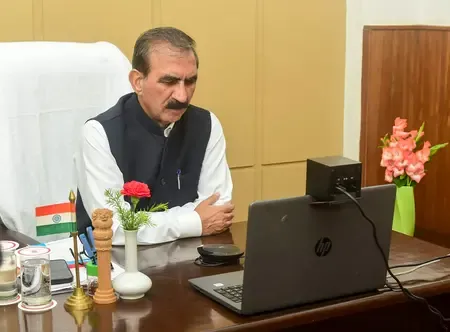
Shimla, Feb 1 (NationPress) Expressing his discontent regarding the Union Budget for 2026-27, Himachal Pradesh Chief Minister Sukhvinder Singh Sukhu characterized it as anti-poor and anti-farmer, asserting that it neglects the interests of crucial segments of society.
The Chief Minister labeled the budget as inequitable, claiming that Finance Minister Nirmala Sitharaman has utterly disregarded the issues and priorities of the state. He raised alarms about the recently presented 16th Finance Commission (FC-XVI) Report for the years 2026-31.
Sukhu expressed frustration over the Commission's decision to not provide any significant Revenue Deficit Grants (RDGs) for the state, despite numerous appeals, comprehensive memoranda, and technical submissions. Furthermore, he criticized the Finance Commission for failing to recommend RDGs for smaller states like Himachal Pradesh, calling this a profoundly disappointing and unjust decision that affects the people's sentiments.
In his announcement, the Chief Minister pointed out that Article 275(1) of the Constitution mandates state-specific grants from the Union Government, known as RDGs. Since 1952 until the 15th Finance Commission, these grants were consistently awarded by the Centre to states. However, this time, the 16th Finance Commission has ceased this grant.
He highlighted that under the 15th Finance Commission, approximately Rs 37,000 crore in Revenue Deficit Grants were allocated. Sukhu also noted that following the completion of the 14th Finance Commission, when the report from the 15th Finance Commission was delayed, assistance of Rs 11,431 crore was still granted based on an interim report during the previous BJP government's term.
“It is disheartening that this omission ignores structural fiscal challenges, such as the high forest and ecological coverage of about 67 percent, increased per-capita service delivery costs in mountainous areas, and recurrent natural disasters resulting in losses surpassing Rs 15,000 crore in recent years,” remarked the Chief Minister.
Himachal Pradesh had expected focused support for region-specific priorities like hydropower development, eco-tourism, road and rail connectivity, and compensation for revenue losses stemming from GST implementation.
CM Sukhu asserted that the lack of sufficient RDGs will hinder Himachal Pradesh's capacity to provide essential public services, uphold fiscal stability, and invest in future development, potentially leading to tough choices between service delivery and increased debt.
As a special category hill state, Himachal Pradesh faces distinct challenges due to its rugged terrain, delicate ecology, frequent natural calamities, and limited revenue generation capabilities. In this scenario, he emphasized the necessity for stronger fiscal backing, especially a transparent framework for sustained RDGs beyond the current Finance Commission's duration, to maintain fiscal equilibrium, deliver essential public services, and uphold social welfare commitments.
Point of View
It's clear that CM Sukhu's concerns reflect the struggles of many regions in India that rely heavily on state support. The budget's focus on broader national interests may overshadow the unique challenges faced by smaller states like Himachal Pradesh, necessitating a more equitable distribution of resources to ensure balanced growth across the country.
NationPress
28 Sept 2026
Frequently Asked Questions
What are Revenue Deficit Grants?
Revenue Deficit Grants are financial assistance provided by the central government to state governments to help them cover their revenue shortfalls and maintain essential public services.
Why is the Union Budget considered anti-poor?
The Union Budget is viewed as anti-poor because it fails to address the financial needs and priorities of marginalized communities, particularly in states like Himachal Pradesh that rely on such support.
What impact does the budget have on farmers?
The budget's lack of support for agricultural initiatives and farmer welfare programs can lead to increased hardships for farmers, affecting their livelihoods and the agricultural economy.
How does the budget affect Himachal Pradesh specifically?
The budget's shortcomings may hinder Himachal Pradesh's ability to deliver essential services, maintain fiscal sustainability, and invest in future growth, impacting the overall welfare of the state's residents.
What can be done to improve the financial situation for Himachal Pradesh?
Stronger fiscal support from the central government, particularly in the form of clear and sustained Revenue Deficit Grants, is crucial for maintaining fiscal balance and delivering essential services in Himachal Pradesh.