UNSC warns of double maritime threat as Houthis advance on Bab al Mandab Strait
Synopsis
The world’s two most critical oil and trade chokepoints — the Strait of Hormuz and the Bab al Mandab — are simultaneously under threat. Houthi forces are reportedly capturing Red Sea islands and pushing toward the Bab al Mandab, the gateway to the Suez Canal, which handles 30% of global container traffic. If both straits are disrupted at once, the economic fallout could dwarf any single maritime crisis in recent memory.
Key Takeaways
The UN Security Council held an emergency session on 16 September 2026 over Houthi advances toward the Bab al Mandab Strait .
Assistant Secretary-General Khaled Khiari confirmed Houthis have reportedly captured several islands in the southern Red Sea .
The Bab al Mandab controls access to the Suez Canal , through which pass 30% of global container traffic and 12% of all world trade.
The Strait of Hormuz — carrying 20% of global petroleum and gas — is already severely disrupted, raising fears of a simultaneous double maritime crisis.
Saudi Arabia , Yemen , Bahrain , Greece , and the US all called for stronger Council action; Iran-backed Houthis were accused of seeking to hold the global economy hostage.
The Security Council remains gridlocked due to divisions among permanent members, with no binding resolution emerging from the session.
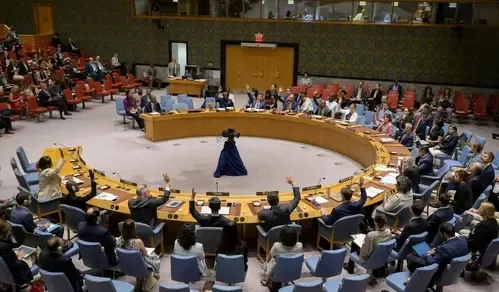
The United Nations Security Council convened an emergency session on Tuesday, 16 September 2026, as diplomats sounded the alarm over Houthi rebel forces advancing on the Bab al Mandab Strait — the narrow chokepoint controlling access to the Red Sea and, beyond it, the Suez Canal. With the Strait of Hormuz already under severe strain, senior UN officials warned the world could be headed for a simultaneous disruption of two of its most critical maritime corridors.
What the UN Said at the Emergency Session
Assistant Secretary-General Khaled Khiari told the Council that fighting had intensified along Yemen's west coast, with Houthi forces reportedly capturing several islands in the southern Red Sea during their push toward the Bab al Mandab. “The situation in and around the Bab al Mandab Strait has become increasingly volatile in recent days,” he said, warning that developments at the strait “underline the urgent need to prevent Yemen’s conflict from further threatening the security of the Red Sea and this vital international maritime route.”
The emergency session was convened at the request of Bahrain, whose Permanent Representative Jamal Fares Alrowaiei reminded the Council that Houthi militias continue to “threaten and disrupt navigation and vital maritime lifelines” despite repeated condemnation. “It is high time for the Security Council to take a more decisive stance,” he said — a call echoed by several member states present.
The Scale of the Threat to Global Commerce
The stakes are enormous. Approximately 30 per cent of the world’s container traffic and roughly 12 per cent of all global trade pass through the Suez Canal, which is accessible only via the Red Sea and the Bab al Mandab. Any sustained disruption at the strait would ripple through supply chains across Europe, Asia, and East Africa.
Compounding the alarm is the deteriorating situation at the Strait of Hormuz, through which flows an estimated 20 per cent of global petroleum and gas supplies. Traffic on that seaway has already fallen to a trickle, according to diplomats. Greece’s Permanent Representative warned that an escalation at the mouth of the Red Sea, on top of the Hormuz crisis, would have a “devastating impact on maritime security, global trade and prosperity.”
Saudi Arabia, Yemen, and the Iran Dimension
Saudi Arabia’s Permanent Representative Abdulaziz M Alwasil — whose country has itself come under Houthi attack — accused the rebels and their allied militias of attempting to “choke the straits with the aim of holding the global economy hostage.”
Yemen’s Permanent Representative Abdullah Ali Fadhel al-Saadi said the Sanaa government was actively trying to block the Houthi advance on the country’s west coast and urged the Council to strictly enforce the existing arms embargo against the group. The Houthi rebels are backed by Iran; US representative Jennifer Locetta called on the Council to take direct action against Tehran, which she described as arming and directing the Houthis.
Why the Security Council Remains Gridlocked
Despite the urgency, analysts and diplomats acknowledge that the Council is structurally hamstrung. The deep polarisation among its five permanent members — each holding veto power — has repeatedly prevented binding resolutions on Yemen. Several countries at Tuesday’s session voiced frustration at this paralysis, but no concrete enforcement mechanism emerged from the emergency meeting.
What Happens Next
The Houthi advance on the Bab al Mandab is being closely tracked by shipping insurers, energy traders, and governments dependent on Red Sea transit. A further deterioration could force a large-scale rerouting of vessels around the Cape of Good Hope — adding weeks and significant cost to global freight journeys, a scenario that already played out partially in the initial phase of Houthi attacks on commercial vessels. The pressure on the Security Council to move beyond condemnations is mounting, even as the path to consensus remains unclear.
Point of View
And Tuesday’s session offered little evidence that dynamic is about to change.
NationPress
16 Sept 2026
Frequently Asked Questions
What is the Bab al Mandab Strait and why does it matter?
The Bab al Mandab is a narrow strait between Yemen and the Horn of Africa that controls maritime access to the Red Sea and, beyond it, the Suez Canal. Roughly 30% of the world’s container traffic and 12% of all global trade pass through the Suez Canal, making the Bab al Mandab one of the most strategically vital chokepoints on earth.
What did the UN Security Council discuss at its emergency session on 16 September 2026?
The Council convened an emergency session — requested by Bahrain — to address the Houthi rebel advance along Yemen’s west coast toward the Bab al Mandab Strait. Assistant Secretary-General Khaled Khiari warned that Houthis had reportedly captured several islands in the southern Red Sea, raising fears of disruption to international shipping routes.
Why is a simultaneous crisis at the Strait of Hormuz and the Bab al Mandab especially alarming?
The Strait of Hormuz carries 20% of global petroleum and gas supplies, and traffic there has already fallen sharply. If the Bab al Mandab — gateway to the Suez Canal — is also disrupted, the world would face two simultaneous shocks to energy and container shipping, potentially forcing vessels on a far longer and costlier route around the Cape of Good Hope.
What role does Iran play in the Houthi threat to the Red Sea?
The Houthi rebels are backed by Iran, according to multiple governments and UN officials. US representative Jennifer Locetta told the Security Council that Tehran is actively arming and directing the Houthis, and called on the Council to take action against Iran. Saudi Arabia’s representative said the Houthis are seeking to choke global maritime straits to hold the world economy hostage.
Can the Security Council stop the Houthi advance?
In practice, the Council is severely constrained. Deep divisions among its five permanent members — each holding veto power — have repeatedly blocked binding resolutions on Yemen. Despite calls from Bahrain, Yemen, Saudi Arabia, Greece, and the US for stronger action, no concrete enforcement mechanism was agreed at Tuesday’s emergency session.