What Updates are Present in the SIR Meeting in Rajasthan?
Synopsis
In Rajasthan, the Special Intensive Revision–2026 of electoral rolls is underway, marked by a systematic and transparent approach. This meeting, attended by political representatives, highlights the commitment to participatory oversight and includes significant measures to ensure no eligible voter is left out.
Key Takeaways
Systematic and transparent implementation of the Special Intensive Revision–2026 in Rajasthan.
Engagement of political parties ensures participatory oversight.
Over 2.03 lakh volunteers involved in the electoral process.
The draft electoral roll is crucial for voter inclusion .
Focus on transparency measures to uphold electoral integrity.
Jaipur, Jan 13 (NationPress) Following the directives of the Election Commission of India (ECI), the Special Intensive Revision–2026 of electoral rolls in Rajasthan is being executed in a systematic, transparent, and time-bound manner.
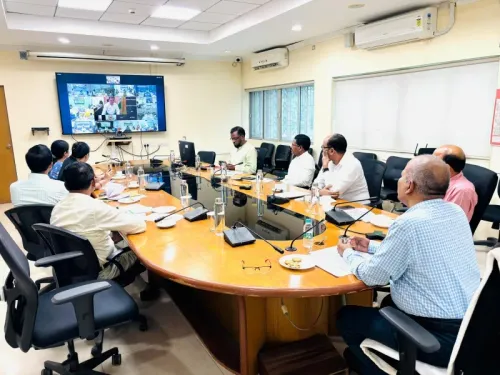
On Tuesday, a thorough review of the ongoing revision efforts was held at the Secretariat, led by the Special Roll Observer nominated by the ECI.
The Chief Electoral Officer (CEO) of Rajasthan, Naveen Mahajan, informed that the Special Roll Observer, Aditi Singh, assessed the advancement of the Special Intensive Revision–2026 during a comprehensive meeting.
This meeting addressed various facets and stages of the revision process, with representatives from recognized political parties in attendance, ensuring participatory oversight and transparency.
The CEO noted that a significant administrative framework has been activated for the successful execution of this extensive electoral endeavor.
A total of 41 District Election Officers, 200 Electoral Registration Officers, over 854 Assistant Electoral Registration Officers, 6,373 Booth-Level Officer (BLO) Supervisors, 61,404 BLOs, more than 2.03 lakh volunteers, and in excess of 1.06 lakh Booth Level Agents are actively participating in this campaign.
The Special Intensive Revision is being executed across 200 Assembly constituencies in 41 districts of Rajasthan.
CEO Mahajan detailed that during the pre-enumeration phase, voters were organized into four categories according to their birth dates and the final SIR electoral roll of 2002.
"A state-level database mapping was conducted, with necessary training and resources provided to BLOs, and the 2002 electoral rolls were made available for verification," he stated.
"Inter-assembly and inter-state coordination was established, achieving successful mapping of nearly 70% of voters even prior to the enumeration phase," the CEO elaborated.
It was also mentioned that the ECI declared the SIR in 199 Assembly constituencies (excluding Anta Assembly Constituency) on October 27, 2025.
"Enumeration forms were distributed to 5.46 crore voters, out of which 5.04 crore were included in the draft electoral roll," CEO Mahajan stated.
Of those, 98.36% were successfully mapped to the 2002 electoral roll, he added.
The draft electoral roll was made public on December 16, 2025, while the roll for the Anta Assembly Constituency was published on January 12, 2026. During this timeframe, the number of polling stations was optimized and increased from 52,469 to 61,404 for enhanced voter convenience.
Emphasizing transparency measures, the CEO stated that ASD (Absentee, Shifted, and Dead) lists were shared with all political parties.
"The draft electoral roll, alongside claims and objections, has been displayed at polling stations, Panchayat and Urban Local Body offices, as well as on the official websites of the Chief Electoral Officer and District Election Officers. During the notice period from December 16, 2025 to February 7, 2026, notices were distributed to nearly 8.28 lakh voters to submit their documents. Additional roll supervisors have been deployed for efficient monitoring to ensure no eligible voter is omitted from the final electoral roll," CEO Mahajan stated.
He added that roll supervisors are mandated to visit each district at least three times -- during the receipt of claims and objections, their resolution, and at the time of the final electoral roll publication -- to inspect field-level work and provide necessary guidance.
The CEO is consistently updating the media to keep the public informed about the progress of the Special Intensive Revision–2026.
Officials from election departments in other states have also traveled to Rajasthan to observe and replicate the best practices implemented during the revision process.
The meeting was attended by representatives from recognized political parties, divisional in-charge officers, and Electoral Registration Officers from Shahpura, Bassi, Chomu, and Hawamahal.
Point of View
The Special Intensive Revision–2026 in Rajasthan represents a significant effort to enhance electoral integrity. The engagement of political party representatives fosters transparency and accountability in the electoral process, ensuring that the needs and voices of the electorate are adequately represented. As this initiative unfolds, it is critical that all stakeholders remain vigilant to uphold the democratic values we cherish.
NationPress
30 Sept 2026
Frequently Asked Questions
What is the purpose of the Special Intensive Revision–2026?
The Special Intensive Revision–2026 aims to update and ensure the accuracy of electoral rolls across Rajasthan, making the voting process more inclusive and transparent.
How many voters are affected by this revision?
A total of approximately 5.46 crore voters were issued enumeration forms, with around 5.04 crore included in the draft electoral roll.
What measures are in place for transparency in this process?
The Election Commission has shared ASD lists with political parties, and draft electoral rolls along with claims and objections are displayed at polling stations and official websites.
Who oversees the revision process?
The revision process is overseen by the Chief Electoral Officer, along with a Special Roll Observer appointed by the Election Commission of India.
How many polling stations are there in Rajasthan now?
The number of polling stations has been increased from 52,469 to 61,404 to enhance voter accessibility and convenience.