Did the US Air Force Successfully Recover the MQ-9 Drone?
Synopsis
The US Air Force has successfully completed the recovery operation for an MQ-9 Reaper drone that crashed off South Korea's coast. This incident is under investigation, highlighting military collaboration and ongoing surveillance capabilities in the region.
Key Takeaways
The US Air Force has completed recovery operations for the crashed MQ-9 drone.
The incident is under investigation to determine its cause.
The recovery involved collaboration with South Korean military branches.
The MQ-9 is essential for surveillance missions in the region.
This incident highlights the strong military partnership between the US and South Korea.
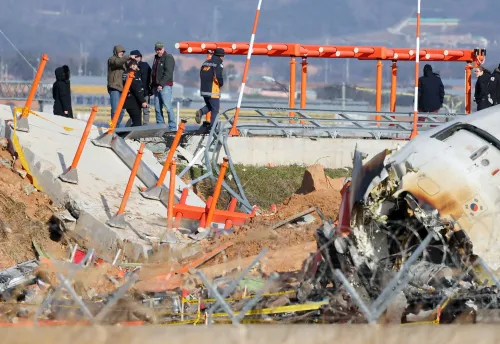
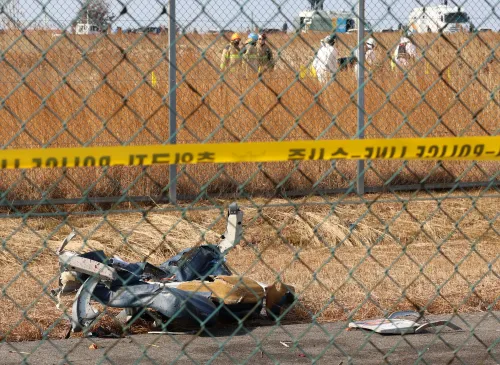
Seoul, Dec 14 (NationPress) A unit of the US Air Force stationed in South Korea has announced the successful conclusion of the recovery efforts for an MQ-9 drone that went down off the nation’s west coast last month.
The drone, commonly referred to as the Reaper, crashed near Maldo-ri Island, close to the western city of Gunsan, approximately 180 kilometers south of Seoul, on November 24, with no injuries reported. An investigation to determine the cause of this incident is currently ongoing, as reported by the Yonhap news agency.
In a statement to Yonhap News Agency regarding follow-up actions, the 8th Fighter Wing expressed, "After a comprehensive and cooperative effort, the recovery mission has now been successfully completed."
The operation was conducted in partnership with the South Korean Navy, Coast Guard, and Army.
"The combined expertise and resources of our two militaries were vital to the success of this operation," the statement added, expressing gratitude to the South Korean military for their "strong partnership."
While the US Air Force did not specify whether it intends to deploy another MQ-9 to cover any reconnaissance gap resulting from the crash, they reaffirmed their commitment to meeting mission requirements.
"Our priority is the safety and efficiency of our operations. We continuously assess our operational status and resource distribution to ensure we meet mission needs," they stated.
The downed drone was part of the MQ-9 fleet assigned to the 431st Expeditionary Reconnaissance Squadron at the US airbase in Gunsan, which was established in late September. This deployment marked the first activation of such a squadron on the Korean Peninsula following prior rotational deployments.
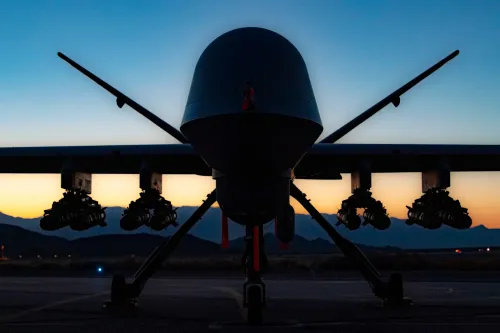
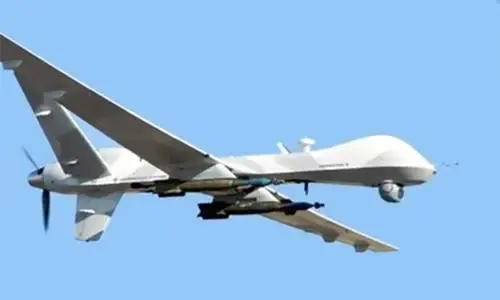
Designed for both surveillance and assault missions, the MQ-9 is capable of long-range flights. Once operational, it is expected to conduct surveillance activities over North Korea and monitor Chinese operations in the Yellow Sea.
Point of View
We recognize the importance of this incident, reflecting both the capabilities and challenges faced by military operations in the region. The successful recovery of the MQ-9 drone underscores the commitment of the US and South Korean forces to maintaining security and operational readiness.
NationPress
26 Sept 2026
Frequently Asked Questions
What caused the MQ-9 drone to crash?
An investigation is currently underway to determine the exact cause of the MQ-9 drone's crash.
Who conducted the recovery operation?
The recovery operation was conducted by the US Air Force in collaboration with the South Korean Navy, Coast Guard, and Army.
What is the significance of the MQ-9 drone?
The MQ-9 Reaper is designed for surveillance and attack missions and is capable of long-distance flights, contributing significantly to reconnaissance efforts.
Will another MQ-9 be deployed following the crash?
The US Air Force has not confirmed whether another MQ-9 will be deployed to fill any potential reconnaissance gaps due to the crash.
Where did the drone crash?
The MQ-9 drone crashed near Maldo-ri Island, off the western city of Gunsan, South Korea.