How Did CBI Dismantle a Major Transnational Cyber Fraud Network?

Synopsis
The CBI's recent crackdown on a vast transnational cyber fraud network highlights the agency's commitment to protecting citizens from sophisticated online scams. With 17 individuals charged and 58 companies implicated, this operation showcases the extensive measures being taken to combat cybercrime in India.
Key Takeaways
CBI's proactive measures against cybercrime demonstrate its commitment to safeguarding citizens.
The operation exposed a sophisticated fraud network operating across multiple states.
Investigation revealed the use of shell companies for fraudulent financial activities.
Foreign nationals played a significant role in orchestrating the scams.
Ongoing vigilance is crucial in combating transnational cyber fraud.
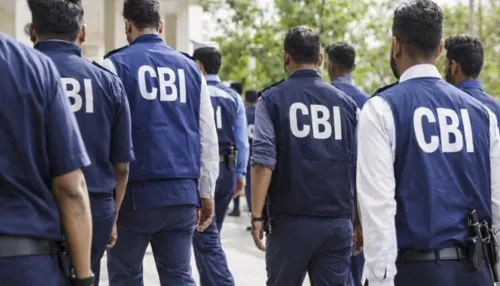
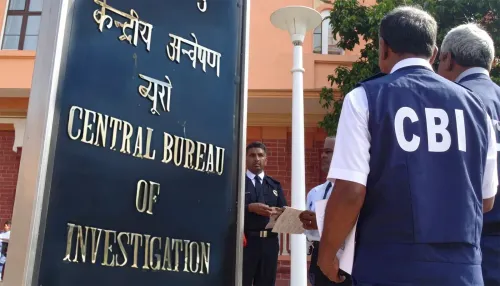
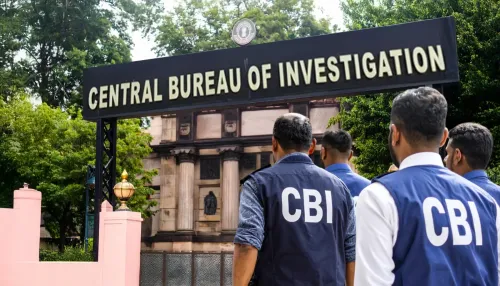
In a significant move, the Central Bureau of Investigation (CBI) has successfully dismantled a large and highly organized transnational cyber fraud network, filing a charge sheet against 17 individuals, including four foreign nationals, and involving 58 companies, officials announced on Sunday.
This operation came after a thorough investigation that unveiled a complex digital and financial system designed to defraud thousands of citizens across various states in India.
As per a CBI press release dated December 14, the accused were implicated in operating misleading loan applications, fraudulent investment schemes, Ponzi and multi-level marketing (MLM) frameworks, fictitious part-time job offers, and deceptive online gaming platforms. The agency stated, “The investigation has uncovered how a single organized syndicate established a wide-reaching digital and financial structure to exploit thousands of unsuspecting individuals.”
The case was initiated based on intelligence received from the Indian Cyber Crime Coordination Centre (I4C), which indicated a systemic cheating of many individuals through online investment and employment schemes.
Initially perceived as isolated complaints, detailed analysis by the CBI revealed “notable commonalities in applications utilized, fund-flow patterns, payment systems, and digital traces, indicating a shared organized conspiracy.”
According to the CBI, the cybercriminals employed a “highly layered and technology-centric modus operandi,” utilizing Google ads, mass SMS campaigns, SIM-box messaging systems, cloud infrastructure, fintech platforms, and numerous mule bank accounts. “Every phase of the operation -- from attracting victims to the collection and transfer of funds -- was meticulously designed to obscure the identities of the real masterminds and to avoid detection by law enforcement,” the release highlighted.
Investigators revealed the core of the fraud network, which included 111 shell companies created with false directors, forged documents, fake addresses, and deceptive business objectives. These shell entities facilitated the opening of bank and merchant accounts, allowing for the swift layering and diversion of illicit funds.
Analysis of numerous bank accounts indicated that over Rs 1,000 crores were funneled through these accounts, with one account alone receiving more than Rs 152 crores in a brief timeframe.
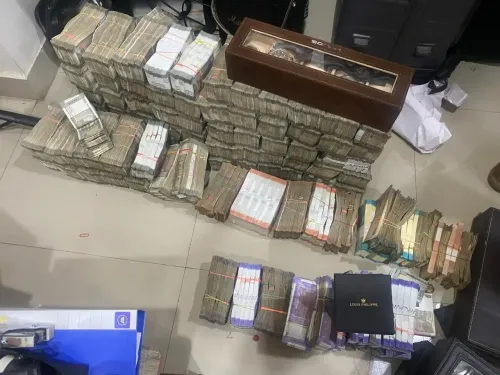
Search operations were conducted at 27 locations across Karnataka, Tamil Nadu, Kerala, Andhra Pradesh, Jharkhand, and Haryana, during which digital devices, documents, and financial records were confiscated for forensic assessment. The CBI concluded that there were “extensive communication channels and operational oversight by foreign nationals managing the fraud network from overseas.”
Importantly, the agency discovered that a UPI ID associated with the bank accounts of two Indian accused was active in a foreign location as recently as August, “definitively confirming ongoing foreign control and real-time operational supervision.”
The investigation revealed that from 2020 onwards, shell companies were established in India at the direction of foreign handlers -- Zou Yi, Huan Liu, Weijian Liu, and Guanhua Wang -- with assistance from Indian associates. The CBI has charged the four foreign masterminds, their Indian collaborators, and 58 companies under various charges, including criminal conspiracy, forgery, and violations of the Banning of Unregulated Deposit Schemes Act, 2019.
“This operation is part of the CBI’s ongoing efforts under Operation CHAKRA-V to combat organized and transnational cyber-enabled financial crimes,” the agency stated, reaffirming its commitment to dismantling cybercrime networks and protecting India’s digital economy.
Point of View
It's imperative to acknowledge the CBI's vigorous actions against organized cybercrime. This operation underscores the necessity for robust cybersecurity measures and public awareness. The scale of this fraud network reveals the increasing sophistication of cybercriminals, emphasizing the need for constant vigilance and collaboration between law enforcement and citizens.
NationPress
13 Oct 2026
Frequently Asked Questions
What led to the investigation by CBI?
The investigation was initiated based on alerts from the Indian Cyber Crime Coordination Centre, which identified widespread cheating through online investment schemes.
How many individuals were charged in the CBI's operation?
The CBI has filed a charge sheet against 17 accused individuals, including four foreign nationals.
What types of fraud were uncovered during the investigation?
The investigation revealed fraudulent loan applications, fake investment schemes, Ponzi and multi-level marketing models, and bogus job offers.
What was the role of shell companies in the fraud?
Shell companies were established to facilitate banking and financial transactions, allowing for the rapid movement and concealment of illicit funds.
How much money was involved in the fraudulent activities?
Over Rs 1,000 crore was routed through various bank accounts associated with the fraud network.