US lawmakers target China's Belt and Road with TRAIN, BRIDGE Acts
Synopsis
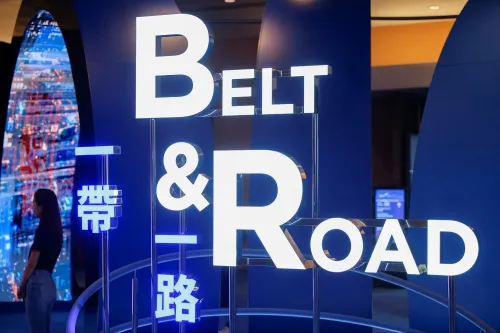
Two Republican lawmakers want to arm Washington with a playbook against China's $1.4 trillion Belt and Road footprint. The TRAIN and BRIDGE Acts would help partner nations spot debt traps before signing and force a formal US strategy against Beijing's invest-to-control model — the sharpest legislative pushback yet on BRI.
Key Takeaways
US Congressmen Scott Fitzgerald and Zach Nunn introduced the TRAIN Act and BRIDGE Act on 3 June 2025 .
The TRAIN Act directs the State Department to help partner nations assess risks of Chinese loans and investment.
The BRIDGE Act mandates a report to Congress within 180 days on China's use of BRI.
BRI engagement in 2025 reportedly reached $213.5 billion ; cumulative engagement since 2013 nears $1.4 trillion .
Over 150 countries and 32 international organisations have signed BRI cooperation documents.
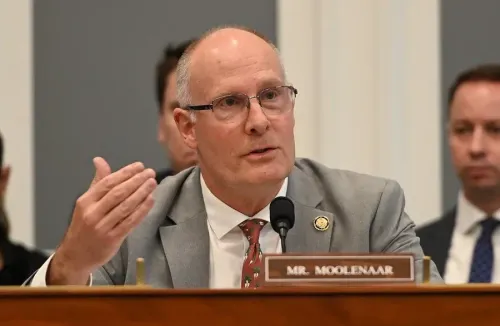
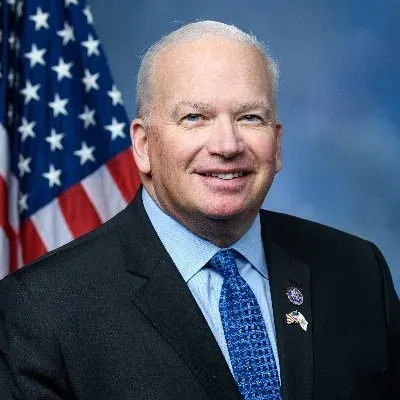
Two Republican lawmakers in Washington on 3 June 2025 introduced fresh legislation to counter China's Belt and Road Initiative (BRI), arguing that Beijing is weaponising infrastructure financing and overseas investment to expand its strategic footprint. Congressman Scott Fitzgerald of Wisconsin and Congressman Zach Nunn of Iowa unveiled the Thwarting Regional Adversary Investments Now (TRAIN) Act and the Build Responsible Infrastructure Development for the Global Economy (BRIDGE) Act on Tuesday.
What the two bills propose
The TRAIN Act would direct the US State Department to help non-adversarial partner governments analyse and mitigate the legal and financial risks of accepting loans or investment from China and other foreign adversaries, according to Fitzgerald's office. The aim, the lawmakers said, is to help countries evaluate long-term implications of infrastructure financing before signing on.
The BRIDGE Act would formally establish it as US policy to counter what the legislation describes as Beijing's effort to build an integrated economic and political order under the Chinese Communist Party. The Secretary of State, working with the Secretary of Commerce, the US International Development Finance Corporation and other agencies, would have to submit a report to Congress within 180 days assessing how the BRI advances Beijing's global objectives.
What the lawmakers said
‘China has turned the Belt and Road Initiative into a weapon of economic coercion, building leverage through debt, controlling critical infrastructure, and pulling countries deeper into Beijing's orbit,' Fitzgerald said. He added that the TRAIN Act helps countries ‘avoid walking into those traps in the first place,' while the BRIDGE Act positions the United States to respond.
Nunn framed the issue around domestic economic stakes. ‘China has spent decades buying up the ports, power grids, and trade routes of developing nations, trapping them in debt and rigging the global market in their favor,' he said, arguing that Iowa's farmers and manufacturers cannot compete on ‘a field Beijing is tilting in their own favor.'
The scale of the BRI
According to figures cited by Fitzgerald's office, more than 150 countries and 32 international organisations have signed cooperation documents linked to the BRI since its 2013 launch, spanning sub-Saharan Africa, Europe, Central Asia, and the Asia-Pacific. BRI engagement in 2025 reportedly reached an estimated $213.5 billion in construction contracts and investments, with cumulative engagement since 2013 approaching $1.4 trillion.
Why it matters
The bills land amid an intensifying debate in Washington over how to blunt China's economic reach in the Global South. The US and its allies have been promoting alternative financing channels, including the Partnership for Global Infrastructure and Investment and projects backed by the US International Development Finance Corporation, to offer developing countries options outside Beijing-backed deals.
What's next
The lawmakers said the TRAIN and BRIDGE Acts form part of a broader legislative push, with additional China-focused measures expected in the coming days. Whether either bill advances will depend on bipartisan traction in a closely divided Congress.
Point of View
Including the Partnership for Global Infrastructure and Investment, have struggled to match the speed, scale, and political flexibility of Chinese financing. Telling developing countries to walk away from a Beijing deal works only if there is a comparable cheque waiting on the other side. Until that gap closes, legislation like this risks being a warning label without a substitute product.
NationPress
17 Oct 2026
Frequently Asked Questions
What are the TRAIN and BRIDGE Acts?
They are two bills introduced by Republican Congressmen Scott Fitzgerald and Zach Nunn on 3 June 2025 to counter China's Belt and Road Initiative. The TRAIN Act helps partner nations evaluate risks of Chinese financing, while the BRIDGE Act sets a formal US policy to counter Beijing's invest-to-control strategy.
Why are US lawmakers targeting the Belt and Road Initiative now?
The lawmakers argue that BRI has become a tool of economic coercion, with Beijing using debt and control of critical infrastructure to expand strategic influence. They cite an estimated $213.5 billion in BRI engagement in 2025 and cumulative engagement nearing $1.4 trillion since 2013.
What would the BRIDGE Act require the US government to do?
It would require the Secretary of State, in coordination with the Secretary of Commerce and the US International Development Finance Corporation, to submit a report to Congress within 180 days assessing how China uses the BRI to advance its global objectives.
How many countries are part of China's Belt and Road Initiative?
More than 150 countries and 32 international organisations have signed BRI cooperation documents since its launch in 2013, according to figures cited by Congressman Fitzgerald's office. The programme spans sub-Saharan Africa, Europe, Central Asia, and the Asia-Pacific.
What alternatives is the US offering to BRI?
Washington and its allies have been promoting the Partnership for Global Infrastructure and Investment and projects backed by the US International Development Finance Corporation. These are pitched as financing options for developing countries beyond Chinese-backed investments.