Is Silence Complicity? US Groups Raise Alarm on Bangladesh
Synopsis
In a critical press conference, human rights advocates and journalists warned that the upcoming election in Bangladesh, marked by violence against minorities and political exclusion, could lead to a catastrophic situation. They are calling for urgent international intervention to ensure the protection of minority rights and democratic freedoms.
Key Takeaways
Urgent need for international intervention to protect minority rights.
Political exclusion is a major concern for democracy.
Violence against religious minorities is escalating.
Press freedom is facing unprecedented challenges.
Women’s rights are being compromised amid rising extremism.
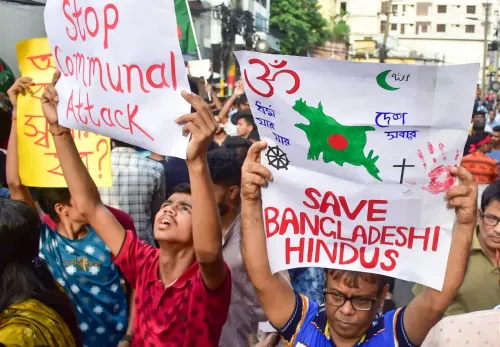
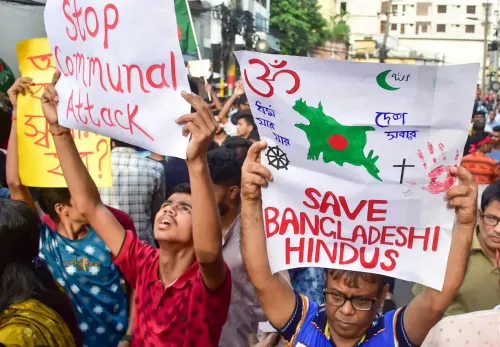
Washington, Feb 10 (NationPress) Advocates for human rights, journalists, and community leaders have expressed grave concerns that targeted violence against religious minorities and the exclusion of significant political factions from Bangladesh's upcoming election could lead the nation toward what they termed a “cataclysmic disaster,” calling for immediate international intervention to safeguard minority rights and uphold democratic freedoms.
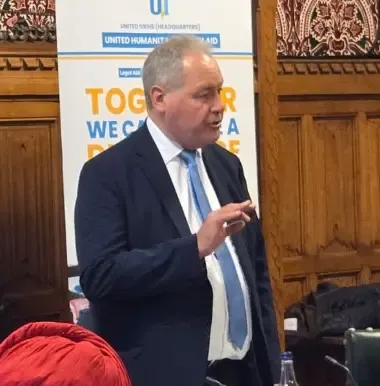
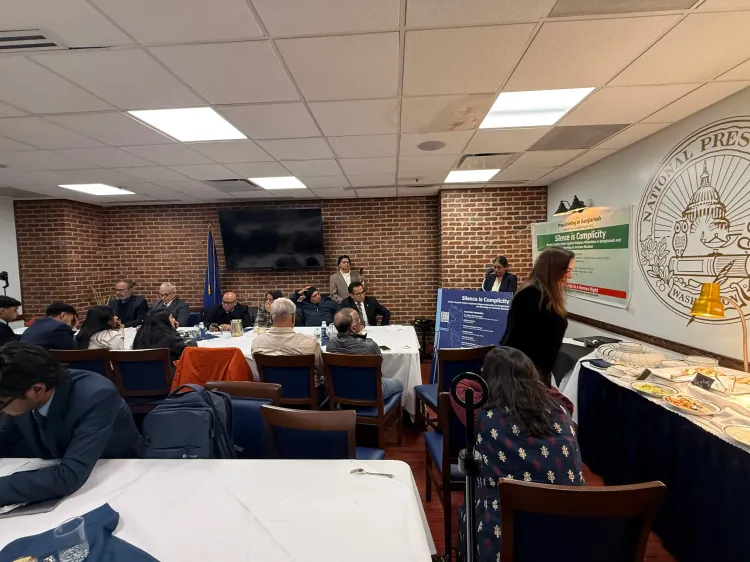
At a press conference held at the National Press Club, the organizers emphasized that the imminent election was occurring without the involvement of a wide opposition alliance, leaving millions voiceless and increasing the vulnerability of minorities.
“Our focus is not to support one political party over another,” stated Dalip Nath, a human rights advocate and political activist. “However, we are deeply concerned about the 14-party coalition that is absent from this election, which represents approximately 65 percent of the nation's population,” he added. “Suppressing voting rights, which are fundamental, undermines democracy.”
Multiple speakers highlighted that this political exclusion has coincided with a worrying escalation in violence against religious and ethnic minorities, journalists, and activists.
Dr. Dwijen Bhattacharjee, president of the Bangladesh Hindu, Buddhist, and Christian Unity Council, noted that Bangladesh is home to 170 million people, among whom 20 million belong to religious minorities who are particularly at risk.
During the conference, Amar Khayam Islam, a former prosecutor at the International Crimes Tribunal, Bangladesh, remarked that the gathering was intended to prevent “a cataclysmic disaster that has been orchestrated to occur within two days in Bangladesh,” referring to the election timeline. “Can we achieve this? We are uncertain, but we must try,” he stated.
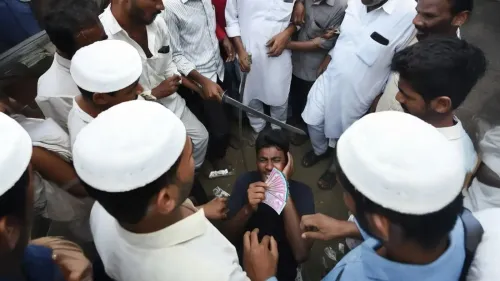
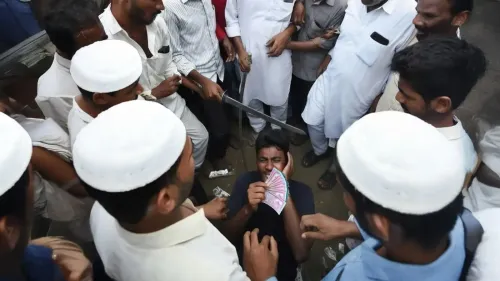
Speakers pointed out what they labeled systematic intimidation of political opponents and minorities, which includes arrests, custodial deaths, and pervasive fear. One participant claimed, “Mob violence has become almost customary,” alleging that daily incarcerations involve police officers, religious minorities, and political leaders.
Journalists who have either fled Bangladesh or are working under duress described what they consider an unprecedented crackdown on press freedom. “A free press is essential for democracy, yet currently, the press is imprisoned,” said Farida Yasmin, a former president of the National Press Club, Dhaka.
“Close to 300 journalists are facing murder allegations. Their accreditation cards have been revoked, bank accounts frozen, and their families harassed,” she warned.
She cautioned that fear and intimidation have led journalists to self-censor, resulting in coverage of the election and violence being “one-sided.” “An independent press is not a political favor; it is a fundamental pillar of democracy and justice,” she emphasized.
Women’s rights advocates voiced concerns that the prevalence of extremist rhetoric and the exclusion of women candidates indicate a broader regression in gender equality. “We cannot allow authorities to strip rights from our mothers or sisters,” said Soraya M Deen, a lawyer and interfaith activist, warning that religious extremism jeopardizes women’s participation in society.
Musa Ibne Mannan, a survivor of assassination attempts and mob attacks, characterized the crisis as “not just a regional issue” but one with global ramifications. “It represents a clash of civilizations,” he claimed, asserting that religious minorities, secular voices, and dissenting Muslims are all at risk.
Organizers called for international oversight, independent inquiries into assaults on minorities, and diplomatic pressure linked to human rights standards. “Evil prevails when good individuals remain silent,” stated Priya Saha, president of the South Asian Minorities Collective, urging governments to take a stand.
Point of View
I recognize the urgency of the situation unfolding in Bangladesh. With human rights at stake and vulnerable populations facing unprecedented threats, our commitment to shedding light on these issues remains steadfast. It is imperative that the international community pays close attention to this developing crisis.
NationPress
27 Sept 2026
Frequently Asked Questions
What is the current situation regarding the elections in Bangladesh?
The elections in Bangladesh are scheduled to occur soon without the participation of significant opposition parties, raising concerns about the legitimacy of the process.
Who are the key speakers raising concerns?
Key speakers include human rights advocates, journalists, and community leaders who are emphasizing the need for international intervention.
What forms of violence are being reported?
Reports indicate a rise in targeted violence against religious minorities, journalists, and political activists.
Why is press freedom a concern in Bangladesh?
Journalists in Bangladesh face severe restrictions, including threats, censorship, and legal repercussions, which limit their ability to report freely.
What actions are being called for by the organizers?
Organizers are calling for international monitoring, independent investigations into attacks on minorities, and diplomatic pressure linked to human rights standards.