Uttarakhand Leads Nation in Modern Criminal Justice Implementation
Synopsis
Uttarakhand has excelled in implementing the Inter-Operable Criminal Justice System (ICJS) 2.0, achieving the top national ranking. This milestone reflects the state's commitment to a modernized judicial framework, driven by technological advancements and coordinated efforts.
Key Takeaways
Uttarakhand ranks first nationally in ICJS 2.0 implementation.
Technology-driven approach enhances criminal justice.
Chief Minister Pushkar Singh Dhami's leadership is pivotal. 'One Data, One Entry' streamlines data sharing.
Over 23,000 police personnel trained in new laws.
Dehradun, March 7 (NationPress) In a remarkable achievement for India's judicial and law enforcement modernization, Uttarakhand has attained the top position in the national rollout of the Inter-Operable Criminal Justice System (ICJS) 2.0.
Data available until January 2026 indicates that this accomplishment underscores the state's vigorous commitment to a technology-enhanced justice system, aligning with the vision set forth by Union Home Minister Amit Shah to upgrade the nation's criminal justice framework.
As per the recent CCTNS/ICJS Progress Dashboard published by the National Crime Records Bureau (NCRB), Uttarakhand leads the national rankings with an impressive score of 93.46.
The leading five states in this national ranking are Uttarakhand with 93.46, closely followed by Haryana at 93.41, Assam at 93.16, Sikkim at 91.82, and Madhya Pradesh at 90.55.
Officials attribute the state’s success to effective administrative coordination and the implementation of state-of-the-art digital systems within the criminal justice framework.
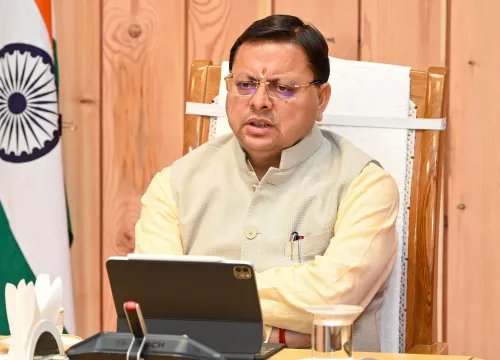
This achievement is also credited to the proactive leadership and vigilant oversight by Chief Minister Pushkar Singh Dhami, who has adopted a mission-mode strategy for the execution of the newly introduced criminal laws: the Bharatiya Nyaya Sanhita (BNS), Bharatiya Nagarik Suraksha Sanhita (BNSS), and the Bharatiya Sakshya Adhiniyam (BSA).
To facilitate the effective execution of these laws, the Chief Minister regularly reviews the progress through meetings with senior officials and district-level officers. These ongoing assessments have allowed for timely resolution of technical challenges and have enabled law enforcement and other departments to adapt seamlessly to the new legal environment.
One of the pivotal elements of Uttarakhand's success is the 'One Data, One Entry' mechanism introduced under ICJS 2.0. This system ensures smooth data sharing across various components of the criminal justice system, including Police (CCTNS), e-Courts, e-Prisons, e-Prosecution, and e-Forensics.
With this integrated approach, data entered into the platform is immediately accessible to all pertinent departments, significantly reducing paperwork, enhancing inter-agency collaboration, and expediting case investigations and resolutions.
Moreover, initiatives have been implemented to bolster transparency and evidence management, with the mandatory use of videography at crime scenes and secure storage of digital evidence via the 'e-Sakshya' application.
The state government has also prioritized extensive capacity building within the police force, with over 23,000 police personnel in Uttarakhand receiving intensive training on the new criminal laws and procedures.
Additionally, technological advancements have been emphasized, including the provision for virtual court hearings through the 'Nyaya Shruti' system and the deployment of forensic mobile vans to enhance on-site investigations.
Affirming the state’s premier ranking, the Uttarakhand Police spokesperson and Inspector General of Police (Crime and Law & Order) Sunil Kumar Meena stated that the state has set a precedent not only in technological infrastructure implementation but also in ensuring real-time data entry and inter-departmental coordination.
Officials noted that Amit Shah has recognized Uttarakhand’s achievements, particularly praising the efficiency of the 'One Data, One Entry' system during high-level reviews.
Through these coordinated efforts and technological advancements, Uttarakhand has established itself as a prototype for 'smart policing' and a paradigm of effective modern criminal justice reforms in the country.
Point of View
Uttarakhand's achievement in the implementation of the ICJS 2.0 represents a significant step forward in the modernization of India's criminal justice system. The state's focus on technology and coordination illustrates a commendable approach that could serve as a model for other regions.
NationPress
13 Oct 2026
Frequently Asked Questions
What is the Inter-Operable Criminal Justice System?
The Inter-Operable Criminal Justice System (ICJS) is a technology-driven framework designed to enhance coordination and data sharing across various components of the criminal justice system.
Who is the Chief Minister of Uttarakhand?
The current Chief Minister of Uttarakhand is Pushkar Singh Dhami.
What are the new criminal laws introduced in Uttarakhand?
The new criminal laws include the Bharatiya Nyaya Sanhita (BNS), Bharatiya Nagarik Suraksha Sanhita (BNSS), and the Bharatiya Sakshya Adhiniyam (BSA).
How has Uttarakhand achieved its top ranking?
Uttarakhand achieved its top ranking through effective administrative efforts, a focus on technology, and a commitment to capacity building within the police force.
What is the 'One Data, One Entry' mechanism?
The 'One Data, One Entry' mechanism allows for seamless data sharing across various components of the criminal justice system, improving efficiency and coordination.