Gujarat adds 500 Janrakshak vehicles, '112' fleet hits 1,000 by Tuesday
Synopsis
Gujarat is doubling its Janrakshak emergency fleet to 1,000 vehicles in a single flag-off, having already slashed average response times from 27 minutes to under 11 minutes in just 11 months. The new SOP scrapping jurisdictional dispatch boundaries — and the 112 panic button now embedded in Ola, Uber, and Rapido — signals a shift from incremental upgrades to a genuinely unified emergency ecosystem.
Key Takeaways
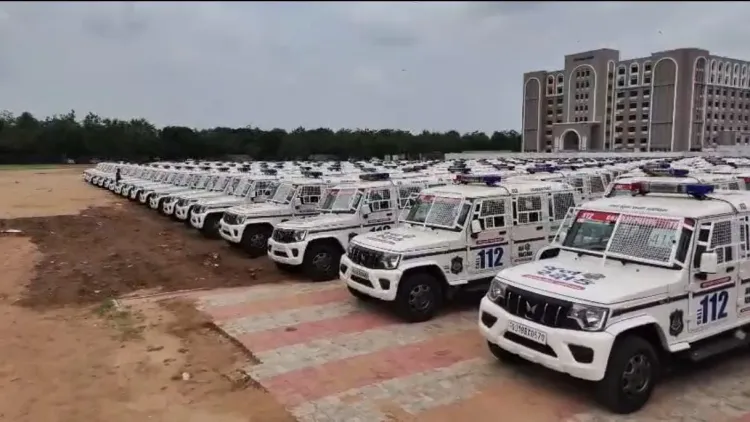
Deputy CM Harsh Sanghavi flags off 500 new Janrakshak PCR vehicles on 24 August from New Secretariat, Gandhinagar , doubling the fleet to 1,000 .
Average emergency response time has fallen from 27 minutes to 10 minutes 49 seconds since launch.
The system handled over 11.04 lakh emergency requests and 6.74 lakh police incidents in its first 11 months .
A new SOP mandates dispatch of the nearest PCR vehicle regardless of police jurisdictional boundaries.
The 112 panic button is now integrated into Ola, Uber, Rapido , and Bharat Taxi apps.
Each vehicle carries 4 personnel on 24-hour duty, equipped with body-worn cameras, MDTs, GPS tracking, and first-aid kits.
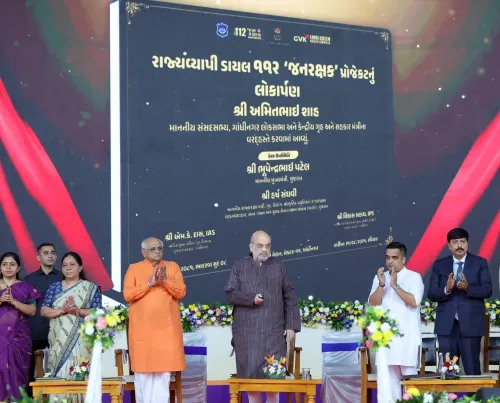
Gujarat is set to double its Janrakshak emergency response fleet to 1,000 vehicles as Deputy Chief Minister Harsh Sanghavi flags off 500 new advanced PCR vehicles from the New Secretariat, Gandhinagar on Tuesday, 24 August, under the expanded '112 Janrakshak' project. The move is designed to push average emergency response times even lower across the state.
Scale of the Expansion
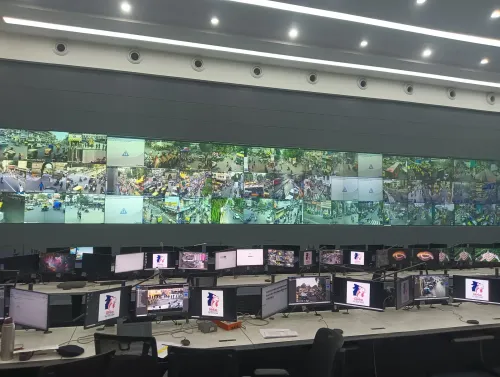
The addition brings the round-the-clock Janrakshak fleet from 500 to 1,000 vehicles, building on the statewide Dial 112 infrastructure inaugurated in 2025, which had deployed an initial fleet alongside a centralised 150-seat control centre and GPS-enabled dispatch technology. Officials cited Gujarat's growing population, rapid urbanisation, and geographical spread as drivers of the expansion.
In its first 11 months of operation, the Janrakshak system handled more than 11.04 lakh integrated emergency service requests and provided immediate assistance in over 6.74 lakh police emergency incidents — figures that underscore the scale of demand on the network.
Response Time Already Halved
The most striking operational metric is the collapse in average response time: from 27 minutes to 10 minutes and 49 seconds, achieved through a combination of the 150-seat emergency call centre, Computer-Aided Dispatch (CAD) technology, and real-time caller-location systems. Authorities say the additional vehicles and upgraded technology are expected to reduce this figure further.
A new Standard Operating Procedure (SOP) has also been introduced to ensure that police jurisdictional boundaries do not delay emergency assistance. Under the revised protocol, the PCR vehicle closest to an incident will be dispatched regardless of jurisdictional lines — a structural change that addresses a longstanding bottleneck in urban and peri-urban areas.
What the New Vehicles Carry
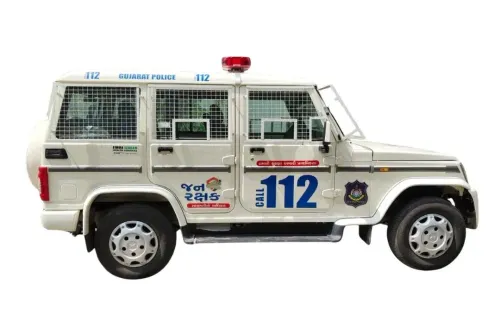
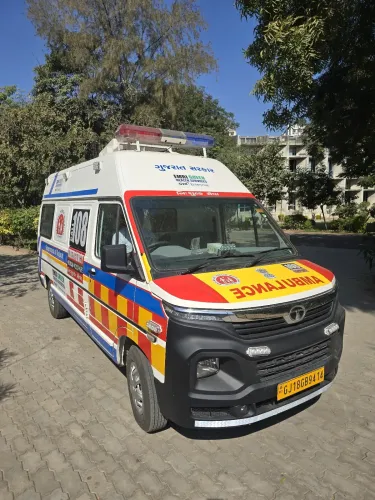
Each of the 500 new Janrakshak PCR vehicles will be air-conditioned and fitted with safety grilles for round-the-clock operations. On-board equipment includes Mobile Data Terminals for real-time information, GPS-based vehicle tracking, emergency light bars and sirens, public-address systems, fire extinguishers, first-aid kits, and searchlight torches.
Personnel aboard each vehicle — one ASI or head constable, two constables, and one driver on 24-hour duty — will be equipped with body-worn cameras, helmets, protective gear, and dashboard cameras, raising both accountability and officer safety standards.
A Unified Emergency Ecosystem
The Dial 112 platform integrates multiple emergency services under a single number: police (100), ambulance (108), fire services (101), the women's helpline (181), child helpline (1098), disaster helpline (1070), and traffic assistance. From 1 August, traffic complaints were also folded into the unified number.
Notably, the 112 panic button has been embedded into the Ola, Uber, Rapido, and Bharat Taxi apps, giving ride-hailing users direct access to the emergency response system — an integration that extends the network's reach to millions of daily commuters. With the fleet now doubling, Gujarat's emergency infrastructure is positioned as one of the most technologically integrated in the country.
Point of View
But the more consequential reform here is the SOP scrapping jurisdictional dispatch boundaries — a bureaucratic friction point that has cost lives in emergencies across Indian states for decades. The integration of the 112 panic button into commercial ride-hailing apps is also underreported: it quietly extends the emergency network to a demographic — urban, app-native, often female — that is disproportionately at risk in transit. The real test will be whether response-time gains hold as call volumes scale with a larger fleet, or whether the 150-seat control centre becomes the new bottleneck.
NationPress
24 Aug 2026
Frequently Asked Questions
What is the Gujarat Janrakshak '112' emergency project?
The Janrakshak project is Gujarat's unified emergency response system operating under the Dial 112 number, integrating police, ambulance, fire, women's helpline, child helpline, and disaster services. Launched in 2025 with an initial fleet of 500 vehicles and a 150-seat control centre, it has handled over 11.04 lakh emergency requests in its first 11 months.
How many new Janrakshak vehicles is Gujarat adding?
Gujarat is adding 500 new advanced PCR vehicles, bringing the total round-the-clock fleet to 1,000. Deputy Chief Minister Harsh Sanghavi flagged them off from the New Secretariat in Gandhinagar on 24 August.
How much has emergency response time improved in Gujarat?
Average response time has dropped from 27 minutes to 10 minutes and 49 seconds, achieved through Computer-Aided Dispatch technology, a 150-seat call centre, and real-time caller-location systems. Authorities expect the figure to fall further with the expanded fleet.
What is the new SOP introduced under the Janrakshak expansion?
The new Standard Operating Procedure requires that the PCR vehicle closest to an incident be dispatched regardless of police jurisdictional boundaries. This eliminates delays caused by jurisdictional hand-offs that previously slowed emergency assistance.
Which apps have integrated the Gujarat 112 panic button?
The 112 panic button has been integrated into the Ola, Uber, Rapido, and Bharat Taxi ride-hailing apps, allowing users to directly access the emergency response system while in transit.