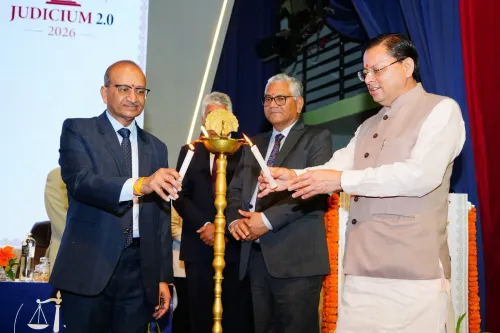
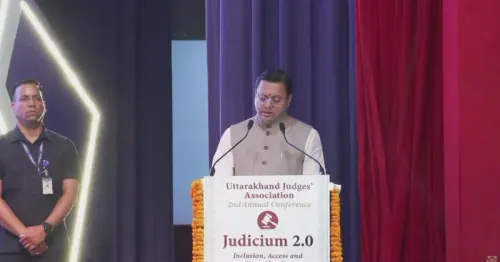
CM Dhami at Judicium 2.0: Judiciary a pillar of democracy
Synopsis
Chief Minister Pushkar Singh Dhami addressed the Judicium 2.0 conference in Dehradun on June 7, 2026, emphasising timely and accessible justice, citing Revenue Lok Adalats, digital services, and a zero-tolerance approach to crime as pillars of Uttarakhand's judicial reform agenda.
Key Takeaways
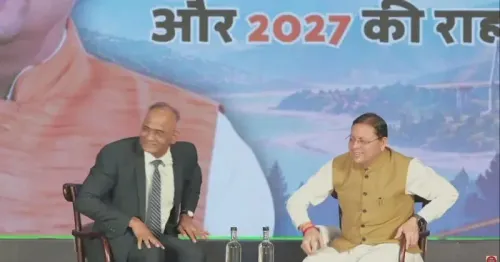
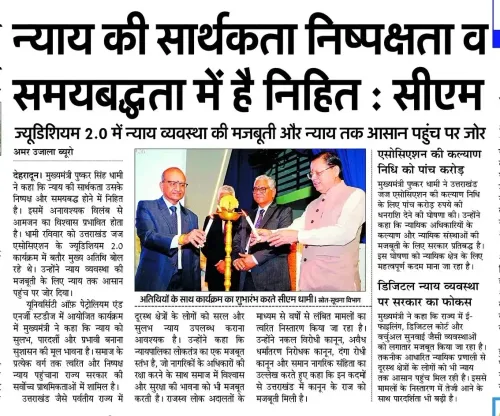
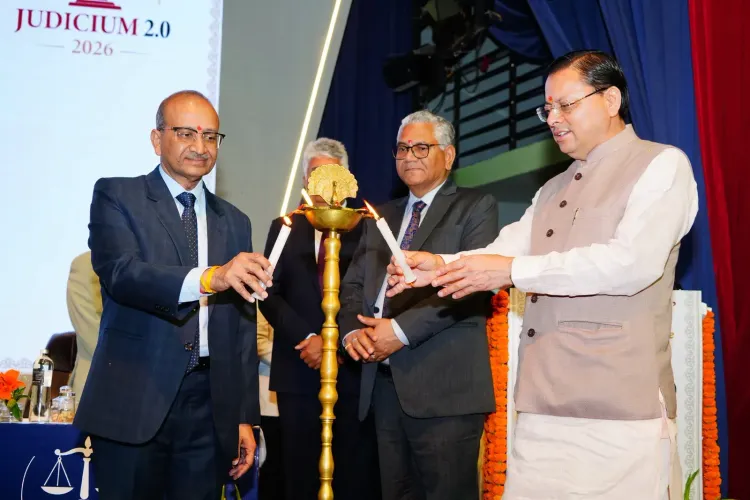
CM Pushkar Singh Dhami attended the inaugural session of Judicium 2.0 , organised by the Uttarakhand Judges Association in Dehradun on June 7, 2026 .
He described the judiciary as a 'strong and foundational pillar of democracy' and called timely justice a collective responsibility.
The Uttarakhand government is deploying Revenue Lok Adalats , digital services, and technology-based systems to speed up justice delivery.
Devbhoomi Uttarakhand is being positioned as a state of discipline, good governance, and zero tolerance toward crime.
Senior judges of the Uttarakhand High Court, Nainital — including the Chief Justice — were present at the conference.
Integrated revenue-court portals and measurable case-disposal improvements are the next milestones to watch.
Uttarakhand Chief Minister Pushkar Singh Dhami on Sunday, June 7, 2026, participated in the inaugural session of Judicium 2.0: Inclusion, Access and Strengthening, a conference organised by the Uttarakhand Judges Association in Dehradun, where he called for timely, accessible, and effective justice for all citizens.
Context
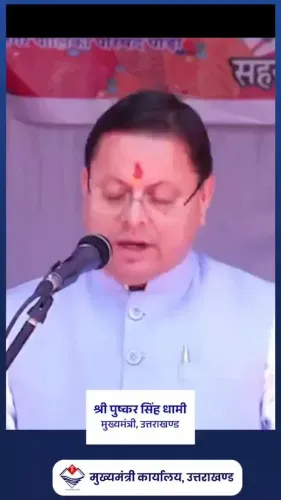
Addressing the gathering, CM Dhami described the judiciary as 'loktantra ka ek sashakt evam aadhaarbhoot stambh' (a strong and foundational pillar of democracy). He underlined that delivering justice in a time-bound, accessible, and effective manner is a 'collective responsibility' of all stakeholders — government, judiciary, and civil society alike.
The conference brought together senior members of the Uttarakhand High Court, Nainital, including the Chief Justice and multiple sitting justices, alongside judges from district and subordinate courts across the state.
Policy Backdrop
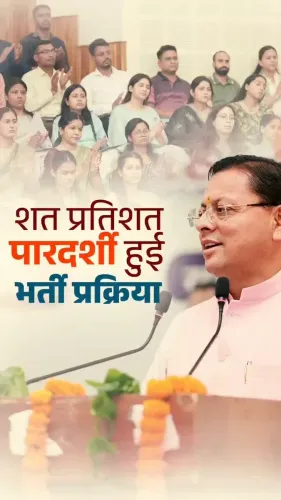
CM Dhami stated that the Uttarakhand government is continuously working to make judicial processes 'simpler, more transparent, and people-oriented.' He specifically cited Revenue Lok Adalats, digital services, and technology-based systems as vehicles for speeding up justice delivery to ordinary citizens.
Revenue Lok Adalats function as statutory alternative dispute resolution forums under the Legal Services Authorities Act, enabling faster settlement of civil and revenue disputes without prolonged litigation. The state's push mirrors the national e-Courts Mission Mode Project, which since 2005 has funded digitisation of case records and video-conferencing infrastructure across Indian states, including Uttarakhand.
Broader adoption of technology-enabled lok adalats and e-filing has gained momentum across Indian states as a response to judicial pendency — a challenge consistently flagged in High Court annual reports. Uttarakhand's approach aligns with similar drives in other hill and north-eastern states focused on administrative efficiency.
Stakeholders and Impact
CM Dhami reiterated his government's commitment to establishing Devbhoomi Uttarakhand as a state defined by discipline, good governance, and 'zero tolerance' toward crime. The statement signals a continued policy emphasis that directly affects litigants, revenue department staff, and the district judiciary.
For ordinary litigants — particularly those in remote hill districts — faster revenue court disposal and digitised services can meaningfully reduce the cost and time of accessing justice. The National Judicial Infrastructure Corporation and state-level judicial academies have increasingly supported such capacity-building conferences to translate policy intent into ground-level reform.
What's Next
Attention will now turn to the roll-out of integrated revenue-court portals and measurable improvements in case disposal times, which are tracked in Uttarakhand High Court annual statistics. The Judicium 2.0 conference, with its focus on inclusion and access, is expected to produce recommendations that the state government may incorporate into its judicial reform roadmap.
Whether the Uttarakhand government's stated commitments translate into quantifiable reductions in pendency will be a key benchmark watched by legal practitioners and civil society groups in the months ahead.
Point of View
Not merely a legal-sector concern. By spotlighting Revenue Lok Adalats and digital tools alongside a 'zero tolerance' crime narrative, he ties judicial efficiency to his broader law-and-order brand. The conference format — co-hosted with the judiciary — also allows the executive to publicly align with institutional reform without overstepping constitutional boundaries. This pattern of executive-judiciary collaboration on access and infrastructure is becoming a template across BJP-governed states seeking to demonstrate administrative credibility.
NationPress
22 Oct 2026
Frequently Asked Questions
What is Judicium 2.0 in Uttarakhand?
Judicium 2.0 is a conference on judicial inclusion, access, and strengthening organised by the Uttarakhand Judges Association in Dehradun. The 2026 edition was inaugurated on June 7 and was attended by CM Pushkar Singh Dhami and senior judges of the Uttarakhand High Court.
What are Revenue Lok Adalats in Uttarakhand?
Revenue Lok Adalats are statutory alternative dispute resolution forums that allow faster settlement of civil and revenue disputes outside regular courts. The Uttarakhand government has been using them, alongside digital services, to speed up justice delivery for ordinary citizens.
What did CM Dhami say at Judicium 2.0?
CM Dhami called the judiciary a strong and foundational pillar of democracy and said delivering timely, accessible, and effective justice is a collective responsibility. He also reaffirmed his government's commitment to zero tolerance toward crime and better governance in Uttarakhand.
What is Uttarakhand's plan for judicial digitisation?
The Uttarakhand government is working on technology-based judicial systems including digital court services and integrated revenue-court portals, in line with the national e-Courts Mission Mode Project that has been digitising case records and enabling video-conferencing across Indian courts since 2005.
Who attended the Judicium 2.0 conference in Dehradun?
The conference was attended by CM Pushkar Singh Dhami, the Chief Justice of the Uttarakhand High Court, Nainital, multiple sitting justices of the High Court, the Registrar General of the High Court, and judges from various courts across the state.