CM Dhami at Judicium 2.0: Inclusive Justice a Top Priority
Synopsis
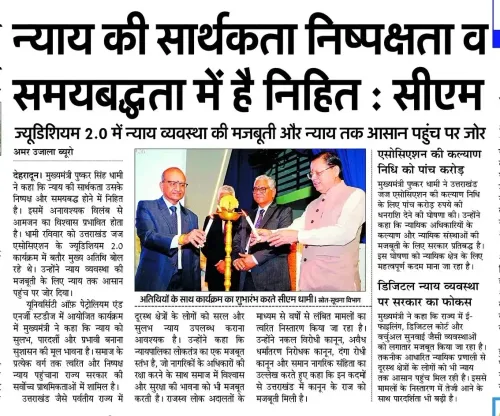
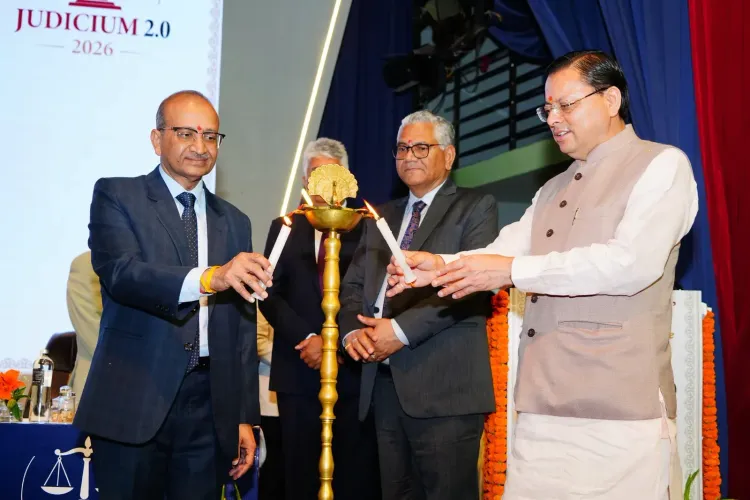
Chief Minister Pushkar Singh Dhami addressed the Uttarakhand Judges Association annual conference 'Judicium 2.0' at UPES Bidholi on 7 June 2026, calling inclusive and timely justice a governance priority and announcing Rs 5 crore for the association's welfare fund.
Key Takeaways
CM Pushkar Singh Dhami attended 'Judicium 2.0: Inclusion, Access and Strengthening' at UPES Bidholi on 7 June 2026 .
He announced Rs 5 crore for the Uttarakhand Judges Association welfare fund.
Dhami stressed that geographical and economic barriers must not prevent access to justice, especially in Uttarakhand's remote hill areas.
He cited the Bharatiya Nyaya Sanhita , e-Courts and the National Judicial Data Grid as landmark modernisation steps under PM Modi .
Uttarakhand's Uniform Civil Code , enacted in February 2024 , was highlighted as a historic step for equal justice and women's empowerment.
Uttarakhand High Court Chief Justice Manoj Kumar Gupta and several High Court judges were present at the conference.
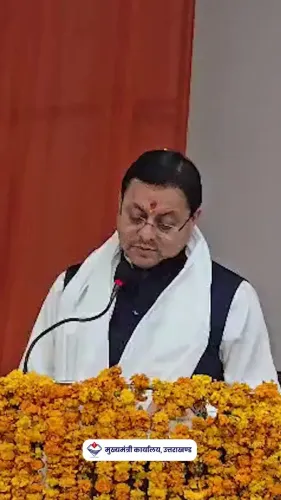
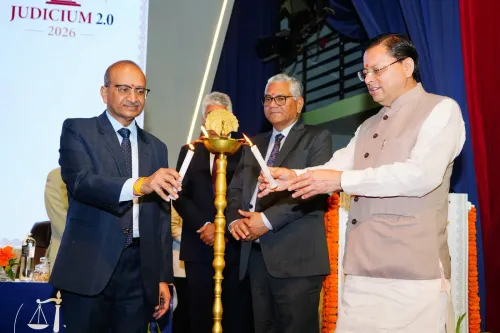
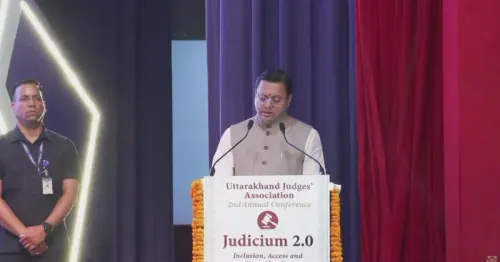
Chief Minister Pushkar Singh Dhami attended the annual conference of the Uttarakhand Judges Association, themed 'Judicium 2.0: Inclusion, Access and Strengthening', held at UPES Bidholi on Sunday, 7 June 2026. At the event, Dhami underscored that making the justice system more inclusive, accessible, transparent and effective is the core spirit of good governance, and announced a welfare fund contribution of Rs 5 crore for the association.
Context
Addressing the gathering, CM Dhami stated that ensuring swift and impartial justice for every section of society is among the state government's highest priorities. He said, 'nyay vyavastha ko adhik samaveshi, sulabh, pardarshi evam prabhavi banana sushasan ki mool bhavna hai' — 'making the justice system more inclusive, accessible, transparent and effective is the fundamental spirit of good governance.' He noted that geographical or economic circumstances must not become barriers to accessing justice, a concern especially acute in a mountainous state like Uttarakhand where remote communities often face distance-related hardships.
The Chief Minister emphasised that unnecessary delays in justice erode public trust, and that judicial processes must be made more effective and time-bound through sustained effort. He described the judiciary as a strong pillar of democracy that safeguards citizens' rights and reinforces a sense of security and trust in society.
Policy Backdrop
CM Dhami credited the leadership of Prime Minister Narendra Modi for several landmark steps to modernise the country's judicial architecture. He specifically cited the Bharatiya Nyaya Sanhita, the Bharatiya Nagarik Suraksha Sanhita and the Bharatiya Sakshya Adhiniyam — the three new criminal codes enacted by Parliament in December 2023 to replace colonial-era laws — as transformative reforms. He also highlighted technology-driven initiatives including e-Courts, the National Judicial Data Grid, Digital Case Management and Video Conferencing as tools that have made judicial processes significantly more effective.
At the state level, Dhami said the government is continuously working to strengthen court infrastructure and expand digital courts, e-filing and virtual hearing systems. He added that Revenue Lok Adalats are being used to resolve long-pending cases quickly and amicably, bringing relief to ordinary citizens.
Stakeholders and Impact
The Chief Minister highlighted several state-specific legislative measures as evidence of a zero-tolerance approach to crime: an anti-cheating law, an anti-illegal conversion law, an anti-riot law, and action against corruption and illegal encroachments. He said these steps have further strengthened the rule of law in Uttarakhand. He also described the state's Uniform Civil Code (UCC) — which made Uttarakhand the first Indian state after independence to enact a common civil code when the bill was passed in February 2024 — as a historic step for women's empowerment and equal justice for all citizens, one that has drawn national attention.
The conference was attended by Uttarakhand High Court Chief Justice Justice Manoj Kumar Gupta, along with Justice Ravindra Maithani, Justice Rakesh Thapliyal, Justice Alok Mehra, Justice Subhash Upadhyay, Justice Siddharth Sah, Registrar General Yogesh Kumar Gupta, and judges from various courts across the state.
What's Next
CM Dhami expressed confidence that 'Judicium 2.0' will play an important role in making the justice system more inclusive, accessible, transparent and effective, and will help realise the vision of a developed and excellent Uttarakhand. The announced Rs 5 crore welfare fund for the Uttarakhand Judges Association, along with the release of the association's souvenir at the event, signals continued state investment in judicial welfare and institutional strengthening. The roll-out of digital courts and e-filing kiosks in the state's remote hill districts in 2026-27 will be a key measure of how the commitments made at Judicium 2.0 translate into ground-level access to justice.
Point of View
He is weaving a coherent law-and-order narrative ahead of any electoral cycle. The Rs 5 crore welfare fund announcement is a tangible gesture of executive goodwill toward the judiciary, reinforcing an institutional partnership. More broadly, this conference reflects a wider federal pattern in which state governments are using judicial-access rhetoric to project responsive governance credentials to hill and tribal constituencies that have historically faced the steepest barriers to courts.
NationPress
21 Oct 2026
Frequently Asked Questions
What is Judicium 2.0 in Uttarakhand?
Judicium 2.0 is the annual conference of the Uttarakhand Judges Association, themed 'Inclusion, Access and Strengthening', held at UPES Bidholi on 7 June 2026 to deliberate on making the state's justice system more inclusive and technology-enabled.
What did CM Dhami announce at Judicium 2.0?
CM Pushkar Singh Dhami announced Rs 5 crore for the Uttarakhand Judges Association welfare fund and released the association's souvenir at the event.
What is Uttarakhand's Uniform Civil Code?
Uttarakhand's Uniform Civil Code, passed in February 2024, made the state the first in India after independence to enact a common civil code, aimed at providing gender-equal personal laws to all citizens regardless of religion.
What are the Bharatiya Nyaya Sanhita and related laws?
The Bharatiya Nyaya Sanhita, Bharatiya Nagarik Suraksha Sanhita and Bharatiya Sakshya Adhiniyam are three new criminal codes enacted by Parliament in December 2023 to replace colonial-era laws such as the IPC, CrPC and Indian Evidence Act.
How is Uttarakhand improving access to justice in remote areas?
The state government is expanding digital courts, e-filing systems and virtual hearings, and using Revenue Lok Adalats to resolve long-pending cases, with further roll-out of e-filing kiosks in remote hill districts planned for 2026-27.