Victoria climate risk: A$57bn infrastructure under threat, rising 25% by 2060s
Synopsis
A$57 billion of Victoria's infrastructure is already in the crosshairs of climate extremes — and that figure is set to grow by a quarter within four decades. With extreme heat exposure set to more than double by 2070 and the 2022 floods alone costing A$3.5 billion, Infrastructure Victoria's report makes the case that adaptation spending is not optional — it is overdue.
Key Takeaways
Infrastructure Victoria identified more than A$57 billion worth of assets currently exposed to climate-related extreme weather.
Total climate risk to infrastructure is projected to rise by nearly 25 per cent over the next four decades .
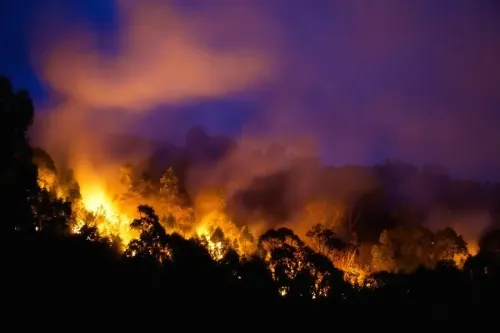
Bushfire exposure is set to grow from A$23 billion to over A$30 billion by 2070 ; flood risk already affects over A$22 billion in assets.
Infrastructure exposed to extreme heat is projected to more than double between 2030 and 2070 .
Extreme weather cost Victoria an average of A$2.7 billion a year in the decade to 2016 ; the 2022 floods alone cost A$3.5 billion .
Victoria's average temperature has risen by 1.2 degrees Celsius since 1910 .
More than A$57 billion worth of infrastructure across the Australian state of Victoria is currently exposed to climate-related extreme weather, according to a report released on Tuesday, 19 May by Infrastructure Victoria, the state's independent infrastructure advisory body. The figure is projected to climb by nearly 25 per cent over the next four decades, raising urgent questions about the resilience of the state's roads, rail, energy grids, and health assets.
Scale of the Risk
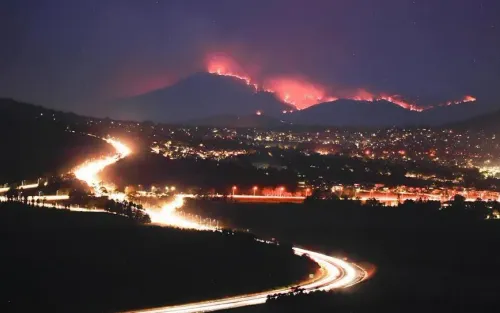
The report assessed A$318 billion worth of assets across Victoria, identifying bushfires, floods, and extreme heat as the three dominant threats. Infrastructure exposed to bushfire risk currently stands at more than A$23 billion, a figure projected to exceed A$30 billion by 2070. Flood risk already affects assets worth over A$22 billion. Most strikingly, infrastructure exposed to extreme heat is projected to more than double between 2030 and 2070.
Roads, Rail, and Energy Most Vulnerable
Road and rail networks are expected to bear the highest damage costs, particularly in the state capital Melbourne and key regional corridors. Energy infrastructure and health assets are also identified as significantly exposed to the compound effects of floods, bushfires, and extreme heat. The geographic concentration of risk around Melbourne — home to the bulk of Victoria's population and economic activity — amplifies the potential economic disruption.
The Cost of Inaction
Extreme weather events already cost Victoria an average of A$2.7 billion a year in the decade to 2016. The 2022 floods alone triggered A$3.5 billion in government spending on relief and recovery — a single-event cost that exceeded the annual average by nearly 30 per cent. Victoria's average temperatures have risen by 1.2 degrees Celsius since 1910, according to the Australian Broadcasting Corporation, underscoring that the climate shift is already measurable and accelerating.
What Infrastructure Victoria Recommends
Infrastructure Victoria said targeted adaptation measures could significantly reduce future damage costs. Recommended interventions include improved drainage maintenance and the adoption of climate-resilient road materials. The body noted that every dollar invested in resilience can yield multiple economic benefits — framing adaptation not as expenditure but as a return-positive investment. Specific disbursement timelines and government commitments were not detailed in the report.
Broader Australian Climate Context
Victoria sits within Australia's temperate southern zone, a region increasingly buffeted by climate variability. Australia spans multiple climate zones — from a tropical north to an arid interior covering roughly 70 per cent of the continent — but the temperate south, where most of the population and infrastructure is concentrated, faces compounding risks from heat and flood cycles. This report is part of a growing body of state-level climate risk assessments that are reshaping infrastructure planning across the country.
Point of View
But the more telling number is the projected 25 per cent rise over four decades — because it signals that risk is compounding faster than current adaptation policy is moving. The 2022 floods, at A$3.5 billion in a single event, already broke the decade-average annual cost of A$2.7 billion. Infrastructure Victoria's call for resilience investment is well-founded, but the report stops short of naming specific funding commitments or accountability mechanisms — a gap that has historically allowed similar assessments to inform policy documents without driving capital allocation. The real question is whether this report shifts budget priorities, or joins a shelf of warnings that preceded the next disaster.
NationPress
7 Oct 2026
Frequently Asked Questions
How much of Victoria's infrastructure is at climate risk?
More than A$57 billion worth of infrastructure in Victoria is currently exposed to climate-related extreme weather, according to a report by Infrastructure Victoria released on 19 May 2025. This figure is projected to rise by nearly 25 per cent over the next four decades.
What are the biggest climate threats to Victoria's infrastructure?
Infrastructure Victoria identified bushfires, floods, and extreme heat as the three greatest risks. Bushfire exposure is projected to grow from A$23 billion to over A$30 billion by 2070, while infrastructure exposed to extreme heat is set to more than double between 2030 and 2070.
Which types of infrastructure are most at risk in Victoria?
Road and rail networks are expected to bear the highest damage costs, particularly around Melbourne and key regional corridors. Energy infrastructure and health assets are also significantly exposed to floods, bushfires, and extreme heat.
What has extreme weather already cost Victoria?
Extreme weather cost Victoria an average of A$2.7 billion a year in the decade to 2016. The 2022 floods alone triggered A$3.5 billion in government spending on relief and recovery — a single-event cost that exceeded the annual average.
What does Infrastructure Victoria recommend to reduce climate damage?
Infrastructure Victoria recommends targeted adaptation measures including improved drainage maintenance and the use of climate-resilient road materials. The body argues that every dollar invested in resilience can generate multiple economic benefits, framing adaptation as a net-positive investment.