Is Violence in Bengal's Beldanga Highlighting a Communal Pattern in Murshidabad District?
Synopsis
The ongoing unrest in Beldanga, West Bengal, following the death of a migrant worker, highlights a troubling trend of communal violence in Murshidabad district. With a history of mob violence and political manipulation, the region's volatile atmosphere raises significant concerns about the future of communal harmony.
Key Takeaways
Mob violence and arson are recurring issues in Murshidabad.
The district has a significant Muslim population, contributing to communal tensions.
Political dynamics play a crucial role in exacerbating the situation.
Recent unrest highlights the need for dialogue and intervention.
Authorities are under pressure to restore peace and stability.
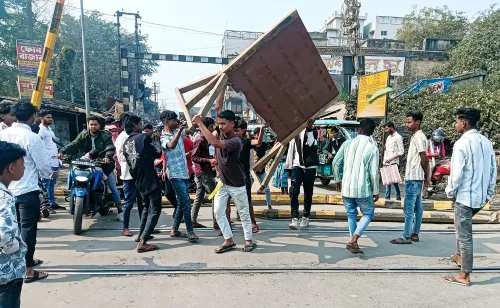
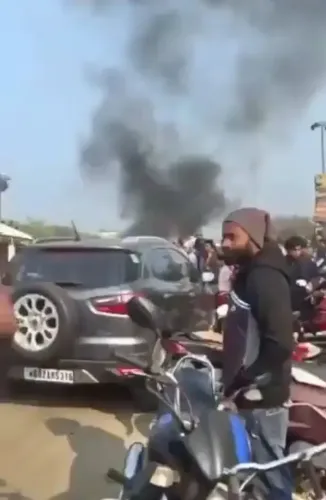
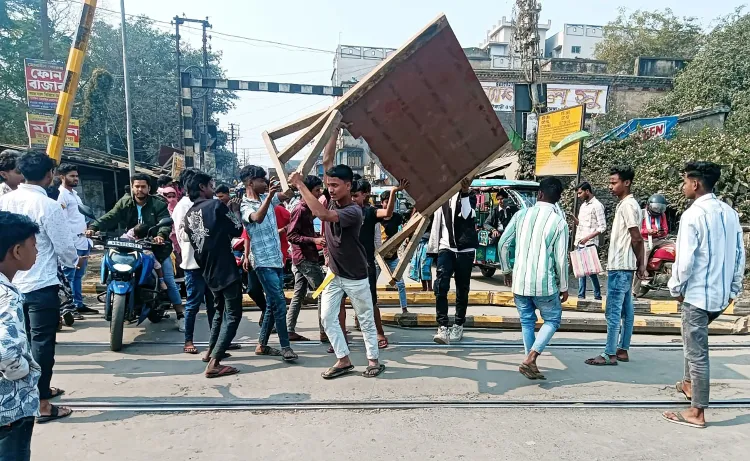
New Delhi, Jan 19 (NationPress) The occurrence of mob violence and arson following communal incidents has become a recurring theme in the Murshidabad district of West Bengal. Recent protests in Beldanga erupted over the death of a migrant worker in Jharkhand, spilling into the weekend.
Notably, former Trinamool MLA Humayun Kabir has proposed a replica of the Babri Masjid for Beldanga, which was heavily fortified on December 6 last year during the laying of its foundation stone.
Riot police and central forces were deployed to monitor the situation, even as images showed individuals carrying bricks to the site. While the construction of a mosque by Humayun Kabir is not the main issue, the choice of the name Babar and the timing of the foundation ceremony, coinciding with the anniversary of the demolition of Ayodhya's disputed structure, is significant.
The district has a Muslim population close to 70 percent, making it a volatile area. In 2019, following the enactment of the Citizenship Amendment Act (CAA) on December 13, violence erupted, with a mob attacking the Beldanga railway station the following day, damaging various infrastructure.
In April of last year, unrest spread across several towns in Murshidabad due to protests against the Waqf (Amendment) Act, 2025. The protests resulted in significant property damage, including homes being set ablaze, leading to the displacement of many Hindu families.
The Waqf protests resulted in multiple fatalities, internet shutdowns, and extensive damage to Hindu properties, prompting the deployment of central forces following court orders. These events heightened communal tensions in adjacent towns, further exacerbating the situation in Beldanga.
The violent protests have established a longstanding divide in West Bengal politics, where mass mobilizations and identity politics have been exploited for electoral advantage.
Opposition parties in West Bengal, particularly the Bharatiya Janata Party (BJP), accuse the administration of tacitly supporting arsonists. They also claim there is a deliberate approach to allow illegal immigrants from Bangladesh, affecting local demographics. Even during their rule from 1977 to 2011, the Left Front allegedly targeted welfare policies to secure minority support, a narrative that resurfaces in current debates about appeasement versus social justice.
Critics of the Mamata Banerjee-led Trinamool Congress accuse the party of engaging in electoral manipulation through welfare initiatives aimed at consolidating minority support. The recent turmoil in Beldanga involved roadblocks, stone-pelting, attacks on journalists, and approximately 30 arrests as police and Rapid Action Force conducted marches to restore order.
The railway station became a target once more, and reports indicated police inaction.
Litigation has been filed in courts seeking the deployment of central forces amid fears of escalating violence. Shops were shuttered, and police patrols intensified while local leaders and opposition figures called for intervention from the governor or central authorities.
Murshidabad has traditionally been a stronghold for the ruling party, with all three Lok Sabha constituencies currently represented by Trinamool MPs. The party secured victories in Murshidabad and Jangipur in the last two parliamentary elections. Baharampur, represented for five consecutive terms by Congress leader Adhir Ranjan Chowdhury, was won by Trinamool’s Yusuf Pathan in the most recent Lok Sabha election.
Residents have voiced concerns about Pathan’s perceived indifference to the community's plight amidst communal turmoil. In Beldanga, the sitting MP was notably absent during the recent violence, while Chowdhury was present, even meeting with the family of the deceased worker.
Out of 20 Assembly segments in these parliamentary constituencies (one seat is in Nadia district), Trinamool won 18 in the 2021 state elections. In the same elections, the Beldanga constituency elected Trinamool’s Hasanuzzaman Sheikh with nearly 54,000 votes against his nearest BJP competitor, Sumit Ghosh. The stark division became evident as the polarisation pushed the 2016 winner, Safiujjaman Sheikh from Congress, into a distant third.
While Congress's vote share plummeted by over 36 percent, the BJP increased its share by more than 14 percent, and Trinamool's share rose by about 23 percent.
Point of View
It is crucial to recognize the complex socio-political landscape in West Bengal. The recurring violence in Murshidabad, particularly in Beldanga, illustrates the urgent need for dialogue among communities and political leaders. Ensuring peace and stability is paramount, and this situation demands immediate attention from authorities to prevent further escalation.
NationPress
11 Oct 2026
Frequently Asked Questions
What caused the recent violence in Beldanga?
The recent violence in Beldanga was triggered by protests following the death of a migrant worker in Jharkhand, which escalated due to underlying communal tensions in the region.
How has the political landscape influenced the unrest in Murshidabad?
The political landscape in Murshidabad has been characterized by identity politics and allegations of electoral manipulation, contributing to the communal tensions that have led to repeated outbreaks of violence.
What are the demographic dynamics in Murshidabad?
Murshidabad has an estimated Muslim population of around 70%, which contributes to its volatile communal atmosphere, especially in the context of political mobilizations.
What measures are being taken to restore order in Beldanga?
Authorities have deployed riot police and central forces to patrol the streets, while local leaders are calling for intervention from higher authorities to address the situation and restore calm.
How have past events shaped the current situation in Murshidabad?
Past events, such as protests against the Citizenship Amendment Act and the Waqf (Amendment) Act, have established a pattern of violence and unrest in the region, heightening communal anxieties.