West Bengal Opposition Demands Government Shift for Fair Elections
Synopsis
In a bold call for change, opposition parties in West Bengal insist on a government transition, asserting that the upcoming Assembly elections must be conducted fairly and peacefully. With concerns over voter eligibility and election integrity surfacing, the political landscape is heating up as the election dates approach.
Key Takeaways
Opposition parties in West Bengal demand a change in government.
They emphasize the need for free and fair elections.
Concerns over voter eligibility and intimidation are prominent.
The Election Commission has announced a two-phase polling schedule.
Over 42 lakh voters face adjudication issues affecting their participation.
Kolkata, March 15 (NationPress) On Sunday, opposition factions in West Bengal demanded a transition in governance, emphasizing the necessity for the Assembly elections to be free, fair, and peaceful.
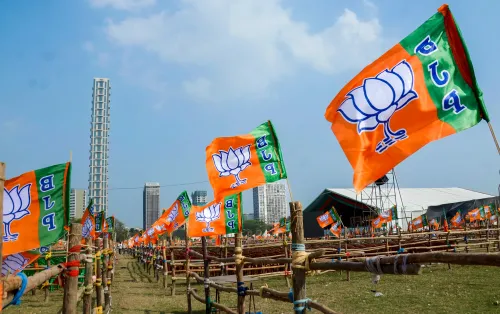
BJP state leader Samik Bhattacharya praised the Election Commission's resolution to conduct the West Bengal Assembly elections in two phases.
"We welcome the two-phase elections in West Bengal. While elections in other states occur without reports of fatalities or violence, West Bengal witnesses targeted aggression from Trinamool Congress affiliates against those voting for the opposition. Here, violence proliferates, and democracy suffers. We urge the people of Bengal to alter this situation. A government change is imperative," Bhattacharya stated during a press interaction.
He expressed confidence that the BJP would secure a government position in West Bengal by May 4, the date of the vote count.
"There's no need to heed the ruling party's claims. The populace is fatigued by TMC's divisive and hateful politics. We are determined to end this. The Trinamool Congress will face consequences for its actions in this Assembly election," added Bhattacharya.
Simultaneously, the CPI(M) criticized the delay in publishing a complete voters' list prior to the election notification.
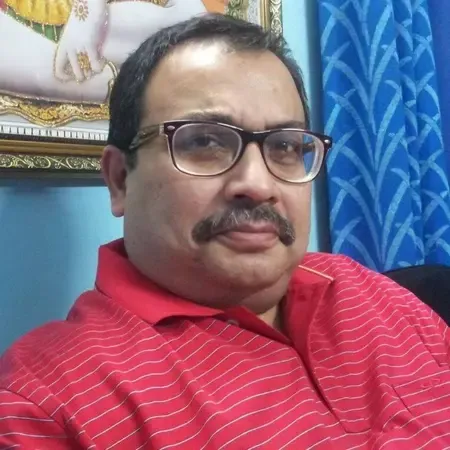
CPI(M) state secretary Md Salim remarked, "Labeling such a substantial number of individuals as ‘D-voters’ lacks legal justification. One is either a voter or not. Initially, a mapping exercise occurred; subsequently, even those who validated their identities during this process faced attempts to exclude their names under various pretenses or were left in uncertainty. Both the central and state governments have faltered in this regard, evidencing that political lackeys have taken over offices like the BDO, SDO, and DM. The BLOs and COs also suffer from indecision."
Challenging the Election Commission's credibility, Salim further stated, "How can a fair, free, and impartial vote be organized when a comprehensive voter list cannot be produced for everyone? The voter list that is prepared lacks fairness, impartiality, and is influenced by communalism, targeting specific regions, religions, booths, and areas to manipulate the voting outcome based on sheer numbers."
He indicated a potential legal challenge to ensure valid voters are included in the supplementary voters' list.
"We will pursue this matter diligently. Our movement aims to safeguard voting rights and reinforce democracy. There will be no politics of division. We have consulted with our legal teams and appeal to all lawyers who value democracy and humanity to join us; our legal professionals will establish volunteer groups spanning from Sub-divisional and District Courts to the High Court and the Supreme Court. We will steadfastly support those under siege. We will fight relentlessly to secure these voting rights," he asserted.
In a conversation with IANS, state Congress leader Ashutosh Chatterjee expressed uncertainty about the voting rights of individuals under adjudication.
"What will happen to the 60 lakh individuals whose names are under adjudication? Today's press conference lacked specific guidelines. No discussions about the law-and-order situation occurred. When will the supplementary voters' list be released? There is no clarity on these critical matters. Is the Election Commission serving as an envoy for the BJP? Why can’t it guarantee impartial elections?" queried Chatterjee.
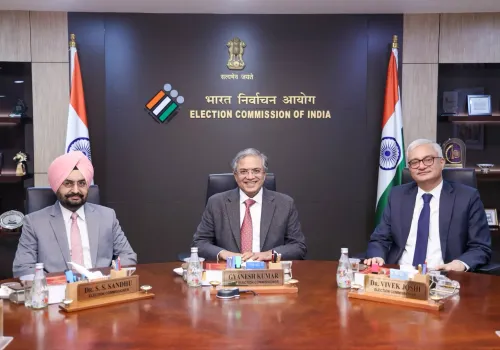
The Election Commission of India (ECI) announced on Sunday a two-phase polling schedule for the 2026 West Bengal Assembly elections, set for April 23 and April 29, despite the uncertainty surrounding over 42 lakh voters referred for judicial adjudication after being classified under the “logical discrepancy” category.
According to data from the Chief Electoral Officer (CEO) for West Bengal, the total number of electors in the state was 7,66,37,529 before the Special Intensive Revision (SIR) of electoral rolls was initiated in November. However, following the finalization of the voters’ list on February 28, excluding those under judicial adjudication, the number of electors decreased to 6,44,52,609.
Point of View
The demand for a change in government in West Bengal highlights critical concerns regarding the integrity of upcoming elections. The opposition's insistence on free and fair voting reflects broader democratic values, and the response from the ruling party will significantly impact political stability in the region.
NationPress
22 Sept 2026
Frequently Asked Questions
What are the main concerns raised by the opposition parties in West Bengal?
The opposition parties are advocating for the elections to be free, fair, and peaceful, expressing worries about voter intimidation and the integrity of the electoral process.
What is the significance of the two-phase election schedule announced by the Election Commission?
The two-phase schedule aims to enhance electoral management and security, but it has raised questions about the readiness and fairness of the election process.
How many voters are currently facing adjudication issues?
Over 42 lakh voters have been referred for judicial adjudication, complicating their eligibility for the upcoming elections.
What actions are the CPI(M) and Congress planning in response to the electoral situation?
Both parties are considering legal actions to ensure valid voters are included and to address concerns over the fairness and accuracy of the voter lists.
What is the overall political climate ahead of the West Bengal Assembly elections?
The political climate is tense, with opposition parties rallying for change and raising significant concerns about the ruling party's practices and the electoral process's integrity.