South-West Pacific hits second-warmest year in 2025 as WMO warns of ocean crisis

Synopsis
The South-West Pacific's oceans hit record-low pH levels and its second-highest temperatures ever in 2025, while Cyclone Senyar — the first tropical cyclone to form in the Strait of Malacca — killed over 1,200 people. A new WMO report frames these not as isolated events but as compounding signals of a region already in climate crisis.
Key Takeaways
The South-West Pacific recorded its second-warmest year on record in 2025 , with temperatures 0.37°C above the 1991–2020 average.
Ocean heat content hit record highs in the upper 700 metres in waters near Australia , the Tasman Sea , and parts of the North Pacific .
Sea levels in the region rose at 3.7 ± 0.03 mm per year between 1999 and 2025 .
Nearly the entire South-West Pacific recorded its lowest surface ocean pH values on record in 2025.
Cyclone Senyar killed more than 1,200 people and affected over 10 million in Indonesia and Malaysia .
The findings were released by the WMO at the Southeast Asia Marine Heatwaves Services Workshop in Singapore .
The South-West Pacific recorded its second-warmest year on record in 2025, with ocean acidification reaching historic lows and sea levels rising steadily, according to the World Meteorological Organization (WMO)'s State of the Climate in the South-West Pacific 2025 report. Released in Singapore during the Southeast Asia Marine Heatwaves Services Workshop, the findings underscore accelerating climate stress on coastal communities, island nations, and marine-dependent economies across the region.
Temperature and Warming Trends
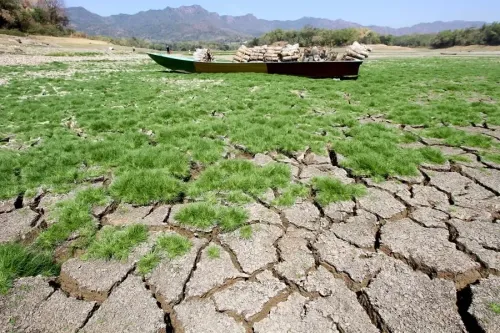
The region's annual mean surface air temperature — averaged across land and ocean — stood at approximately 0.37 degrees Celsius above the 1991–2020 baseline, making 2025 the second-warmest year since records began. Long-term ocean warming has driven more frequent, longer-lasting, and more intense marine heatwaves, with cascading consequences for marine ecosystems and the industries that depend on them.
Marine heatwaves — prolonged periods of extreme oceanic heat — can trigger widespread coral bleaching, fish deaths, disruptions to aquaculture, kelp forest mortality, shifts in species distributions, and harmful algal blooms. In 2025, record-high ocean heat content in the upper 700 metres was observed in waters south of Australia, the southern Tasman Sea, parts of the tropical North Pacific between the Philippines and Hawaii, and locally south of Sumatra Island, Indonesia.
Rising Seas and Ocean Acidification
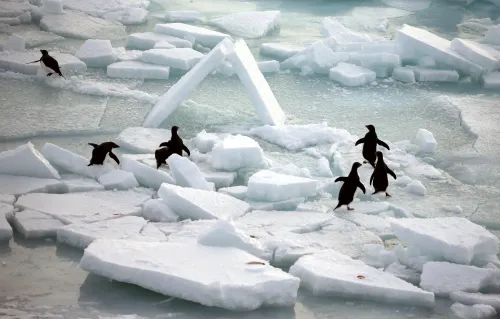
Sea levels across the South-West Pacific rose at an average rate of 3.7 ± 0.03 millimetres per year between 1999 and 2025, the WMO report stated. For low-lying island nations in the region, this trajectory poses an existential threat to land, freshwater supplies, and infrastructure.
Simultaneously, ocean waters continued to acidify as they absorbed increasing amounts of carbon dioxide. Nearly the entire South-West Pacific recorded its lowest surface ocean pH values on record in 2025 — a development that threatens shellfish, coral reefs, and the broader marine food chain.
Extreme Weather and Human Cost
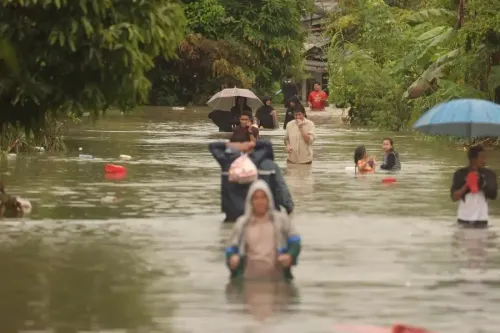
Several countries across the region suffered fatalities and significant economic losses from extreme weather events in 2025, particularly tropical cyclones. The deadliest was Cyclone Senyar — reportedly the first known system to reach tropical cyclone strength in the Strait of Malacca — which affected more than 10 million people in Indonesia and Malaysia and killed more than 1,200, according to reports.
What Experts Are Saying
Armida Salsiah Alisjahbana, executive secretary of the United Nations Economic and Social Commission for Asia and the Pacific, said: 'Across Asia and the Pacific, heat is intensifying multi-hazard risks, intersecting with food systems, public health, infrastructure and oceans, and placing new pressures on health and livelihoods.'
She added: 'Early warning and early action save lives when alerts are timely, messages are trusted and last-mile delivery reaches the vulnerable.'
What Comes Next
The WMO report's findings arrive as regional governments face mounting pressure to invest in early-warning systems, coastal resilience infrastructure, and marine conservation frameworks. With ocean pH at record lows and sea levels on an upward trajectory, the window for preventive action is narrowing — particularly for the Pacific's most vulnerable small island developing states.
Point of View
Record acidification, and rising seas, all in the same year. The emergence of Cyclone Senyar in the Strait of Malacca is a particularly alarming signal: if tropical cyclones are now forming in waters previously too cool or narrow to sustain them, climate models may be underestimating regional risk. For small island developing states in the Pacific, sea-level rise of 3.7 mm per year is not an abstraction — it is a countdown. Regional governments and multilateral bodies have consistently acknowledged these risks without matching them with proportionate investment in early-warning infrastructure or managed retreat planning.
NationPress
6 Oct 2026
Frequently Asked Questions
What did the WMO report find about the South-West Pacific climate in 2025?
The WMO's State of the Climate in the South-West Pacific 2025 report found that the region recorded its second-warmest year on record, with temperatures 0.37°C above the 1991–2020 average. Ocean acidification reached historic lows and sea levels continued to rise at 3.7 mm per year.
What is ocean acidification and why does it matter for the Pacific?
Ocean acidification occurs when seawater absorbs carbon dioxide, lowering its pH. In 2025, nearly the entire South-West Pacific recorded its lowest surface ocean pH values on record, threatening coral reefs, shellfish, and the marine food chains that coastal communities depend on.
What was Cyclone Senyar and how deadly was it?
Cyclone Senyar was reportedly the first tropical cyclone to reach cyclone strength in the Strait of Malacca. It killed more than 1,200 people and affected over 10 million in Indonesia and Malaysia, making it the deadliest extreme weather event in the region in 2025.
How fast are sea levels rising in the South-West Pacific?
Sea levels in the South-West Pacific rose at an average rate of 3.7 ± 0.03 millimetres per year between 1999 and 2025, according to the WMO report. This poses a direct and growing threat to low-lying island nations and coastal communities in the region.
Where was the WMO climate report released and who presented findings?
The report was released in Singapore during the Southeast Asia Marine Heatwaves Services Workshop. Armida Salsiah Alisjahbana, executive secretary of the UN Economic and Social Commission for Asia and the Pacific, highlighted the need for timely early-warning systems to protect vulnerable populations.