Assam Cabinet Approves Milk Processing Unit at Biswanath Chariali
Synopsis
The Assam Cabinet has approved a Milk Processing Unit at Biswanath Chariali under CM Himanta Biswa Sarma's leadership, aiming to boost dairy farmer incomes, add value to milk production and generate youth employment as part of the state's White Revolution push.
Key Takeaways
The Assam Cabinet has approved a Milk Processing Unit at Biswanath Chariali in Biswanath district.
The decision was taken under the leadership of Chief Minister Dr.
Himanta Biswa Sarma and announced on 8 July 2026 .
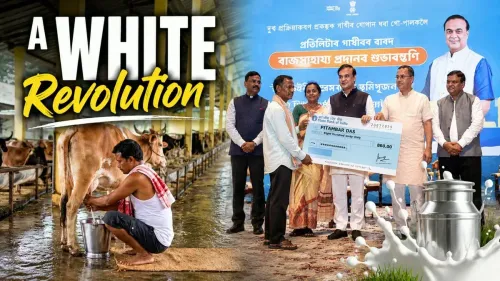
The unit is positioned as part of Assam's White Revolution , a state-level dairy development initiative.
Key stated objectives include strengthening dairy farmer livelihoods , adding value to milk production and creating youth employment .
The move follows a national pattern of state governments establishing district-level processing units to reduce milk wastage and raise farmer price realisation.
Formal project details including capacity, cost and commissioning timeline are yet to be made public.
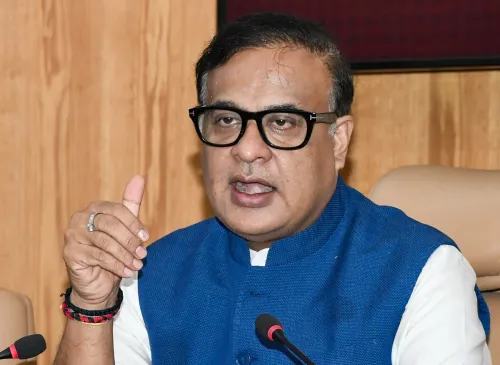
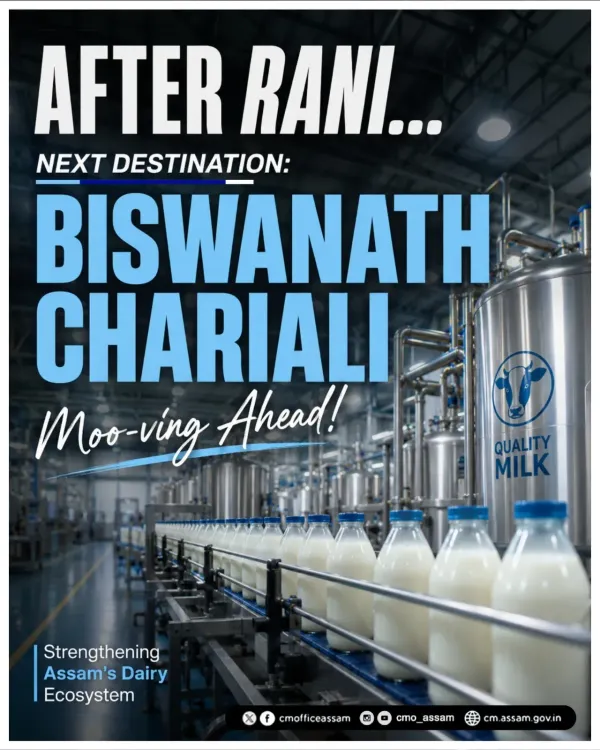
The Chief Minister's Office of Assam announced on Wednesday, 8 July 2026 that the Assam Cabinet, under the leadership of Chief Minister Dr. Himanta Biswa Sarma, has approved the establishment of a Milk Processing Unit at Biswanath Chariali, marking a significant step in the state's ongoing dairy development drive.
Context
The cabinet decision was framed by the Chief Minister's Office as part of Assam's 'White Revolution' — a state-level push to scale up dairy infrastructure and integrate farmers into a more structured milk value chain. The announcement stated the unit will 'strengthen the livelihoods of dairy farmers, add value to milk production and open up new employment opportunities for the youth.'
Biswanath Chariali, a town in Biswanath district in north Assam, has been selected as the site for the facility. The district sits in an agriculturally active belt where livestock rearing forms a significant part of rural household income.
Policy Backdrop
India's dairy sector traces its cooperative backbone to Operation Flood, launched in 1970 by the National Dairy Development Board (NDDB). That programme created the procurement, processing and marketing architecture that transformed India into the world's largest milk producer. State governments have since adapted the cooperative model to local geographies, with district-level processing units seen as a key tool for reducing post-harvest milk wastage and increasing farmer price realisation.
Assam's move fits a broader pattern visible across eastern and north-eastern states, where agro-processing investments are being used to reduce dependence on milk supplies from other regions and to retain more of the dairy value chain within the state. A locally sited processing unit shortens the cold-chain distance, which is particularly important in a geographically diverse state like Assam.
Stakeholders and Impact
Dairy farmers in and around Biswanath district stand to be the most immediate beneficiaries, gaining access to an organised procurement channel that can offer more stable pricing compared to informal local markets. Value-added milk products processed at the unit could also command higher margins, a portion of which can flow back to producers through cooperative or contract-farming arrangements.
The announcement specifically highlighted employment generation for youth, signalling that the facility is expected to create both direct jobs in processing operations and indirect opportunities in logistics, quality testing and ancillary services. Rural non-farm employment in the dairy value chain has been identified nationally as a priority for states with high agricultural labour density.
What's Next
Formal project sanction orders, including the unit's processing capacity, capital outlay and commissioning timeline, are expected to follow the cabinet approval. Observers will watch whether the state pursues technical or procurement partnerships with the NDDB or national dairy cooperatives to support marketing of products from the new facility.
If implemented on schedule, the Biswanath Chariali unit could serve as a template for similar district-level dairy infrastructure across Assam, reinforcing the state government's stated ambition of making the White Revolution a defining pillar of its rural economy strategy.
Point of View
Lending it symbolic weight beyond its immediate footprint. The deliberate mention of youth employment alongside farmer welfare suggests the government is calibrating the messaging to address two distinct voter blocs simultaneously. Whether the unit delivers on those promises will depend on the speed of commissioning and the depth of market linkages established with national dairy bodies.
NationPress
8 Jul 2026
Frequently Asked Questions
What is the Milk Processing Unit approved for Biswanath Chariali?
The Assam Cabinet has approved a new Milk Processing Unit to be set up at Biswanath Chariali in Biswanath district, aimed at adding value to locally produced milk and strengthening dairy farmer incomes.
What is Assam's White Revolution?
Assam's White Revolution is a state-level dairy development initiative inspired by the national Operation Flood programme of 1970, focused on scaling milk production, improving farmer earnings and building cooperative dairy infrastructure across the state.
Who approved the Biswanath Chariali dairy unit?
The Assam Cabinet, led by Chief Minister Dr. Himanta Biswa Sarma, approved the establishment of the Milk Processing Unit at Biswanath Chariali.
How will the Biswanath milk unit help farmers and youth?
The unit is intended to provide dairy farmers with organised procurement channels and better price realisation, while also generating direct and indirect employment opportunities for youth in processing, logistics and allied services.
When was the Biswanath Chariali milk processing unit announced?
The cabinet approval was announced by the Chief Minister's Office of Assam on 8 July 2026 .