Yogi Adityanath: Caste divides, shared faith unites; Deepotsav proof
Synopsis
Ahead of Diwali, UP CM Yogi Adityanath used X posts to deliver a two-pronged message: Deepotsav proves shared faith can dissolve caste barriers, and the BJP government — unlike its predecessors — has backed that philosophy with welfare action, now including ₹1,500 crore in LPG subsidies for nearly two crore UP families.
Key Takeaways
CM Yogi Adityanath posted on X on 3 November 2026 , calling shared faith and culture a unifying force against caste divisions.
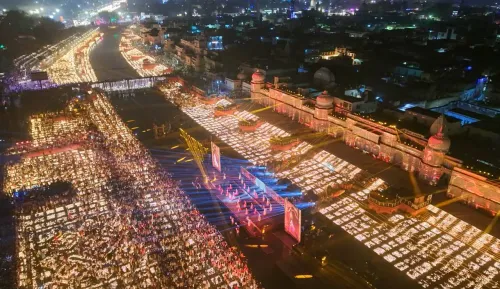
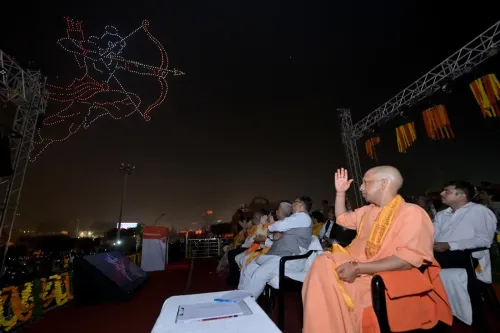
He cited Ayodhya's Deepotsav , launched by the BJP government in 2017 , as a model of inclusive celebration spanning saints, students, sanitation workers, potters, and traders.
Yogi alleged governments before 2017 used caste divisions politically and ignored Uttar Pradesh's cultural heritage.
He announced LPG refill subsidies worth ₹1,500 crore to be distributed among more than 1.89 crore eligible families in UP at a Lucknow event on Diwali.
The subsidies are part of the Pradhan Mantri Ujjwala Yojana , which Yogi credited with improving women's health and dignity in poor households.
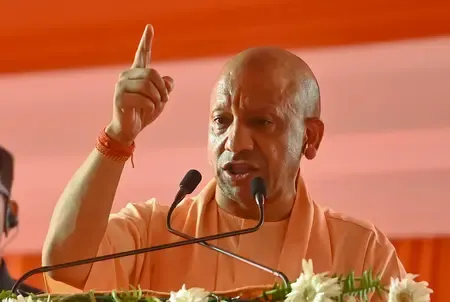
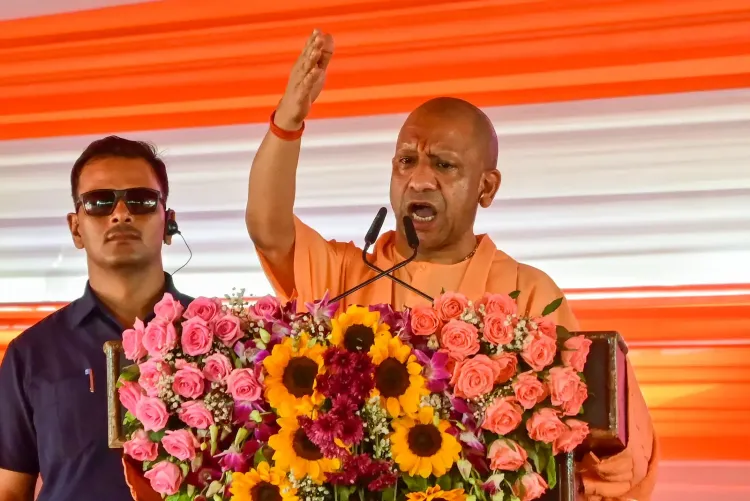
Uttar Pradesh Chief Minister Yogi Adityanath on Tuesday, 3 November 2026, asserted that caste-based divisions fragment society while shared faith and cultural traditions act as a binding force, holding up Ayodhya's Deepotsav as a living example of that social cohesion. The remarks came through posts on social media platform X, ahead of Diwali celebrations across the state.
Deepotsav as a Symbol of Unity
In his post, CM Yogi argued that governments before 2017 had weaponised caste divisions for political gain and, in doing so, neglected the unifying power embedded in Uttar Pradesh's cultural heritage. 'Caste rigidity divides society, while shared faith and culture weave it into a single thread. Shri Ayodhya ji's Deepotsav is a vibrant example of this social unity. Before 2017, governments that made caste divisions the basis of politics completely ignored this cultural force that unites society,' he said.
The Chief Minister credited the Bharatiya Janata Party (BJP)-led government with launching Deepotsav in 2017 and repositioning Ayodhya — also known as Ram Nagari — as a festival space open to every section of society. He noted that under the guidance of religious leaders and Prime Minister Narendra Modi, participants now include saints, students, sanitation workers, potters, and traders, all joining with equal devotion.
'Here, identity is not determined by caste, but by participation. Lamps are lit by different hands, but their light unites the entire society. This is the message of Deepotsav. This is the vision of a harmonious society,' Yogi said.
Attack on the Previous UP Government
In a separate post on X, CM Yogi targeted his predecessors, alleging that a 'family-centric' style of governance had left the struggles of economically weaker households — particularly women — invisible in policy. 'When the government's priority is its own family, the suffering of poor families becomes obscured by the policies of the administration. In the previous government in Uttar Pradesh, the situation was similar. Amid the politics of familism, millions of mothers and sisters were compelled to spend their lives in smoke-filled kitchens,' he wrote.
The remarks are widely read as a pointed reference to the Samajwadi Party government that preceded the BJP's 2017 election victory in the state.
LPG Subsidies Worth ₹1,500 Crore Announced
Highlighting the Pradhan Mantri Ujjwala Yojana, Yogi said the Modi government had prioritised public welfare by extending clean cooking fuel to poor households, thereby improving women's health, convenience, and dignity. He announced that LPG refill subsidies worth ₹1,500 crore would be distributed among more than 1.89 crore eligible families in Uttar Pradesh at an event in Lucknow on the occasion of Diwali.
The Chief Minister reaffirmed that the government's commitment was to ensure no poor family was forced back to traditional, smoke-producing chulhas due to financial constraints. He also thanked Prime Minister Modi for his continued support to women and underprivileged families, and extended advance Diwali greetings to mothers and sisters across the state.
Political Context and What to Watch
Yogi's dual message — cultural unity through Deepotsav and welfare delivery through Ujjwala — follows a pattern the BJP has used ahead of festival seasons: framing its governance record against the alleged failures of opposition-era administrations. This comes amid heightened political attention on Uttar Pradesh, a state whose electoral outcomes have historically shaped national politics. Whether the ₹1,500 crore Diwali subsidy event in Lucknow translates into measurable political capital ahead of future state elections will be closely watched by both allies and opponents.
Point of View
While the ₹1,500 crore Ujjwala announcement grounds that symbolism in a tangible welfare claim. The attack on 'familism' in the previous government is thinly veiled Samajwadi Party-targeting, a reliable BJP playbook ahead of any electoral cycle. What the commentary leaves unaddressed is whether Deepotsav's optics of inclusion have translated into structural changes in caste-based discrimination — a gap critics have consistently flagged. Framing culture as the solvent for caste is politically potent but analytically incomplete: participation in a festival does not dissolve the social hierarchies that operate year-round.
NationPress
3 Nov 2026
Frequently Asked Questions
What did CM Yogi Adityanath say about caste and social unity?
Yogi Adityanath said caste rigidity divides society while shared faith and culture bring people together. He described Ayodhya's Deepotsav as a concrete example of this unity, noting that it draws participants from all walks of life — from sanitation workers to traders — regardless of caste.
What is Deepotsav and when was it started?
Deepotsav is an annual festival of lamps held in Ayodhya, launched by the BJP government in Uttar Pradesh in 2017. It has grown into one of the state's flagship cultural events, coinciding with Diwali and intended to celebrate Ayodhya's heritage as Ram Nagari.
What LPG subsidy did Yogi Adityanath announce for Diwali 2026?
CM Yogi announced LPG refill subsidies worth ₹1,500 crore to be distributed among more than 1.89 crore eligible families in Uttar Pradesh at an event in Lucknow on the occasion of Diwali. The subsidies fall under the Pradhan Mantri Ujjwala Yojana.
Which previous government did Yogi Adityanath target, and why?
Yogi targeted the Uttar Pradesh government that preceded the BJP's 2017 victory — widely understood as a reference to the Samajwadi Party administration. He alleged it followed 'familism' politics and neglected poor families, particularly women who lacked access to clean cooking fuel.
What is the Pradhan Mantri Ujjwala Yojana?
The Pradhan Mantri Ujjwala Yojana is a central government scheme that provides subsidised LPG connections to households below the poverty line, with a focus on women in rural and low-income homes. Yogi credited the scheme with reducing dependence on smoke-producing traditional stoves and improving women's health and dignity in Uttar Pradesh.