Did the Competition Commission of India Log 54 Cases of Anti-Competitive Practices and 149 Merger Filings in 2025?
Synopsis
In a recent update, the Competition Commission of India revealed significant activity in 2025, marking 54 cases of anti-competitive practices and 149 merger filings. This development indicates a robust regulatory environment aimed at fostering fair competition in the market. Stay informed about the implications of these changes.
Key Takeaways
54 cases of anti-competitive practices logged in 2025.
149 merger filings received by CCI.
New reforms aim to streamline approval processes.
Green Channel route allows for expedited approvals .
Market Study on AI highlights competition concerns .
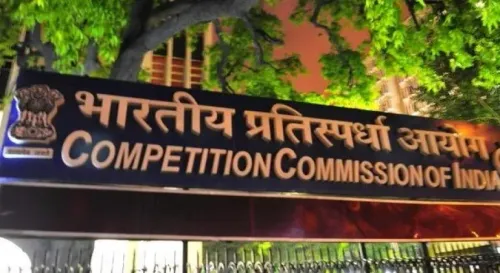
New Delhi, Feb 9 (NationPress) The Competition Commission of India (CCI) has recorded 54 cases concerning anti-competitive practices and has received 149 filings for mergers and acquisitions in 2025, as disclosed to Parliament on Monday.
The Commission has delivered final decisions on 38 antitrust issues and processed 146 merger notifications, stated Harsh Malhotra, the Minister of State for Corporate Affairs, in a written response during the Lok Sabha session.
Furthermore, to enhance the efficiency, transparency, and speed of processes before the Commission, the Competition (Amendment) Act, 2023 has implemented progressive reforms, decreasing the approval timeframe for combinations from 210 days to 150 days. It also introduced a settlement and commitment framework aimed at expediting the resolution of competition cases.
As per the minister, various Rules and Regulations have been notified by the government to facilitate the implementation of recent competition law reforms under the Competition (Amendment) Act, 2023.
In terms of penalty assessment, the Act stipulates that the calculation will be based on the global turnover of the individual or organization involved, he noted.
Importantly, the Green Channel mechanism established under the Act allows for faster approval of combinations through deemed approval upon submission of notice to the CCI, thus promoting quicker resolution of competition issues.
The minister also shared that a 'Market Study on AI and Competition' was conducted to analyze critical AI systems and markets/ecosystems, including stakeholders, crucial inputs/resources, value chains, market structures, and competition parameters.
This study highlighted significant competition challenges such as high upfront costs leading to concentration in the AI value chain, ecosystem lock-in, and switching costs, risks of algorithmic collusion due to AI-driven pricing algorithms and automated business strategies; self-preferencing across the AI tech stack, and AI-enabled price discrimination utilizing consumer data.
The findings suggest self-auditing of AI systems for competition compliance by businesses; enhanced transparency and reduction of information asymmetry; targeted advocacy and capacity building by the CCI; continuation of governmental policy initiatives; and inter-regulatory coordination alongside international collaboration, as per Malhotra.
Point of View
The recent activities and reforms by the Competition Commission of India highlight a proactive approach towards ensuring fair competition in the market. Such measures not only aim to protect consumer interests but also foster a healthy business environment. As the nation progresses, it's essential to maintain transparency and efficiency in competition law enforcement.
NationPress
25 Oct 2026
Frequently Asked Questions
What is the Competition Commission of India?
The Competition Commission of India (CCI) is a statutory body responsible for enforcing the Competition Act, 2002, aimed at promoting and sustaining competition in the Indian market.
What were the key findings of the Market Study on AI and Competition?
The study identified significant competition concerns, including high upfront costs, risks of algorithmic collusion, and AI-enabled price discrimination, highlighting the need for compliance and transparency.
How has the Competition (Amendment) Act, 2023 changed merger approvals?
The Act has reduced the approval timeframe for mergers and acquisitions from 210 days to 150 days, enhancing efficiency in regulatory processes.