CCI Chair Ravneet Kaur Warns Against AI-Driven Anti-Competitive Practices
Synopsis
As AI technology proliferates, CCI Chair Ravneet Kaur warns of potential anti-competitive practices, urging companies to self-audit their systems. The regulator is committed to ensuring fair competition in this evolving landscape.
Key Takeaways
CCI's readiness to tackle AI-related anti-competitive practices.
Identified risks include algorithmic collusion and price discrimination.
Significant resolution rate of antitrust cases by the CCI.
Encouragement for companies to perform self-audits.
Proactive merger control approach focusing on solutions.
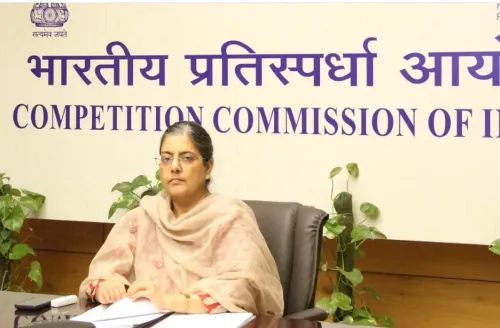
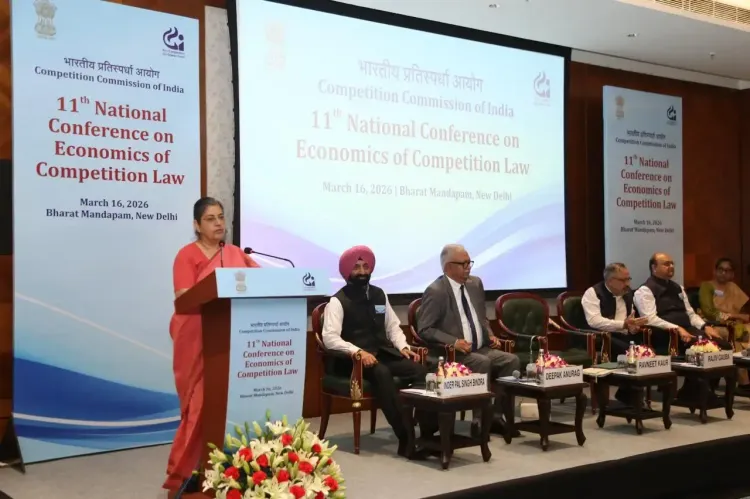
New Delhi, March 16 (NationPress) - The Competition Commission of India (CCI), which oversees fair trade in the country, is ready to intervene if any anti-competitive practices arise in the realm of artificial intelligence (AI), as stated by Chairperson Ravneet Kaur on Monday.
During her address at the 11th National Conference on the Economics of Competition Law in New Delhi, Kaur highlighted that the antitrust body has pinpointed several potential threats within the AI sector, such as concentration along the AI value chain, algorithmic collusion, price discrimination, and a notable lack of transparency in AI applications.
"We have discerned possible anti-competitive behaviors in AI, which include concentration in the AI value chain, algorithm-driven collusion, discriminatory pricing, and opacity in AI applications," Kaur remarked.
She further mentioned that the CCI is vigilantly observing trends across various industries, including sports, civil aviation, liquor, and paints.
Kaur emphasized the importance for companies utilizing AI systems to conduct frequent self-assessments to prevent any concealed anti-competitive consequences.
In a market study published in October 2025, the CCI reiterated the critical need for organizations to evaluate their AI systems to preemptively address any competition-related issues, all while the regulator enhances its technical expertise and infrastructure to tackle new challenges.
"Stakeholders must perform self-audits to ensure that, at the point of AI application deployment, no hidden anti-competitive effects exist, whether they arise knowingly or unintentionally," the CCI Chairperson stated.
As per Kaur, the swift expansion and integration of AI technology have not only amplified competition but also triggered worries about data monopolies, algorithm-induced collusion, and pricing strategies.
The CCI has resolved around 90% of the antitrust cases it has received to date. "Of the 1,360 antitrust cases we've handled, 1,290 have been concluded," Kaur noted.
On the subject of merger regulations, Kaur mentioned that the CCI employs a proactive and solution-focused strategy.
"Our Commission aims for a solution-oriented approach; we are not inclined to block mergers but instead seek voluntary alterations to mitigate competition-related concerns," she explained.
Point of View
It is essential to recognize the proactive stance of the CCI in regulating AI technologies. By encouraging self-audits and monitoring sector developments, the CCI showcases its commitment to maintaining fair competition and addressing emerging challenges effectively.
NationPress
1 Oct 2026
Frequently Asked Questions
What actions is the CCI taking regarding AI?
The CCI is prepared to intervene against any anti-competitive practices in AI, as indicated by Chairperson Ravneet Kaur.
What potential risks in AI has the CCI identified?
The CCI has identified risks including concentration in the AI value chain, algorithmic collusion, price discrimination, and lack of transparency.
How many antitrust cases has the CCI resolved?
The CCI has resolved approximately 90% of the antitrust cases, concluding 1,290 out of 1,360 received cases.
What is the CCI's approach to mergers?
The CCI employs a solution-oriented approach, focusing on voluntary modifications rather than blocking mergers.
Why is self-auditing important for companies using AI?
Self-auditing is crucial to ensure that AI applications do not inadvertently lead to hidden anti-competitive outcomes.