SEBI study: 88.5% of F&O traders under 30 lost money in FY26
Synopsis
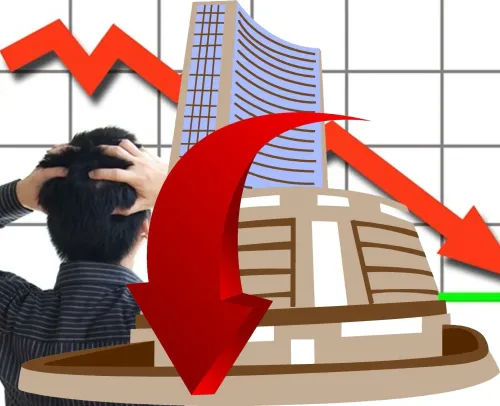
SEBI's latest study reveals that nearly 9 in 10 F&O traders under 30 lost money in FY26 — and the average loss per trader actually rose even as total losses fell. With ₹3.85 lakh crore wiped out over five years and low-income traders leveraging 75 times their portfolio value, the data makes the strongest regulatory case yet for restricting retail access to equity derivatives.
Key Takeaways
88.5 per cent of individual F&O traders below age 30 incurred losses in FY26 , according to a SEBI study.
Traders under 30 made up 43 per cent of the individual trader base; those earning under ₹5 lakh annually bore 53 per cent of aggregate losses.
Average loss per individual trader rose 2.4 per cent to ₹1.17 lakh in FY26, even as total losses fell 18 per cent to ₹91,685 crore .
Active individual traders in the Equity Derivatives Segment dropped 18 per cent to 87.5 lakh — the first such decline since FY16 .
B30 city traders accounted for 67 per cent of individual derivatives participants and 58 per cent of retail losses.
Cumulative individual losses in equity derivatives over FY22–FY26 totalled ₹3.85 lakh crore .
A new study by the Securities and Exchange Board of India (SEBI) has found that 88.5 per cent of individual traders below the age of 30 incurred losses in futures and options (F&O) trading in FY26, laying bare the acute financial risks young retail investors face in India's equity derivatives market. The findings, released on 20 August, come as regulators intensify scrutiny of retail participation in leveraged segments.
Who Is Losing — and How Much
Traders under 30 accounted for 43 per cent of the entire individual trader base in FY26, making youth the single largest demographic in the F&O segment. Separately, 73 per cent of all individual traders reported annual incomes below ₹5 lakh, and this lower-income cohort bore 53 per cent of the aggregate losses recorded during the year.
SEBI noted that low-income traders remained disproportionately active, with their trading intensity reaching 75 times their portfolio value — a level of leverage that amplifies both gains and, more commonly, losses. The aggregate net losses of individual traders fell 18 per cent to ₹91,685 crore in FY26, down from ₹1.12 lakh crore in FY25. However, the average loss per trader rose 2.4 per cent to ₹1.17 lakh, indicating that while fewer traders participated, those who did lost more on average.
The Geographic Spread of Losses
The study reveals that retail derivatives losses are not confined to India's financial capitals. Traders from B30 cities — locations beyond India's top 30 financial centres — constituted 67 per cent of individual derivatives traders and absorbed 58 per cent of total retail derivatives losses. At the state level, Maharashtra, Gujarat, and Uttar Pradesh together accounted for 41 per cent of net losses incurred by individual traders, reflecting the wide geographic reach of F&O participation.
A Decade-High Reversal in Trader Numbers
The Equity Derivatives Segment (EDS) recorded its first year-on-year decline in active individual traders since FY16. Active individual traders dropped 18 per cent to 87.5 lakh in FY26, from 106.2 lakh in FY25. New entrants fell even as the pace of exits accelerated — a pattern consistent with loss-driven attrition rather than a voluntary pullback. This comes amid SEBI's ongoing regulatory tightening, including revised lot-size norms and stricter expiry-day rules introduced in late FY25.
Five-Year Damage: ₹3.85 Lakh Crore in Cumulative Losses
Over the five-year period from FY22 to FY26, individual traders cumulatively lost ₹3.85 lakh crore in equity derivatives — a figure that contextualises the scale of wealth destruction in a segment that regulators have repeatedly flagged as unsuitable for most retail participants. Notably, this loss pool accumulated even as India's equity benchmarks broadly trended upward over the same period, underlining that F&O losses are structural, not merely cyclical.
What Comes Next
SEBI's findings are expected to inform further regulatory action on F&O access for retail investors. Industry observers anticipate potential measures around income-based eligibility thresholds, mandatory risk disclosure at the point of trade, and stricter broker-level guardrails. The regulator has not yet announced follow-on steps, but the data provides a clear empirical basis for intervention.
Point of View
But the more telling detail is that average losses rose even as aggregate losses fell. Fewer traders participated, yet those who stayed in lost more: classic loss-chasing behaviour in a leveraged market. SEBI has now published three successive studies pointing to the same structural problem, yet retail F&O access remains largely unrestricted. The ₹3.85 lakh crore in five-year cumulative losses is not a market anomaly — it is a policy failure in slow motion. The B30 city data is particularly alarming: derivatives losses are now a small-town phenomenon, reaching populations with little financial cushion and limited recourse. The regulator has the evidence; what it lacks is the political will to act decisively on eligibility thresholds.
NationPress
20 Aug 2026
Frequently Asked Questions
What did the SEBI study on F&O trading in FY26 find?
The SEBI study found that 88.5 per cent of individual traders under 30 lost money in futures and options trading in FY26. Aggregate retail losses fell 18 per cent to ₹91,685 crore, but the average loss per trader rose 2.4 per cent to ₹1.17 lakh.
How much have retail traders lost in F&O over the past five years?
Individual traders cumulatively incurred losses of ₹3.85 lakh crore in the equity derivatives segment between FY22 and FY26, according to SEBI data.
Why are low-income traders particularly at risk in F&O markets?
SEBI found that traders with annual incomes below ₹5 lakh traded at an intensity of 75 times their portfolio value, a level of leverage that magnifies losses. This group accounted for 53 per cent of aggregate retail losses in FY26 despite representing 73 per cent of the trader base.
Which states and cities recorded the highest F&O losses?
Maharashtra, Gujarat, and Uttar Pradesh together contributed 41 per cent of net individual trader losses. Traders from B30 cities — beyond India's top 30 financial centres — made up 67 per cent of individual derivatives participants and bore 58 per cent of total retail losses.
Has the number of F&O traders in India changed?
Yes. Active individual traders in the Equity Derivatives Segment fell 18 per cent to 87.5 lakh in FY26 from 106.2 lakh in FY25 — the first year-on-year decline since FY16, driven by rising exits and fewer new entrants.