Army Hospital R&R commissions Ring Gantry Linear Accelerator for cancer care
Synopsis
India's premier military hospital, AHRR in New Delhi, has commissioned a Ring Gantry-based Linear Accelerator — bringing VMAT, IMRT, SBRT, and Stereotactic Radiosurgery under one roof for armed forces patients. It is the latest in a string of medical firsts at AHRR, a hospital that has quietly become one of India's most technologically advanced government healthcare institutions.
Key Takeaways
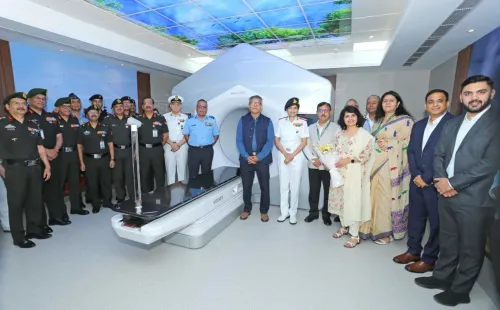
Army Hospital Research and Referral (AHRR) , New Delhi , commissioned a Ring Gantry-based Linear Accelerator on 25 May .
The system supports VMAT, IMRT, IGRT, SBRT , and Stereotactic Radiosurgery — enabling precise tumour-targeted radiation.
The new equipment replaces a decommissioned predecessor and is described by the Ministry of Defence as a significant upgrade for Armed Forces Medical Services (AFMS) .
Other AFMS oncology centres are being upgraded in a phased manner , according to official statements.
AHRR performed India's first 3D Flex Aqueous Angiography with iStent in 2025 and became the first government hospital in India to use the ALLY Robotic Cataract System in August 2025 .
The Department of Radiation Oncology at Army Hospital Research and Referral (AHRR), New Delhi, has commissioned a Ring Gantry-based Linear Accelerator, significantly upgrading cancer treatment capabilities for serving military personnel, veterans, and their dependents, according to an official statement issued on Monday, 25 May. The Ministry of Defence said the new system is expected to substantially enhance in-house radiotherapy capacity at the hospital.
What the New Equipment Offers
The Ring Gantry-based Linear Accelerator is capable of delivering a range of advanced radiotherapy techniques, including Volumetric Modulated Arc Therapy (VMAT), Intensity-Modulated Radiation Therapy (IMRT), Image-Guided Radiation Therapy (IGRT), Stereotactic Body Radiation Therapy (SBRT), and Stereotactic Radiosurgery (SRS). These modalities allow clinicians to deliver highly precise doses of radiation directly to tumour sites while minimising exposure to surrounding healthy tissue — a critical factor in improving patient outcomes and reducing treatment side effects.
Replacing Outdated Infrastructure
According to the Ministry of Defence statement, the newly inducted equipment represents a substantial upgrade over the previous Linear Accelerator used within the Armed Forces Medical Services (AFMS), which has since been decommissioned. The induction is described as a key step in the broader modernisation of oncology services across AFMS. Officials noted that other oncology centres under AFMS are also being upgraded in a phased manner, signalling a sustained institutional push to bring military healthcare in line with contemporary standards.
AHRR's Growing Record of Medical Firsts
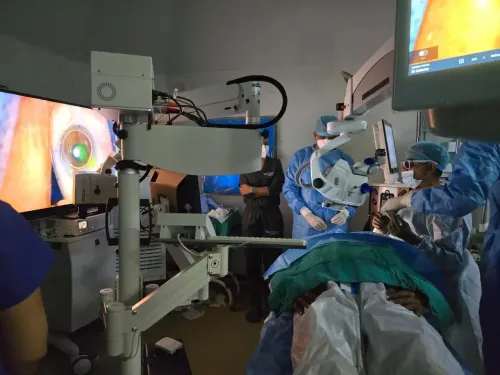
The commissioning adds to a growing list of medical milestones at AHRR. In 2025, the hospital's Ophthalmology Department made headlines for performing India's first-ever 3D Flex Aqueous Angiography with iStent — a procedure that combined advanced intraoperative imaging with minimally invasive glaucoma surgery, setting a new benchmark in glaucoma care. In August 2025, AHRR became the first government institution in India and the second in South Asia to perform Robotic Custom Laser Cataract Surgery using the ALLY Adaptive Cataract Treatment System, marking its entry into femtosecond laser-assisted, computer-guided eye surgery.
Why This Matters for Military Healthcare
AHRR serves a high patient load comprising active-duty service members, ex-servicemen, and their families — a population that has historically had limited access to cutting-edge oncology care within the military healthcare system. The addition of a Ring Gantry Linear Accelerator brings the hospital's radiation oncology capabilities closer to those available at leading civilian cancer centres. This comes amid a wider national conversation about improving specialised healthcare access for armed forces personnel, and the upgrade is likely to reduce referrals to external facilities, easing both cost and logistical burden on patients.
Point of View
Or whether the upgrades remain concentrated at the flagship institution. The phased rollout language in the official statement is encouraging but vague; concrete timelines and facility-level targets would give veterans and serving personnel across India a clearer picture of when they can expect equivalent access.
NationPress
9 Oct 2026
Frequently Asked Questions
What is the Ring Gantry-based Linear Accelerator commissioned at AHRR?
It is an advanced radiotherapy machine installed in the Radiation Oncology Department at Army Hospital Research and Referral, New Delhi, capable of delivering precision cancer treatments including VMAT, IMRT, IGRT, SBRT, and Stereotactic Radiosurgery. It replaces older equipment that has been decommissioned.
Who benefits from the new Linear Accelerator at Army Hospital R&R?
The equipment is intended to serve serving military personnel, veterans, and their dependents who receive treatment at AHRR. It is expected to increase in-house treatment capacity and reduce the need for referrals to external facilities.
How does the new radiotherapy system improve cancer treatment?
The Ring Gantry Linear Accelerator delivers radiation with high precision directly to tumour sites while minimising exposure to surrounding healthy tissue, which can improve treatment outcomes and reduce side effects compared to older radiotherapy systems.
Is AFMS upgrading other hospitals as well?
According to the Ministry of Defence, other oncology centres under the Armed Forces Medical Services are also being upgraded in a phased manner, though specific timelines and facility names were not detailed in the official statement.
What other medical milestones has AHRR achieved recently?
In 2025, AHRR performed India's first 3D Flex Aqueous Angiography with iStent for glaucoma care. In August 2025, it became the first government hospital in India and second in South Asia to perform Robotic Custom Laser Cataract Surgery using the ALLY Adaptive Cataract Treatment System.