Army Hospital Delhi commissions ring gantry Linear Accelerator for cancer care
Synopsis
The Army Hospital (R&R) in New Delhi has inducted a ring gantry-based Linear Accelerator — capable of five advanced radiotherapy modalities — marking the most significant upgrade to military cancer care in recent years. With older equipment decommissioned and a phased rollout planned across all AFMS oncology centres, this signals a structural shift in how India's armed forces deliver cancer treatment to serving personnel and veterans.
Key Takeaways
Army Hospital (Research and Referral) , New Delhi, commissioned a ring gantry-based Linear Accelerator on 25 May 2025 .
The machine supports five advanced techniques: VMAT, IMRT, IGRT, SBRT, and Stereotactic Radiosurgery .
Defence Secretary Rajesh Kumar Singh presided over the commissioning ceremony.
Previous tumour-screening equipment at the hospital has been decommissioned .
Other AFMS oncology centres are being upgraded in a phased manner, with the technology set to be rolled out across armed forces hospitals.
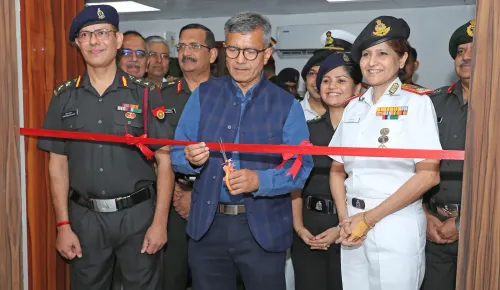
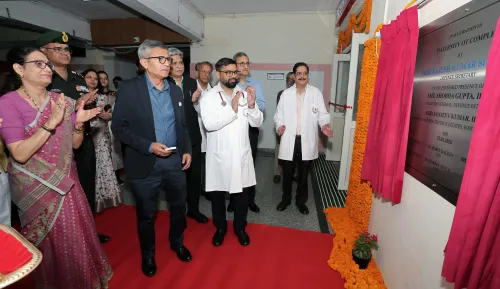
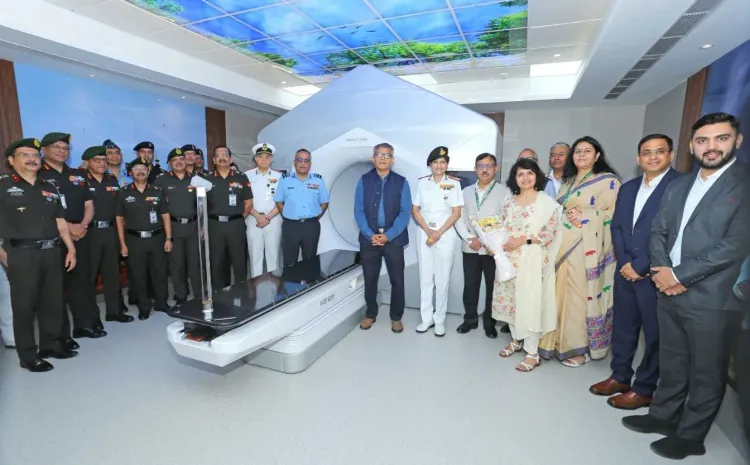
The Army Hospital (Research and Referral) in New Delhi has commissioned a ring gantry-based Linear Accelerator in its Department of Radiation Oncology, marking a significant upgrade to cancer care services for serving military personnel, veterans, and their dependents. The machine was formally inducted on Monday, 25 May, in the presence of Defence Secretary Rajesh Kumar Singh.
What the New Machine Delivers
According to an official statement, the state-of-the-art Linear Accelerator is capable of delivering a full suite of modern radiotherapy techniques, including Volumetric Modulated Arc Therapy (VMAT), Intensity-Modulated Radiation Therapy (IMRT), Image-Guided Radiation Therapy (IGRT), Stereotactic Body Radiation Therapy (SBRT), and Stereotactic Radiosurgery (SRS).
'It enables precise delivery of radiation to tumour sites while minimising exposure to surrounding normal tissues, thereby supporting improved treatment outcomes and patient care,' the official statement noted. The previous equipment used for tumour screening and scanning has been simultaneously decommissioned.
Who Was Present at the Commissioning
The ceremony was attended by Director General, Armed Forces Medical Services (AFMS), Surgeon Vice Admiral Arti Sarin, Commandant of Army Hospital (R&R), Lieutenant General Avinash Das, and other senior officials. The high-level attendance underscores the strategic importance the armed forces are placing on modernising their oncology infrastructure.
Broader Upgrade Across AFMS
The induction at Army Hospital (R&R) is not a standalone development. Officials confirmed that other oncology centres under the Armed Forces Medical Services are being upgraded in a phased manner. 'The induction marks a step towards modernisation of oncology services within AFMS. Other oncology centres under AFMS are also being upgraded in a phased manner,' an official said.
This comes amid a wider push by the defence establishment to reduce dependence on civilian tertiary-care referrals and build in-house capacity for complex treatments. The Linear Accelerator procurement is expected to be replicated across various AFMS-run medical hospitals.
Impact on Patients
The new system is designed to handle the hospital's significant patient load more effectively, offering precision radiotherapy that was previously unavailable in-house. Serving personnel, veterans, and their families — who rely on the Army Hospital (R&R) as a premier referral centre — stand to benefit most directly from faster access to advanced treatment without external referrals.
Point of View
But the more consequential detail is the phased AFMS-wide rollout. For decades, military personnel requiring advanced radiotherapy were routed to civilian institutions — a logistical and financial burden on both patients and the system. If the phased upgrade holds to schedule, it could meaningfully reduce that dependency. The test will be execution: AFMS has the intent, but procurement timelines across defence medical infrastructure have historically slipped. Whether this becomes a genuine capability shift or a flagship installation with slow follow-through deserves close monitoring.
NationPress
24 Sept 2026
Frequently Asked Questions
What is the ring gantry-based Linear Accelerator commissioned at Army Hospital Delhi?
It is a state-of-the-art radiotherapy machine commissioned at the Army Hospital (Research and Referral) in New Delhi on 25 May 2025. It delivers advanced cancer treatments including VMAT, IMRT, IGRT, SBRT, and Stereotactic Radiosurgery, enabling precise radiation delivery to tumours while protecting surrounding healthy tissue.
Who will benefit from the new Linear Accelerator at Army Hospital (R&R)?
Serving military personnel, veterans, and their dependents who rely on Army Hospital (R&R) as a premier referral centre will benefit directly. The machine is expected to expand in-house treatment capacity and reduce the need for external referrals for advanced radiotherapy.
Which senior officials attended the commissioning ceremony?
Defence Secretary Rajesh Kumar Singh, DG AFMS Surgeon Vice Admiral Arti Sarin, and Commandant of Army Hospital (R&R) Lieutenant General Avinash Das were present at the commissioning on 25 May 2025.
Will other armed forces hospitals also get this technology?
Yes. Officials confirmed that the procurement marks a phased upgrade across Armed Forces Medical Services oncology centres. The Linear Accelerator is expected to be implemented at various other AFMS-run medical hospitals in a phased manner.
What happened to the old equipment at Army Hospital (R&R)?
The previous equipment used for tumour screening and scanning has been decommissioned as part of the transition to the new ring gantry-based Linear Accelerator.