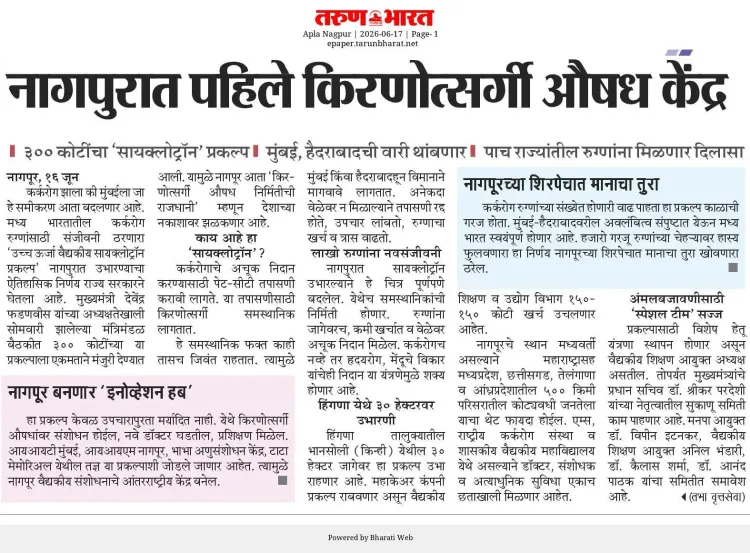
CM Fadnavis: Nagpur to get Maharashtra's first radiopharmaceutical centre
Synopsis
Maharashtra's Chief Minister's Office has announced that Nagpur will host the state's first radiopharmaceutical drug centre, bringing nuclear medicine diagnostics and isotope-based cancer therapy to the Vidarbha region and reducing patients' dependence on Mumbai for advanced treatment.
Key Takeaways
Nagpur will host Maharashtra's first radiopharmaceutical drug centre , as announced by the CMO on 17 June 2026 .
The facility will support nuclear medicine diagnostics (PET/SPECT imaging) and isotope-based cancer therapies for patients in the Vidarbha region.
The announcement was made by the Chief Minister's Office and tagged CM Devendra Fadnavis , indicating high-level political backing.
The move aligns with Maharashtra's State Cancer Care Policy (2023) , which prioritised nuclear medicine expansion outside Mumbai.
Regulatory clearance from the Atomic Energy Regulatory Board (AERB) and supply-chain agreements with national isotope producers are key next steps.
The centre mirrors national efforts by the Department of Atomic Energy to decentralise radioisotope supply to tier-2 cities.
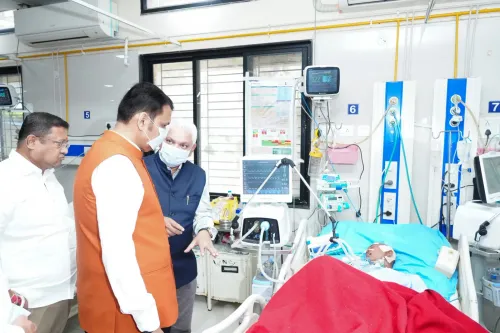
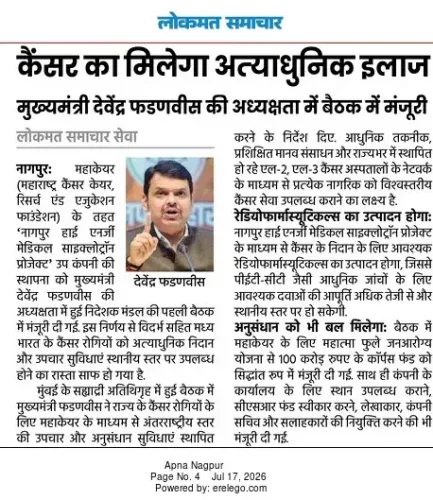
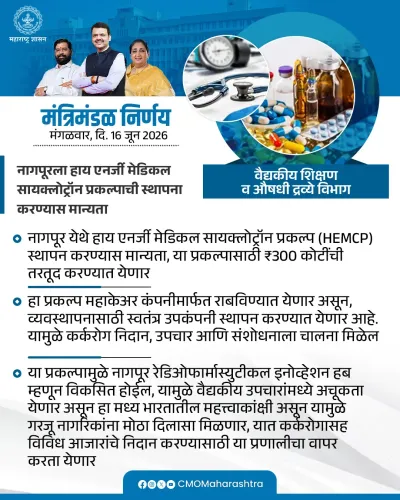
The Chief Minister's Office of Maharashtra announced on Wednesday, 17 June 2026 that Nagpur will host the state's first radiopharmaceutical drug centre, a facility dedicated to nuclear medicine diagnostics and cancer therapy using radioisotopes. The post, shared on the official CMO handle and tagging Chief Minister Devendra Fadnavis, marks a significant step in decentralising advanced medical infrastructure beyond Mumbai.
Context
The CMO's post — 'नागपुरात पहिले किरणोत्सर्गी औषध केंद्र' ('First radiopharmaceutical drug centre in Nagpur') — signals the state government's intent to establish a production and application facility for radioactive medicines in the Vidarbha region. Radiopharmaceuticals are isotope-based compounds used both in imaging (PET/SPECT scans) and in targeted cancer treatments such as radioiodine therapy and lutetium-based therapies.
Nagpur, Maharashtra's second capital and the administrative heart of Vidarbha, has long been identified as a priority location for tertiary healthcare expansion. The city hosts major government medical colleges and is the proposed site of an AIIMS campus, making it a natural anchor for high-technology medical services in the region.
Policy Backdrop
The announcement aligns with Maharashtra's State Cancer Care Policy expansions initiated in 2023, which explicitly prioritised nuclear medicine units in Vidarbha and Marathwada to reduce the burden on Mumbai-based facilities. Patients from these regions currently travel hundreds of kilometres for radioisotope-based diagnostics and therapy — a gap this centre is intended to close.
At the national level, the Department of Atomic Energy has been pushing to decentralise radioisotope supply through its commercial arm BRIT (Board of Radiation and Isotope Technology) and through new cyclotron projects at regional hospitals. Maharashtra's Nagpur centre, if realised, would fit directly into this broader national architecture of distributed nuclear medicine infrastructure.
Stakeholders and Impact
The primary beneficiaries are cancer patients across Vidarbha, a region that records among the highest cancer incidence rates in Maharashtra, particularly for oral, cervical, and breast cancers. Access to on-site radiopharmaceuticals would enable faster diagnosis through nuclear imaging and open the door to isotope-based therapies that are currently unavailable locally.
Nuclear medicine departments at Nagpur's government medical colleges stand to gain upgraded diagnostic capability, while oncologists in the region would be able to offer treatment protocols that currently require patient referral to Mumbai or Pune. The facility would also reduce logistical costs associated with transporting short-lived radioisotopes, which have half-lives measured in hours.
What's Next
The immediate steps to watch include a formal project sanction from the state government, civil works timelines, and regulatory clearances from the Atomic Energy Regulatory Board (AERB), which governs all facilities handling radioactive material in India. Any memorandum of understanding with national isotope producers for a regular supply chain to the Nagpur centre will be a key milestone.
If the centre advances as announced, Nagpur could become a model for similar radiopharmaceutical hubs in other tier-2 cities across India — demonstrating that nuclear medicine need not remain confined to metropolitan teaching hospitals.
Point of View
Historically underserved in tertiary medical infrastructure, is a priority. By anchoring the facility in Nagpur, the state government simultaneously addresses a genuine public health gap and reinforces CM Fadnavis's home-region credentials. The move slots neatly into a national pattern of DAE-backed decentralisation of nuclear medicine, suggesting the state may be positioning itself for central co-funding or technical partnership. The real test will be in the regulatory and supply-chain execution, where similar announcements in other states have stalled.
NationPress
16 Sept 2026
Frequently Asked Questions
What is a radiopharmaceutical drug centre?
A radiopharmaceutical drug centre produces and administers radioactive compounds used in nuclear medicine — both for imaging (such as PET and SPECT scans) and for targeted cancer treatments like radioiodine or lutetium-based therapy.
Where will Maharashtra's first radiopharmaceutical centre be located?
The centre will be located in Nagpur , Maharashtra's second capital and the administrative hub of the Vidarbha region, as announced by the Chief Minister's Office on 17 June 2026.
Who announced the Nagpur radiopharmaceutical centre?
The announcement was made by the Chief Minister's Office of Maharashtra on its official X account, tagging Chief Minister Devendra Fadnavis .
How will this centre benefit cancer patients in Vidarbha?
Patients in Vidarbha currently travel to Mumbai or Pune for radioisotope-based diagnostics and therapy. The Nagpur centre would make these services locally available, cutting travel costs and treatment delays for cancer patients in the region.
What approvals are needed before the Nagpur radiopharmaceutical centre opens?
The facility will require a formal project sanction from the Maharashtra government, civil construction, and mandatory regulatory clearances from the Atomic Energy Regulatory Board (AERB) , which oversees all radioactive material handling in India.