Has Army Hospital R&R Achieved India’s First 3D Flex Aqueous Angiography with iStent?
Synopsis
In a groundbreaking achievement, the Army Hospital R&R has successfully conducted India’s first-ever 3D Flex Aqueous Angiography combined with iStent. This innovative procedure promises to revolutionize glaucoma treatment, showcasing the commitment of the Armed Forces Medical Services to enhance ocular care for its personnel.
Key Takeaways
3D Flex Aqueous Angiography is a groundbreaking procedure in glaucoma treatment.
The integration of iStent enhances surgical outcomes.
AHRR is at the forefront of innovative eye care solutions in India.
This achievement reflects the Armed Forces' commitment to healthcare.
Glaucoma continues to be a major challenge in eye health.
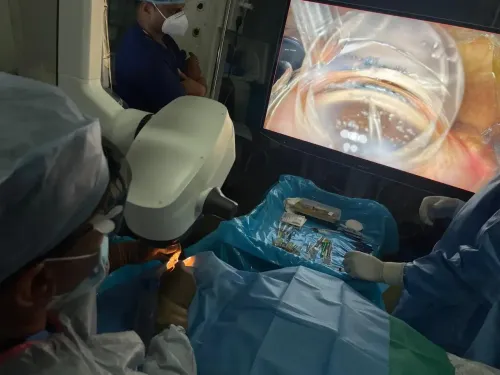
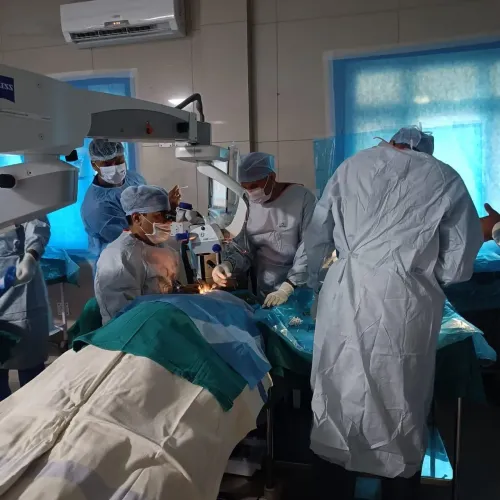
New Delhi, Dec 31 (NationPress) The Ministry of Defence announced on Wednesday that the Ophthalmology Department at the Army Hospital Research and Referral (AHRR) has successfully executed India’s inaugural 3D Flex Aqueous Angiography with iStent. This groundbreaking procedure merges advanced imaging techniques with minimally invasive approaches to glaucoma surgery.
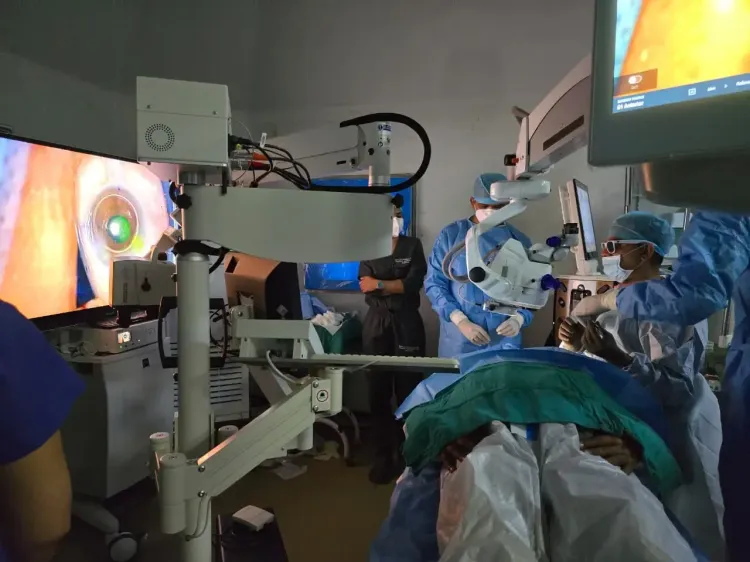
Utilizing the innovative stand-mounted Spectralis system along with a cutting-edge 3D operating microscope, this trailblazing operation positions the Armed Forces Medical Services at the leading edge of global ophthalmic healthcare, marking a significant milestone for Indian medicine, as noted in a ministry statement.
Being the first in the nation, the fusion of 3D Flex Aqueous Angiography with iStent establishes a new standard in glaucoma treatment, ensuring superior intraoperative imaging and improved long-term outcomes.
This achievement signifies not just a medical milestone for the Armed Forces community but also a strategic advancement in protecting vision and maintaining operational readiness.
Glaucoma, a primary cause of irreversible blindness, has historically posed challenges to healthcare providers due to its stealthy advancement.
The recent innovation provides unparalleled real-time visualization of aqueous outflow pathways, allowing surgeons to implement precise and targeted interventions, thereby greatly enhancing patient outcomes.
Earlier in August, AHRR became the first government hospital in India and the second in South Asia to carry out Robotic Custom Laser Cataract Surgery using the advanced ALLY Adaptive Cataract Treatment System.
This accomplishment highlighted the Ophthalmology Department’s successful leap into the realm of robotic, bladeless, and computer-assisted eye surgeries, with its initial Femto-second Laser Assisted Cataract Surgery (FLACS).
The integration of such innovative technology at AHRR underscores the commitment of the Armed Forces in providing the most advanced, safe, and effective healthcare for its personnel and their families, as stated in the announcement.
Point of View
It is essential to highlight the significance of the Armed Forces Medical Services' advancement in ophthalmic care. The successful implementation of the 3D Flex Aqueous Angiography with iStent not only enhances healthcare for military personnel but also sets a precedent in the medical field, showcasing India's capabilities in advanced medical technologies.
NationPress
30 Sept 2026
Frequently Asked Questions
What is the significance of the 3D Flex Aqueous Angiography with iStent?
This procedure represents a pioneering advancement in glaucoma treatment in India, combining advanced imaging with minimally invasive techniques for better patient outcomes.
Where was the procedure performed?
The procedure was conducted at the Army Hospital Research and Referral (AHRR) in New Delhi.
What challenges does glaucoma pose?
Glaucoma is a leading cause of irreversible blindness and is often difficult to detect due to its silent progression.
What previous achievement did AHRR accomplish in ophthalmic surgery?
Earlier, AHRR became the first government hospital in India to perform Robotic Custom Laser Cataract Surgery.
Who benefits from these advancements in eye care?
These advancements primarily benefit the Armed Forces personnel and their families, ensuring they receive high-quality medical care.