Rajnath Singh at Bhoomi Pujan for 10,000-Ton Aluminium Press in Nagpur
Synopsis
Union Defence Minister Rajnath Singh attended the ground-breaking ceremony for a 10,000-ton Aluminium Extrusion Press at Yantra India Limited's Nagpur facility on June 19, 2026, advancing India's push to indigenise critical aluminium components for missiles, aircraft and armoured vehicles under the Atmanirbhar Bharat framework.
Key Takeaways
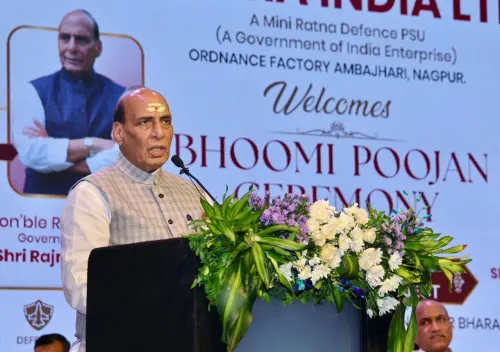
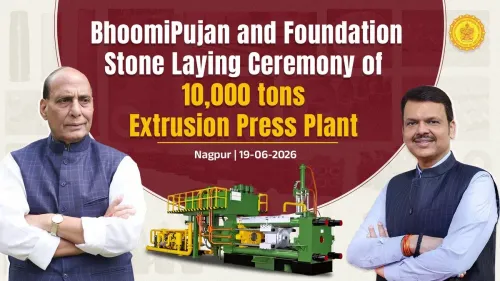
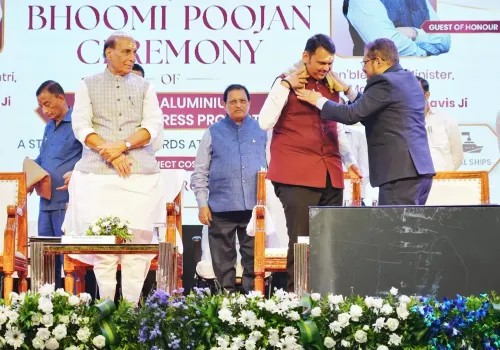
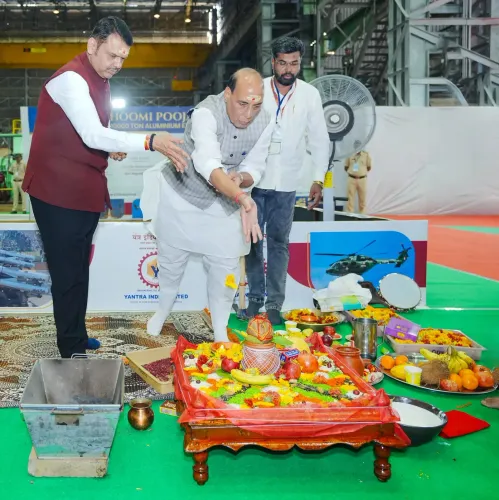
Rajnath Singh attended the Bhoomi Pujan Samaroh for a 10,000-ton Aluminium Extrusion Press at Yantra India Limited , Nagpur , on June 19, 2026 .
Yantra India Limited is a defence PSU formed after the 2021 corporatisation of the Ordnance Factory Board, granting it greater operational and commercial autonomy.
Large aluminium extrusions are critical inputs for missiles, fighter aircraft, armoured vehicles and aerospace structures — items on India's negative import lists.
The investment aligns with the Atmanirbhar Bharat defence manufacturing target of ₹1.75 lakh crore in domestic production and exports.
Nagpur is a growing node in India's defence industrial geography, hosting multiple production units and benefiting from planned corridor investments.
The commissioning of the press is expected to reduce import dependence for precision aluminium profiles across multiple armed-forces platforms.
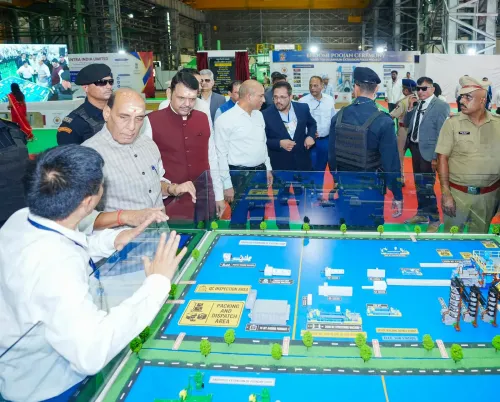
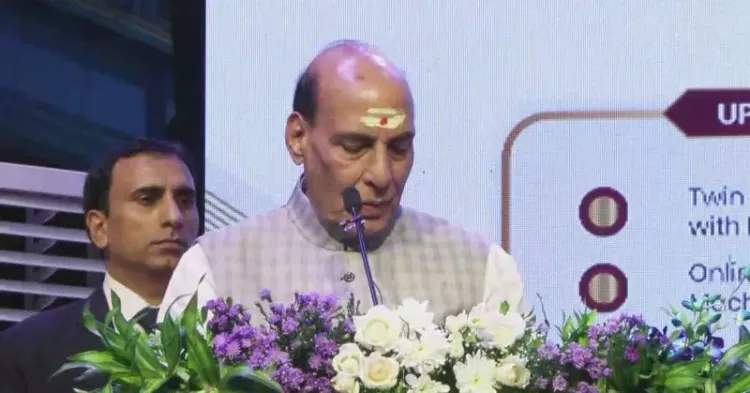
Union Defence Minister Rajnath Singh attended the Bhoomi Pujan Samaroh (ground-breaking ceremony) for a 10,000-ton Aluminium Extrusion Press at the Yantra India Limited facility in Nagpur on Friday, June 19, 2026, marking a significant step in India's drive to indigenise critical defence manufacturing components.
Context
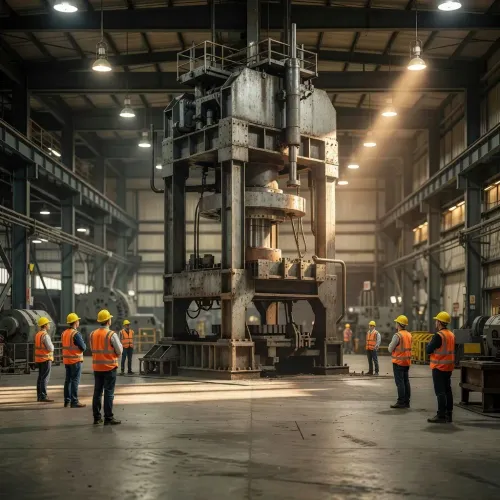
The ground-breaking ceremony centres on the installation of a 10,000-ton Aluminium Extrusion Press — a heavy industrial machine capable of producing large-section aluminium profiles used in missiles, aircraft structures, armoured vehicles and aerospace systems. Such high-tonnage presses are rare in India and their domestic availability reduces dependence on imported aluminium extrusions for defence platforms.
Yantra India Limited, headquartered in Nagpur, is one of seven Defence Public Sector Undertakings (DPSUs) created in 2021 when the government corporatised the legacy Ordnance Factory Board. The restructuring was designed to give each entity greater operational autonomy, sharper commercial focus and faster capacity expansion.
Policy Backdrop
The event sits squarely within the Atmanirbhar Bharat framework launched in 2020, which set an ambitious target of raising indigenous defence manufacturing and exports to ₹1.75 lakh crore by 2025. The Defence Production and Export Promotion Policy underpins this push, directing DPSUs to invest in technology upgrades and close gaps in the domestic supply chain.
Successive Union Budgets have increased capital outlay for domestic defence procurement, and the Ministry of Defence has notified multiple 'negative import lists' — catalogues of items that the armed forces must now source exclusively from Indian manufacturers. Large aluminium extrusions feature prominently in these indigenisation priorities, making the Nagpur press strategically significant.
Nagpur has emerged as a node in India's defence industrial geography, hosting several production units and benefiting from proximity to raw-material supply chains in central India. The city's inclusion in defence corridor planning further reinforces its role as a manufacturing hub.
Stakeholders and Impact
The primary beneficiaries are the Indian Army, Indian Air Force and Indian Navy, whose platforms — from artillery shells to fighter-jet components — require precision aluminium extrusions. A domestic 10,000-ton press gives programme managers a reliable, sovereign supply source insulated from global commodity and logistics disruptions.
Yantra India Limited stands to expand its product portfolio and revenue base, while the broader DPSU ecosystem gains a demonstration that large-scale capital investment in manufacturing infrastructure is viable within the corporatised model. Ancillary industries — tooling, logistics, finishing — in the Nagpur region are also expected to benefit from the facility's downstream demand.
What's Next
Attention will now turn to the commissioning timeline of the press and its integration into active missile and aerospace production programmes. The government's indigenisation agenda also points to further facility announcements along the Uttar Pradesh and Tamil Nadu defence industrial corridors, where similar capital-intensive investments are being planned. Today's ceremony signals that the DPSU modernisation cycle is accelerating, with Rajnath Singh's presence lending ministerial weight to the rollout.
Point of View
000-ton Aluminium Extrusion Press at Yantra India Limited is more than a factory milestone — it is a visible data point in the government's effort to convert the 2021 DPSU corporatisation from a structural reform into tangible manufacturing capacity. Rajnath Singh's personal presence elevates the event into a political signal: that the Ministry of Defence is actively stewarding the DPSU modernisation agenda, not merely legislating it. The choice of Nagpur also reinforces the geographic diversification of India's defence industrial base beyond its traditional clusters. Cumulatively, such investments test whether the Atmanirbhar Bharat framework can deliver sovereign supply chains before the next procurement cycle tightens import restrictions further.
NationPress
25 Sept 2026
Frequently Asked Questions
What is the 10,000-ton Aluminium Extrusion Press at Yantra India Limited?
It is a heavy industrial press being installed at Yantra India Limited's Nagpur facility that will manufacture large aluminium profiles used in missiles, aircraft, armoured vehicles and aerospace systems, reducing India's dependence on imported components.
What is Yantra India Limited and where is it located?
Yantra India Limited is a Nagpur-based Defence Public Sector Undertaking formed in 2021 after the government corporatised the Ordnance Factory Board into seven separate DPSUs to improve operational efficiency and output.
Why did Rajnath Singh attend the Nagpur ceremony on June 19, 2026?
As Union Defence Minister, Rajnath Singh presided over the Bhoomi Pujan Samaroh — the formal ground-breaking — for the 10,000-ton Aluminium Extrusion Press, lending ministerial endorsement to a key indigenisation project under Atmanirbhar Bharat.
What is Atmanirbhar Bharat in defence manufacturing?
Atmanirbhar Bharat is a 2020 government initiative to make India self-reliant in defence production; the Defence Production and Export Promotion Policy under it targets ₹1.75 lakh crore in domestic manufacturing and exports, supported by negative import lists that mandate Indian sourcing.
How does the aluminium extrusion press support India's armed forces?
A domestic high-tonnage press gives the Army, Air Force and Navy a sovereign, uninterrupted supply of precision aluminium extrusions for platforms ranging from artillery shells to fighter-jet structural components, reducing vulnerability to global supply disruptions.