Rajnath Singh attends Bhoomi Poojan for Nagpur aluminium extrusion press
Synopsis
Union Defence Minister Rajnath Singh attended the Bhoomi Poojan for a 10,000-tonne aluminium extrusion press in Nagpur on 19 June 2026. He cited domestic defence production reaching Rs 1.78 lakh crore in FY 2025-26 and exports hitting Rs 38,424 crore, while flagging targets of Rs 3 lakh crore production and Rs 50,000 crore exports ahead of schedule.
Key Takeaways
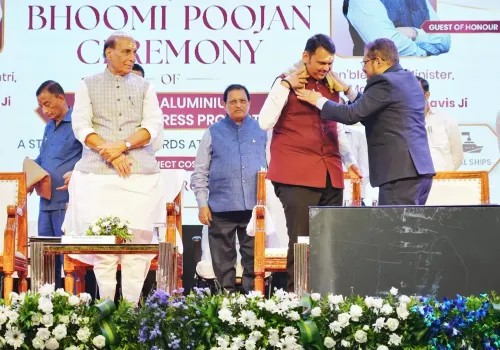
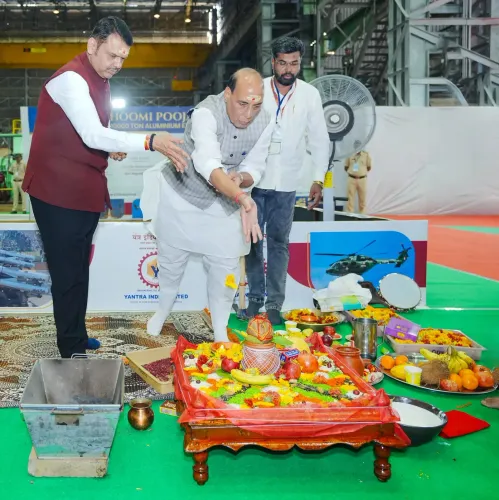
Rajnath Singh attended the Bhoomi Poojan for a 10,000-tonne Aluminium Extrusion Press in Nagpur on 19 June 2026 .
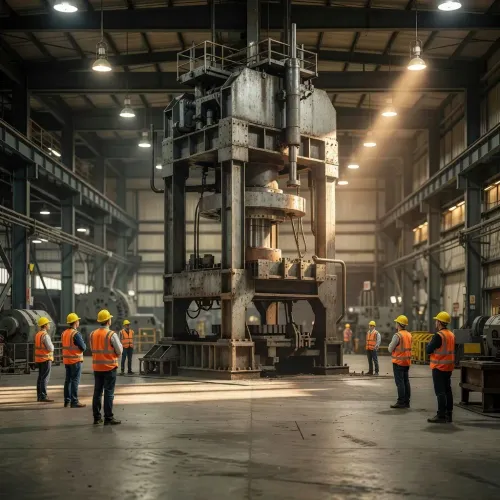
The facility will produce lightweight, high-strength metals for fighter jets, missiles, and space programmes, addressing a critical gap in India's defence supply chain.
India's domestic defence production rose from Rs 46,000 crore in 2014 to a record Rs 1.78 lakh crore in FY 2025-26 .
Defence exports surged from under Rs 1,000 crore to an all-time high of Rs 38,424 crore over the same period.
The government is targeting Rs 3 lakh crore in defence production and Rs 50,000 crore in exports, with Singh saying these goals may be achieved ahead of schedule.
The Nagpur press is part of India's broader Atmanirbhar Bharat and Make in India defence indigenisation drive backed by the DPEPP 2020 .
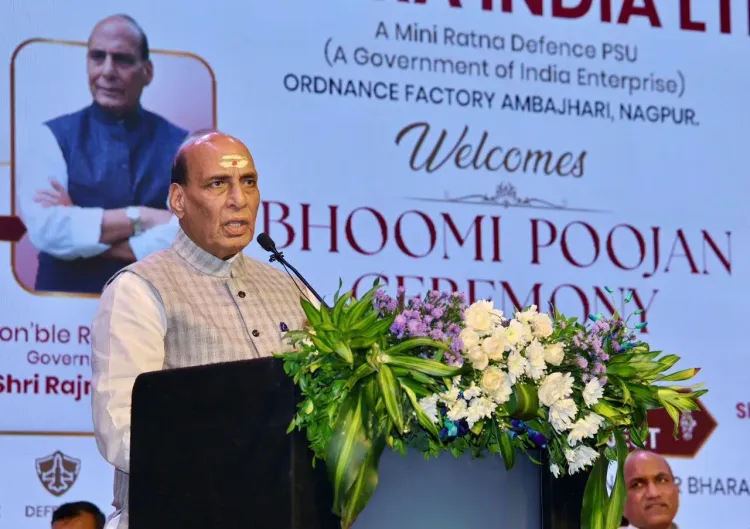
Union Defence Minister Rajnath Singh on Friday, 19 June 2026, attended the Bhoomi Poojan Samaroh for a state-of-the-art 10,000-tonne Aluminium Extrusion Press in Nagpur, marking a significant step in India's push to secure strategic materials for advanced defence and space platforms.
Context
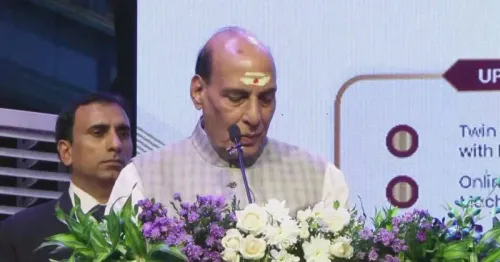
The groundbreaking ceremony in Nagpur centres on a specialised facility designed to produce high-strength, lightweight aluminium alloys — materials indispensable to modern fighter jets, precision missiles, and advanced space programmes. Singh underscored the strategic rationale at the event, stating that 'modern fighter jets, missiles, and advanced space programmes require metals that are lightweight and strong, capable of withstanding even the most extreme conditions.'
The minister added that 'if the quality of the metal is superior, it will serve well in every situation' — signalling that the facility is intended to close a critical gap in India's domestic defence supply chain rather than serve purely commercial ends.
Policy Backdrop
The Nagpur press is the latest addition to India's decade-long drive toward defence indigenisation under the Atmanirbhar Bharat framework. The government's Defence Production and Export Promotion Policy (DPEPP) 2020 set explicit quantitative targets for domestic output and exports, backed by liberalised FDI norms and preferential procurement rules favouring Indian manufacturers.
Singh cited the cumulative impact of these measures: domestic defence production has risen from Rs 46,000 crore in 2014 to a record Rs 1.78 lakh crore in Financial Year 2025-26, while defence exports have surged from under Rs 1,000 crore to an all-time high of Rs 38,424 crore over the same period. 'This represents not just a rise in numbers, but a growth in India's capabilities,' Singh said. 'It signifies a boost in the nation's self-confidence.'
Stakeholders and Impact
The facility is expected to benefit both public-sector defence undertakings and private aerospace and missile manufacturers that currently depend on imported aluminium extrusions for structural components. The Indian armed forces — which operate platforms ranging from the domestically developed Tejas light combat aircraft to the BrahMos supersonic cruise missile — stand to gain from a more secure and cost-competitive domestic materials supply.
Nagpur's location in Maharashtra places the facility within an emerging industrial corridor that already hosts aerospace and defence component manufacturers, potentially enabling supply-chain clustering. The Make in India defence push, launched in 2014, has progressively combined higher capital procurement mandates with investment in specialised metallurgical capacities of precisely this kind.
What's Next
Singh indicated that the government is on track — and may even move ahead of schedule — on its twin targets of Rs 3 lakh crore in annual defence production and Rs 50,000 crore in defence exports within the next two to three years. If achieved, those figures would represent a near-doubling of current output and a further step-change in export volumes.
Attention will now turn to the commissioning timeline for the Nagpur press, potential technology partnerships announced at forthcoming events such as Aero India, and whether successive defence budgets will sustain the capital allocation required to meet the stated targets. The facility's progress will be a concrete test of whether India's indigenisation ambitions translate into operational industrial capacity.
Point of View
Results-driven programme rather than an aspirational slogan. The trajectory from Rs 46,000 crore to Rs 1.78 lakh crore in production over a decade is substantial, and the export surge from under Rs 1,000 crore to Rs 38,424 crore is particularly striking as a signal of competitive capability. Whether the Rs 3 lakh crore production and Rs 50,000 crore export targets are met ahead of schedule will determine how credibly India can position itself as a net defence exporter rather than primarily an importer.
NationPress
19 Sept 2026
Frequently Asked Questions
What is the 10,000-tonne aluminium extrusion press in Nagpur?
It is a state-of-the-art manufacturing facility whose Bhoomi Poojan (groundbreaking ceremony) was held in Nagpur on 19 June 2026. It is designed to produce high-strength, lightweight aluminium alloys required for fighter jets, missiles, and space systems.
What is India's current defence production figure?
According to Rajnath Singh, India's domestic defence production reached a record Rs 1.78 lakh crore in Financial Year 2025-26, up from Rs 46,000 crore in 2014.
How much does India export in defence equipment?
India's defence exports have risen to an all-time high of Rs 38,424 crore, compared to under Rs 1,000 crore in 2014, according to figures cited by Defence Minister Rajnath Singh.
What are India's defence production and export targets for the next few years?
The government has set targets of Rs 3 lakh crore in annual defence production and Rs 50,000 crore in defence exports, which Rajnath Singh said India is poised to achieve ahead of schedule within the next two to three years.
Why is aluminium extrusion important for India's defence sector?
Aluminium extrusion produces lightweight, high-strength structural components essential for modern fighter jets, precision missiles, and space vehicles. Domestic production of such materials reduces dependence on imports and strengthens India's strategic supply chain.