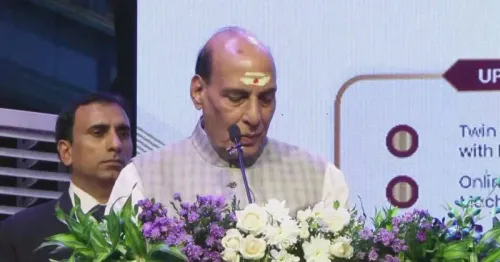
Rajnath Singh, CM Fadnavis lay foundation of 10,000-Ton Extrusion Press in Nagpur
Synopsis
Union Minister Rajnath Singh and Maharashtra CM Devendra Fadnavis performed the groundbreaking of a 10,000-Ton Extrusion Press at Ordnance Factory Ambajhari in Nagpur on 19 June 2026, advancing India's Atmanirbhar Bharat defence manufacturing agenda under Yantra India Limited.
Key Takeaways
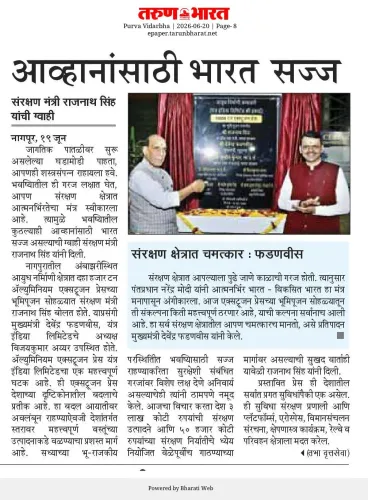
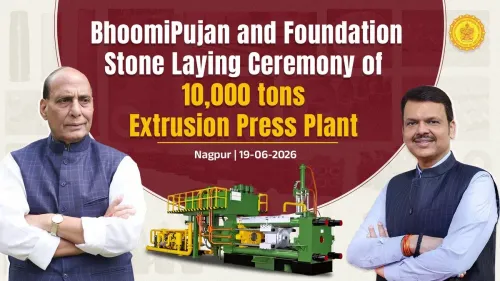
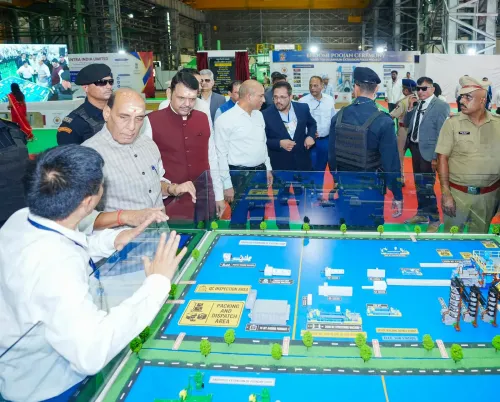
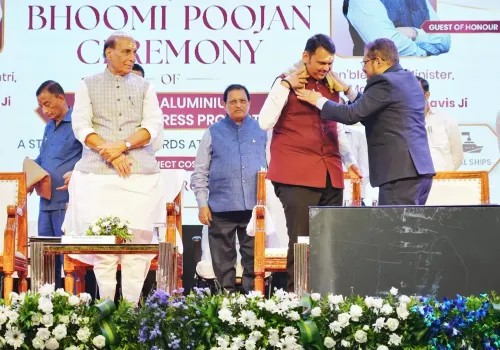
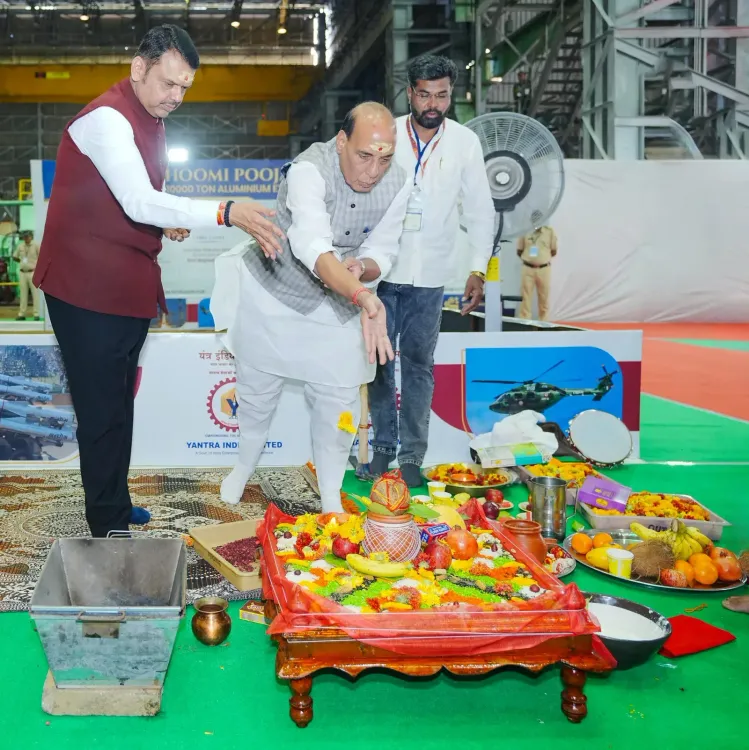
Union Minister Rajnath Singh and CM Devendra Fadnavis jointly performed the bhoomipujan for the 10,000-Ton Extrusion Press at Ordnance Factory, Ambajhari , Nagpur on 19 June 2026 .
Yantra India Limited CMD Vijaykumar Iyer was present at the ceremony alongside other senior dignitaries.
The press will be installed at a unit of Yantra India Limited , one of seven Defence PSUs created from the corporatisation of the Ordnance Factory Board in October 2021 .
The project aligns with the Atmanirbhar Bharat initiative and the Defence Production and Export Promotion Policy 2020 , which targets 75 percent indigenous manufacturing in defence.
The new extrusion press is expected to enhance domestic production capacity for ammunition casings and precision metal components for the Indian armed forces .
Commissioning timelines and technology sourcing details are yet to be formally announced by the Ministry of Defence .
The Chief Minister's Office of Maharashtra announced on 19 June 2026 that Union Minister of Defence Rajnath Singh and Chief Minister Devendra Fadnavis jointly performed the bhoomipujan (groundbreaking ceremony) and unveiled the stone plaque for a 10,000-Ton Extrusion Press at Ordnance Factory, Ambajhari, a unit of Yantra India Limited, in Nagpur.
Context
The ceremony, held at 12:30 PM, marked the formal launch of a significant capital infrastructure project at one of Maharashtra's key defence manufacturing sites. Vijaykumar Iyer, Chairman and Managing Director of Yantra India Limited, was present alongside other senior dignitaries. The trilingual announcement — in English, Marathi, and Hindi — underscored the event's official weight and its relevance to both the central government and the Maharashtra state administration.
Policy Backdrop
The project sits squarely within India's Atmanirbhar Bharat framework, announced in May 2020, which prioritised domestic defence production and a reduction in import dependence. The Defence Production and Export Promotion Policy of 2020 set a target of raising the indigenous manufacturing share to 75 percent by 2025, pushing defence public sector undertakings to invest in advanced production infrastructure.
Yantra India Limited was itself a product of this reform wave. The corporatisation of the Ordnance Factory Board into seven new Defence Public Sector Undertakings — completed in October 2021 — transformed legacy ordnance factories into commercially structured entities capable of faster capital deployment. Ordnance Factory Ambajhari, specialising in explosives, shells, and related components, became a unit under Yantra India Limited in that restructuring.
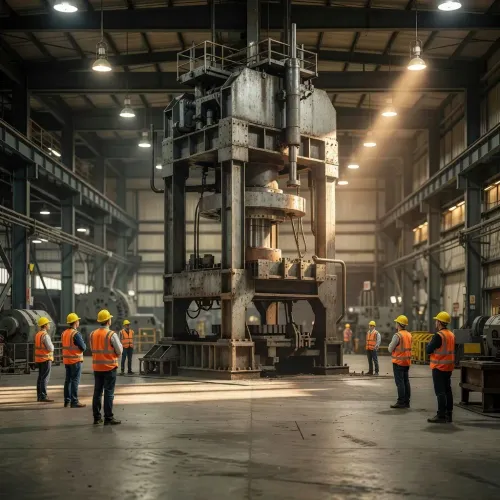
An extrusion press of this scale is used to manufacture metal tubes, casings, and other precision components critical to ammunition production. A 10,000-ton capacity press would represent a substantial upgrade to the facility's throughput and the quality of components it can produce for the Indian armed forces.
Stakeholders and Impact
The primary beneficiary of the new infrastructure is the Indian armed forces, which depend on domestic ordnance factories for a steady supply of ammunition and propellant components. Enhanced extrusion capacity at Ambajhari is expected to reduce dependence on imported semi-finished materials and improve the supply chain resilience of ammunition production in Maharashtra.
For the Nagpur industrial workforce, the project signals fresh investment in a facility that has been part of the city's defence manufacturing identity for decades. Downstream employment in ancillary industries supplying raw materials and engineering services to the factory could also be affected positively as the project progresses toward commissioning.
What's Next
The bhoomipujan marks the beginning of the construction and installation phase; the commissioning timeline and production ramp-up schedule have not yet been formally announced. Observers will watch for follow-on disclosures from the Ministry of Defence on technology sourcing, equipment suppliers, and any associated transfer-of-technology arrangements. The pace at which the press becomes operational will be a key indicator of Yantra India Limited's ability to execute large-scale modernisation under the corporatised DPSU model.
More broadly, the groundbreaking at Ambajhari adds to a pattern of capital investment across Yantra India and Munitions India Limited units since the 2021 restructuring, signalling that the government's push toward self-reliance in defence production continues to translate into on-ground infrastructure commitments.
Point of View
Executing a project of this scale will be an early test of whether the corporatised model delivers faster and more accountable infrastructure build-out than the legacy Ordnance Factory Board. The choice of Nagpur — a city with deep strategic significance in central India — also fits a broader pattern of anchoring defence manufacturing capacity in locations with multimodal logistics access.
NationPress
18 Sept 2026
Frequently Asked Questions
What is the 10,000-Ton Extrusion Press at Ordnance Factory Ambajhari?
It is a large-scale industrial press being built at Ordnance Factory Ambajhari in Nagpur to manufacture precision metal components such as ammunition casings for the Indian armed forces. Its groundbreaking was performed by Union Minister Rajnath Singh and CM Devendra Fadnavis on 19 June 2026.
What is Yantra India Limited?
Yantra India Limited is a Defence Public Sector Undertaking formed in October 2021 when the Ordnance Factory Board was corporatised into seven separate entities. It focuses on ammunition and armaments production, with Ordnance Factory Ambajhari as one of its units.
Why did Rajnath Singh visit Nagpur on 19 June 2026?
Union Minister of Defence Rajnath Singh visited Nagpur to jointly perform the bhoomipujan and stone plaque unveiling of the 10,000-Ton Extrusion Press at Ordnance Factory Ambajhari alongside Maharashtra CM Devendra Fadnavis.
What is the Atmanirbhar Bharat initiative in defence?
Atmanirbhar Bharat, announced in May 2020, is a government policy push for self-reliance across sectors including defence. In defence manufacturing, it aims to raise the share of indigenous production to 75 percent by 2025 and reduce dependence on imported equipment and components.
What does an extrusion press do in a defence factory?
An extrusion press forces metal through a die to produce tubes, rods, and casings with precise dimensions. In an ordnance factory context, it is used to manufacture components such as shell casings and propellant tubes that form the basis of ammunition for the armed forces.