AI leadership must centre human benefit, says NITI Aayog's Debjani Ghosh
Synopsis
As AI reshapes public life, NITI Aayog Distinguished Fellow Debjani Ghosh warned at a New Delhi event that leadership must stay anchored in human benefit — not technological efficiency alone. With UP Minister Arvind Kumar Sharma and Gujarat's Rajeev Topno also on the dais, the event connected AI-era governance to ground-level lessons from disaster recovery and state development.
Key Takeaways
Debjani Ghosh , Distinguished Fellow at NITI Aayog , spoke on 17 November 2026 in New Delhi on AI and human-centred leadership.
Ghosh said leadership must prioritise 'the benefit of citizens and the benefit of people' in the AI era.
UP Minister Arvind Kumar Sharma highlighted Uttar Pradesh 's development since 2017 , attributing progress to strong leadership.
Sharma declined to comment on reports of a Congress–Samajwadi Party meeting, citing his presence at the event.
Rajeev Topno , Additional Chief Secretary, Gujarat Health, shared governance lessons from the Kutch earthquake rehabilitation effort.
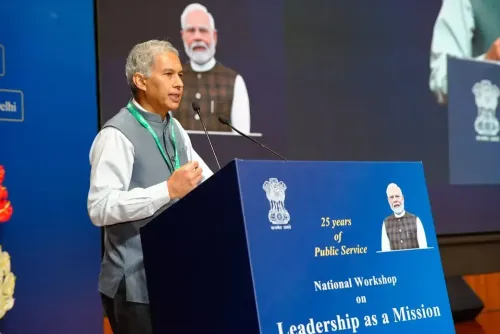
Distinguished Fellow at NITI Aayog Debjani Ghosh on Tuesday, 17 November 2026, called for leadership rooted in human welfare and public service as artificial intelligence reshapes economies, governance, and everyday life. Speaking at an event in New Delhi, Ghosh argued that the accelerating pace of AI-led transformation makes the question of purposeful leadership more urgent than ever.
Leadership as a Mission, Not a Position
Addressing the gathering on the theme of 'leadership as a mission', Ghosh drew a sharp distinction between authority and service. She emphasised that genuine leadership is defined not by rank but by its ability to generate positive outcomes for citizens and society at large.
'The world of AI makes this conversation even more relevant. Leadership as a mission means leadership that thinks about human benefit, the benefit of citizens and the benefit of people,' she said.
Her remarks come as global institutions grapple with how AI governance frameworks should balance technological efficiency with democratic accountability — a tension that has grown sharper with the rapid deployment of large language models and automation tools across public services.
Uttar Pradesh's Development Story
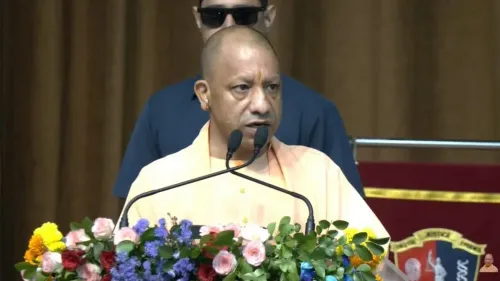
Uttar Pradesh Urban Development and Energy Minister Arvind Kumar Sharma used the platform to highlight the state's transformation over the past several years, arguing that decisive leadership is the primary driver of progress for any country, state, or society.
Responding to a question on the state's development trajectory, Sharma said the condition of Uttar Pradesh before 2017 was well known to residents and attributed the rapid positive changes since then to strong leadership. On political developments ahead of upcoming elections, Sharma said he was attending the event and was therefore not in a position to comment on reports of a meeting between the Indian National Congress and the Samajwadi Party that reportedly did not take place.
Kutch Earthquake: Lessons in Governance
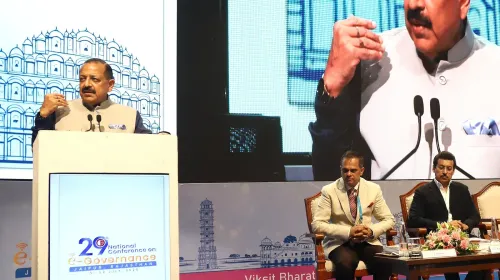
Rajeev Topno, Additional Chief Secretary in Gujarat's Health and Family Welfare Department, shared insights drawn from the rehabilitation and reconstruction efforts that followed the devastating Kutch earthquake. He said the experience yielded enduring lessons in governance, public service, and disaster recovery — underlining how leadership quality directly determines how communities bounce back from crisis.
Broader Themes at the Event
The event brought together voices from multiple states and sectors to discuss governance, development, and public administration. Speakers collectively underscored that as AI tools permeate the machinery of government, the human and ethical dimensions of leadership cannot be an afterthought. Ghosh's framing — positioning leadership as a mission rather than a career milestone — is likely to resonate with policymakers navigating the trade-offs between technological adoption and citizen welfare in the months ahead.
Point of View
Which the event appears not to have directly addressed, is what institutional mechanisms enforce it. India's AI governance architecture remains a work in progress, and NITI Aayog's own advisory role, without regulatory authority, limits how much such exhortations translate into policy guardrails. The juxtaposition of Sharma's UP development narrative with a governance-and-AI discussion also points to a persistent tension: state-level political leadership often measures itself by infrastructure and growth optics, not by citizen-welfare metrics of the kind Ghosh is advocating.
NationPress
17 Nov 2026
Frequently Asked Questions
What did Debjani Ghosh say about AI and leadership?
Debjani Ghosh, Distinguished Fellow at NITI Aayog, said at a New Delhi event on 17 November 2026 that leadership in the AI era must focus on human benefit — the welfare of citizens and society — rather than being treated as a position of authority. She argued that AI's rapid transformation of economies and governance makes this framing more urgent than ever.
Who is Debjani Ghosh and what is her role at NITI Aayog?
Debjani Ghosh is a Distinguished Fellow at NITI Aayog, the Indian government's principal policy think tank. She has previously served as President of the IT industry body NASSCOM and is a prominent voice on technology policy and digital governance in India.
What did UP Minister Arvind Kumar Sharma say at the event?
Uttar Pradesh Urban Development and Energy Minister Arvind Kumar Sharma underscored the role of strong leadership in driving state development, pointing to Uttar Pradesh's transformation since 2017. He also declined to comment on reports of a Congress–Samajwadi Party meeting, saying he was attending the event and lacked details.
What governance lessons did Rajeev Topno share?
Rajeev Topno, Additional Chief Secretary in Gujarat's Health and Family Welfare Department, shared lessons from the rehabilitation and reconstruction work undertaken after the Kutch earthquake. He said the experience offered practical insights into governance, public service delivery, and disaster recovery.
Why does leadership in the AI era matter for India's governance?
As AI tools are increasingly embedded in public administration — from welfare delivery to urban planning — the values and priorities of leadership directly shape how these tools are deployed. Experts like Ghosh argue that without a citizen-welfare orientation at the leadership level, AI risks amplifying existing inequalities or serving efficiency over equity.