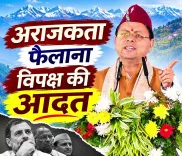
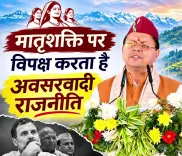
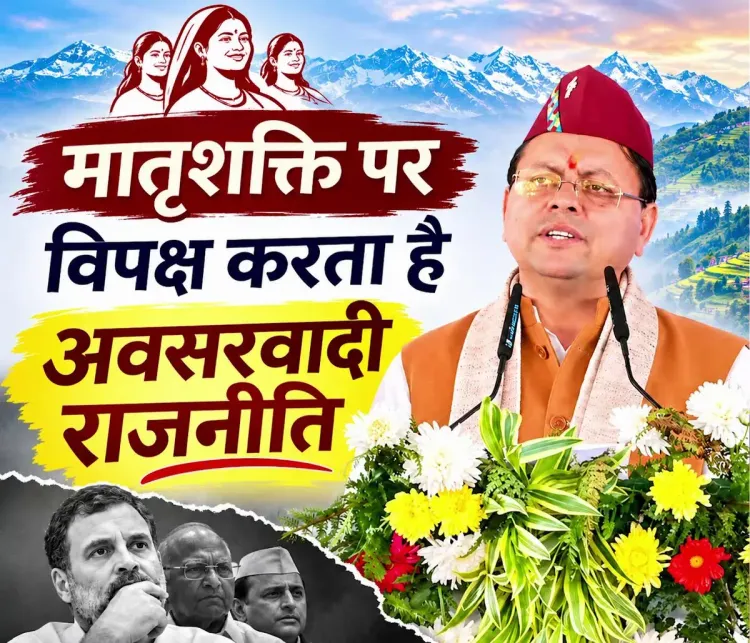
CM Dhami accuses Opposition of treating women as vote banks
Synopsis
Uttarakhand CM Pushkar Singh Dhami attacked the Opposition on November 17, 2026, charging them with reducing women to a vote bank while BJP points to triple talaq criminalisation and Uttarakhand's Uniform Civil Code as proof of concrete action.
Key Takeaways
CM Pushkar Singh Dhami accused the Opposition of viewing matrashakti purely as an electoral vote bank on November 17, 2026 .
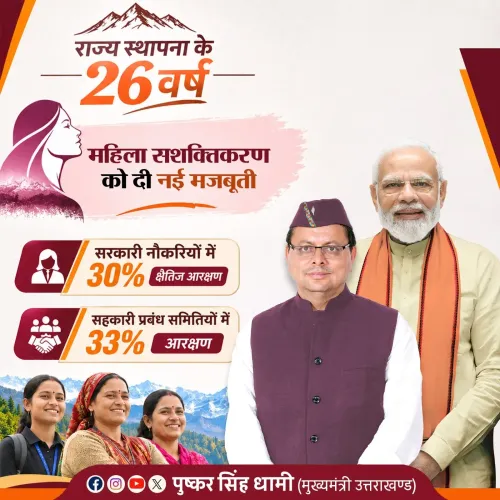
Dhami cited a failure by Opposition parties to take 'concrete steps' for women's respect, safety, and empowerment.
The Uttarakhand Uniform Civil Code (2024) , passed under Dhami's government, is the central legislative credential BJP uses in this debate at the state level.
At the national level, BJP routinely invokes the criminalisation of triple talaq in 2019 as evidence of substantive action on women's rights.
Women voters are an increasingly independent and decisive bloc in Uttarakhand state politics, making them the primary audience for this messaging.
No immediate electoral trigger for the post has been confirmed; analysts see it as part of sustained narrative-building by BJP state leadership.
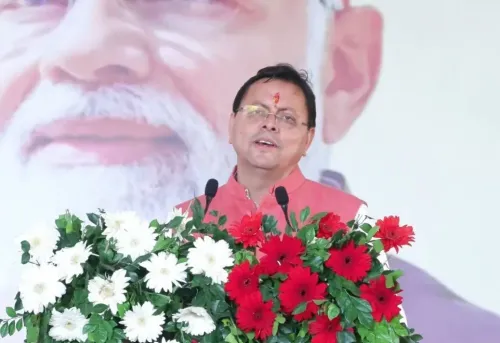
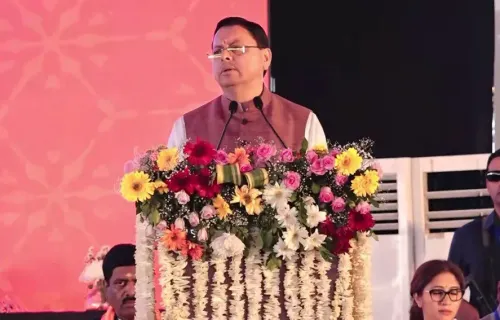
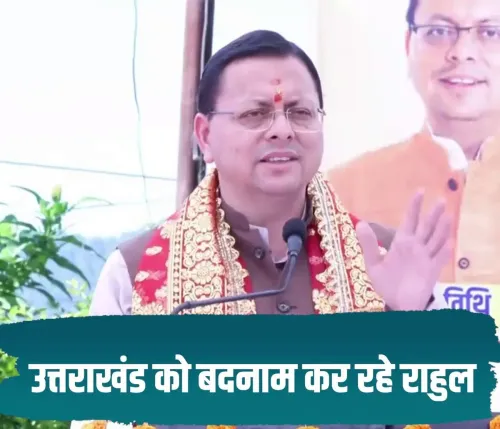
Uttarakhand Chief Minister Pushkar Singh Dhami fired a pointed political salvo on Tuesday, November 17, 2026, accusing the Opposition of viewing women solely through an electoral lens while doing little of substance for their dignity, security, or empowerment.
In his post, Dhami wrote: 'Vipaksh ne hamesha matrashakti ko keval votebank ke nazariye se dekha' — 'The Opposition has always viewed womanhood only from the angle of a vote bank, while keeping its distance from concrete steps for their respect, safety and empowerment.' The language is deliberate: matrashakti, or 'the power of motherhood,' is a term that frames women not as a demographic slice but as a civilisational force — and accusing rivals of reducing that force to ballot arithmetic is a sharp rhetorical strike.
BJP's legislative record as the counter-argument
Dhami's broadside arrives against the backdrop of a well-established BJP playbook: contrast the party's legislative actions with what it portrays as Opposition inertia on women's issues. At the national level, the criminalisation of triple talaq in 2019 remains the flagship example BJP leaders reach for in this debate. In Uttarakhand specifically, the Dhami government's passage of the Uniform Civil Code (UCC) in 2024 — the first state in independent India to do so — has been framed by the ruling party as a structural step toward gender equality in personal laws, going beyond the symbolic to the statutory.
The charge the Opposition will contest
Opposition parties in Uttarakhand are unlikely to let the framing go unchallenged. The counter-argument will predictably point to implementation gaps, the pace of welfare scheme delivery, and whether legislative moves such as the UCC meaningfully improve daily security or economic agency for women on the ground. Women voters, who have emerged as a decisive and increasingly independent bloc in state elections across India, are the real audience both sides are speaking to. The charge of 'vote bank politics' is itself a vote-bank move — aimed at consolidating women who feel that prior governments offered gestures without governance.
What the timing signals
With no immediate electoral trigger confirmed, the post reads as part of a sustained narrative-building exercise ahead of any future assembly cycle in Uttarakhand. BJP state leaders across the country have been consistent in keeping women's welfare a front-of-mind issue in public communication, ensuring the contrast with the Opposition stays sharp and current — not just a campaign-season talking point but a year-round governing argument.
When a Chief Minister frames women's rights as a measure of political sincerity rather than strategy, the implicit question he is posing to voters is simply: who actually delivered? That question, not any single post, is the one that will hang over the next ballot.
Point of View
He elevates the debate beyond welfare schemes into a question of cultural respect, making any rebuttal from the Opposition sound transactional by contrast. The strategy has worked electorally in multiple states where women voter turnout has risen sharply. The real test is whether the UCC and allied state measures translate into measurable safety and economic outcomes that voters can point to — because narrative only carries a party so far.
NationPress
17 Nov 2026
Frequently Asked Questions
What did CM Dhami say about the Opposition and women?
CM Pushkar Singh Dhami accused the Opposition of always viewing women — referred to as matrashakti — only as a vote bank, while keeping its distance from concrete steps for their respect, safety, and empowerment.
What is the Uttarakhand Uniform Civil Code and why does it matter?
Uttarakhand became the first state in independent India to pass a Uniform Civil Code in 2024 under CM Dhami. It standardises personal laws across religions and is presented by the BJP government as a structural step toward gender equality.
What is 'matrashakti' and why do BJP leaders use the term?
Matrashakti translates as 'the power of motherhood' or 'the power of womanhood.' BJP leaders use it to frame women as a civilisational and moral force rather than a demographic, lending a cultural weight to policy discussions on women's welfare.
How does BJP contrast its record with the Opposition on women's issues?
BJP typically highlights the criminalisation of triple talaq in 2019 at the national level and state-level measures like Uttarakhand's UCC, arguing these represent legislative action rather than vote-bank rhetoric.
Is Uttarakhand heading for assembly elections soon?
No immediate election has been confirmed as the trigger for this post. Political analysts read CM Dhami's statement as part of sustained year-round narrative-building on women's welfare, a key issue for Uttarakhand's growing bloc of independent women voters.