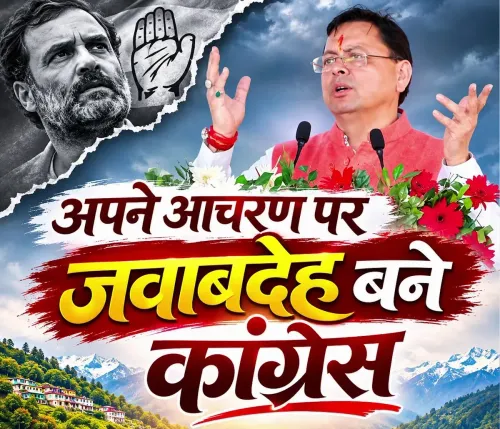
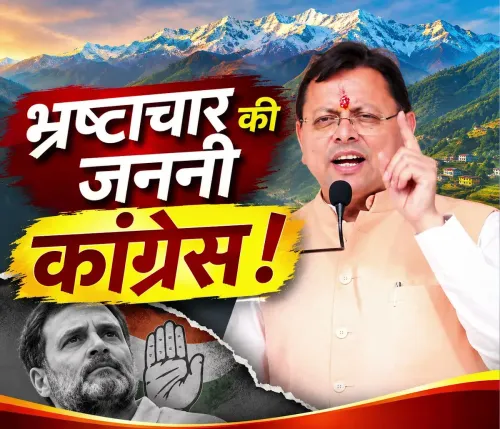
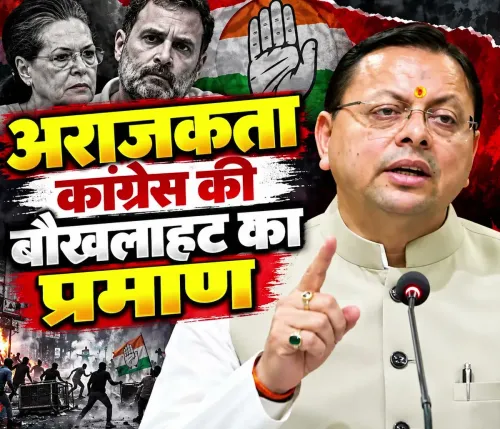
CM Dhami Targets Opposition Over Constitution 'Chaos'
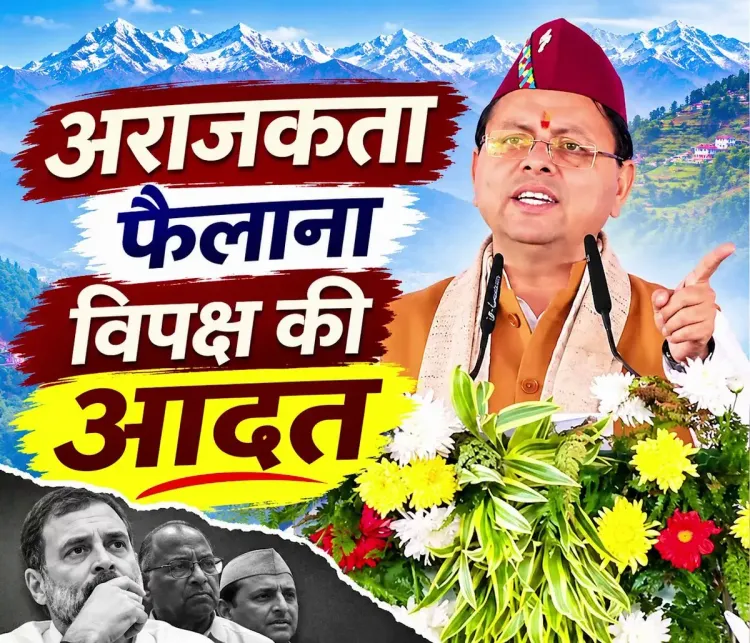
Synopsis
Uttarakhand Chief Minister Pushkar Singh Dhami fired back at opposition leaders on 17 November 2026, accusing those who publicly carry the Constitution of spreading confusion and anarchy by simultaneously questioning India's constitutional institutions — reigniting a long-running BJP versus opposition battle over who truly upholds the founding document.
Key Takeaways
CM Pushkar Singh Dhami posted on X on 17 November 2026 accusing Constitution-carrying politicians of trying to spread 'confusion and anarchy' by questioning constitutional institutions.
The post is in Hindi and directly targets a signature opposition tactic — publicly displaying a copy of the Constitution at protests and rallies.
Dhami has been Uttarakhand Chief Minister since 2021 and is a senior Bharatiya Janata Party leader at the state level.
The BJP has consistently argued that performative constitutionalism by the opposition is designed to undermine institutional credibility rather than defend it.
No specific trigger for the November 2026 post has been officially stated; opposition responses are anticipated.
The exchange reflects a recurring pattern in Indian politics where both sides contest ownership of constitutional legitimacy.
Those who wave the Constitution as a political prop are themselves sowing confusion and disorder by questioning India's constitutional institutions — that is the pointed charge Uttarakhand Chief Minister Pushkar Singh Dhami levelled on Tuesday, 17 November 2026, in a sharp post on X that cut straight to the heart of one of Indian politics' most combustible fault lines.
Dhami's post, written in Hindi, reads: 'Haath mein Samvidhan ki prati lekar chalne waale log hi aaj samvaidhanik sansthaaon par sawaal uthaakar bhram aur anarajkata failaane ka prayas kar rahe hain.' ('Those who walk around carrying a copy of the Constitution in their hands are themselves today attempting to spread confusion and anarchy by raising questions about constitutional institutions.')
The Constitution as Political Weapon — and Counter-Weapon
The imagery in Dhami's post is deliberate and pointed. Carrying a physical copy of the Constitution became a signature act of opposition politics in India — most visibly during the anti-Citizenship Amendment Act protests of 2019-20 and periodically since, as opposition leaders have invoked the document at rallies, press conferences, and Parliament. The BJP, and ruling-party leaders at the state level, have consistently sought to invert that symbolism: arguing that those who weaponise the Constitution in public demonstrations simultaneously erode the credibility of the very institutions it establishes — courts, Election Commission, Parliament, the federal executive.
Dhami, who has led Uttarakhand since 2021 and steered the Bharatiya Janata Party to a second consecutive term in the state in 2022, is a reliable amplifier of central BJP messaging. A post like this rarely emerges in a vacuum — it typically tracks a live political flashpoint: a judicial controversy, a fresh round of opposition protests, or a charged debate on federalism. The specific trigger here has not been officially stated, but the framing is unmistakable.
A Familiar Charge, an Evergreen Battle
The accusation runs in both directions in Indian politics. Opposition parties argue that the ruling dispensation undermines constitutional bodies through appointments, investigative pressure, and legislative overreach. The ruling party — and its state leaders like Dhami — counter that performative constitutionalism masks a strategy of delegitimising every institution that upholds a government mandate the opposition dislikes. Neither argument is new. What keeps it alive is that it touches something genuinely consequential: public trust in the referee structures of Indian democracy.
The strength of Dhami's formulation lies in its rhetorical compression — nine words in Hindi do what a press conference takes ten minutes to attempt. Whether it lands as a principled defence of institutions or as a deflection will depend entirely on what controversy prompted it. Opposition responses are expected to follow swiftly.
In a democracy where the Constitution is simultaneously a legal document, a political symbol, and a moral claim, the fight over who gets to invoke it — and who is accused of abusing it — is never really finished.
Point of View
Turning a defensive posture into an offensive one. Over time, this rhetorical tug-of-war risks deepening public cynicism about whether any party's constitutional invocations are sincere, rather than resolving the underlying institutional trust deficit. The post's real audience may be less the opposition and more the BJP's own base, reassured that their government stands as defender of the republic's architecture.
NationPress
17 Nov 2026
Frequently Asked Questions
What did CM Pushkar Singh Dhami say about the Constitution?
On 17 November 2026, Dhami posted that people who walk around carrying a copy of the Constitution are themselves attempting to spread confusion and anarchy by raising questions about constitutional institutions — a pointed attack on an opposition political tactic.
Who is Pushkar Singh Dhami?
Pushkar Singh Dhami is the Chief Minister of Uttarakhand and a senior BJP leader. He has held the post since 2021 and led the party to a second consecutive state election victory in 2022.
Why do opposition leaders carry copies of the Constitution in India?
Carrying a physical copy of the Constitution became a prominent form of political protest and symbolism in India, associated with demonstrations against legislation or government actions that critics argue threaten fundamental rights or democratic norms.
What is the BJP's position on opposition criticism of constitutional institutions?
BJP leaders, including Dhami, argue that opposition parties that publicly invoke the Constitution while questioning courts, the Election Commission, and other bodies are undermining institutional credibility for political gain rather than defending constitutional values.
What was the specific trigger for Dhami's November 2026 post?
The specific event or controversy that prompted the post on 17 November 2026 has not been officially stated. Such statements from BJP leaders typically arise amid live political flashpoints involving courts, elections, or protest movements.