Air India CEO Wilson warns successor faces 'hands full' of crises
Synopsis
Air India's outgoing CEO Campbell Wilson didn't sugarcoat it — his successor inherits an airline battered by the Pakistan airspace ban, a war that wiped out 2,500 flights, fuel costs that have doubled, and a 787 Dreamliner crash that killed hundreds. The platform may be laid, but the next CEO walks into one of the most turbulent leadership briefs in Indian aviation history.
Key Takeaways
Campbell Wilson confirmed he will exit Air India within two months , speaking at an event in New York on 22 May .
A ban on Pakistan airspace has extended the Delhi -to- London route from 8.5 hours to approximately 12 hours .
Fuel costs have doubled from 34 per cent of the carrier's cost base since the onset of the US-Iran war .
Air India cancelled around 2,500 flights to West Asia over three weeks, running at just 30 per cent of its Middle East schedule.
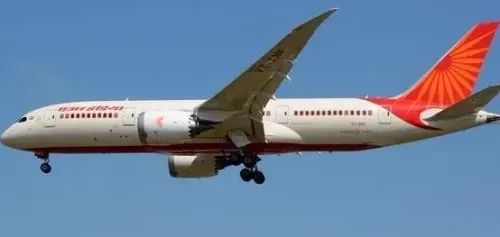
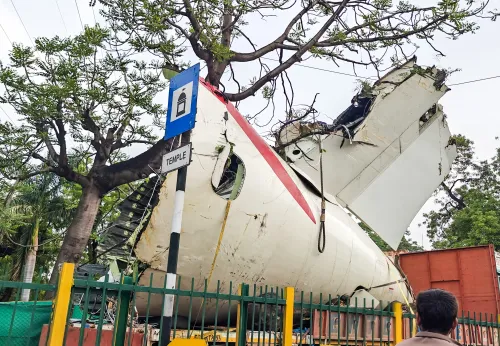
The airline's 787 Dreamliner crashed in June 2025 , killing hundreds, and the carrier was separately reprimanded for safety lapses including flying without a valid airworthiness certificate.
Air India Chief Executive Campbell Wilson has warned that his successor will have their 'hands full' navigating a cascading set of challenges — from a ban on Pakistan airspace and the fallout of the US-Iran war to surging operating costs driven by a strong US dollar. Wilson made the remarks at an event in New York on 22 May, confirming he would exit the airline within two months.
What Wilson Said
Speaking candidly about the road ahead, Wilson said the next four years would be 'just as challenging as the past, albeit in a different way.' He pledged to facilitate a smooth handover and stressed that he wants 'to make sure the right person is in place to carry forward' the work begun under his tenure.
'The platform has been laid, but obviously when you bring aircraft in, you're going to be operating in a much greater scale quite soon,' Wilson added, signalling confidence in the airline's structural progress even as near-term headwinds mount.
The Airspace and Fuel Crisis
The closure of Pakistan airspace and restrictions over large parts of the Gulf have forced Air India to reroute long-haul flights significantly. A Delhi-to-London service that previously took 8.5 hours now requires approximately 12 hours, Wilson noted — a direct consequence of the altered routing. Fuel costs have doubled as a share of the carrier's overall cost base from 34 per cent before the US-Iran war, compounding the financial strain.
At the height of the conflict, Air India reportedly cancelled around 2,500 flights to West Asia over three weeks, operating at just 30 per cent of its normal Middle East schedule.
Safety Record Under Scrutiny
Air India has faced significant regulatory and reputational pressure over its safety record. The carrier was reprimanded for flying an aircraft multiple times without a valid airworthiness certificate and without proper emergency equipment checks, according to multiple reports. Most gravely, its 787 Dreamliner crashed in June 2025, killing hundreds — a tragedy that has cast a long shadow over the airline's recovery narrative.
The Broader Challenge for the Next CEO
Beyond the geopolitical turbulence, Wilson outlined company-specific challenges the incoming chief executive must confront: scaling operations, managing profitability on key international corridors, and rebuilding staff relationships. Profitable North America routes have been scaled back, and longer flight times are eating into margins already squeezed by high fuel prices and a strong dollar.
With a new CEO search underway, the transition comes at a moment when Air India — under Tata Group ownership — is in the middle of an ambitious fleet and service overhaul. Whether the incoming leadership can sustain that momentum while managing external shocks will define the airline's trajectory in the years ahead.
Point of View
Rebuild Middle East revenue, and hold the turnaround thesis together simultaneously.
NationPress
9 Oct 2026
Frequently Asked Questions
Why is Campbell Wilson leaving Air India?
Campbell Wilson confirmed he will depart Air India within two months, without specifying a reason beyond the transition. He pledged to ensure a smooth handover and said he wants the right person in place to carry forward the airline's remaining challenges.
How has the Pakistan airspace ban affected Air India?
The ban on using Pakistan's airspace has forced Air India to reroute flights, significantly increasing journey times. The Delhi-to-London route, for instance, now takes approximately 12 hours instead of the previous 8.5 hours, raising fuel and operating costs.
What impact has the US-Iran war had on Air India?
The US-Iran war prompted Air India to cancel around 2,500 flights to West Asia over three weeks, reducing its Middle East schedule to just 30 per cent of normal operations. Fuel costs have also doubled as a share of the carrier's total cost base since the conflict began.
What safety issues has Air India faced?
Air India was reprimanded for flying an aircraft multiple times without a valid airworthiness certificate and without proper emergency equipment checks, according to multiple reports. The carrier also suffered a 787 Dreamliner crash in June 2025 that killed hundreds of people.
Who owns Air India and what is the turnaround plan?
Air India is owned by the Tata Group, which has been overseeing an ambitious fleet expansion and service overhaul. Wilson noted that the platform has been laid for growth, but the incoming CEO will need to scale operations while navigating ongoing geopolitical and financial headwinds.