Anand Mahindra Compares Haaland's Movement to Chess Strategy
Synopsis
Mahindra Group chairman Anand Mahindra drew a striking parallel between Erling Haaland's deceptive on-field movement and chess strategy on 7 July 2026, playfully suggesting Magnus Carlsen might call it the 'Cobra Gambit' — spotlighting Norway's rare dual dominance in football and chess.
Key Takeaways
Anand Mahindra posted on X on 7 July 2026 comparing Erling Haaland 's striker movement to chess strategy.
Mahindra described Haaland as 'decoying defenders into leaving him unmarked' before striking 'like a cobra' — a pattern he likened to a chess gambit.
He invoked Magnus Carlsen , Norway's world chess champion, coining the playful term 'Cobra Gambit' for Haaland's technique.
Norway has produced both Carlsen and Haaland — two global leaders in chess and football respectively — making the analogy geographically apt.
The post reflects a broader trend of business leaders using chess metaphors to explain competitive strategy and athletic execution.
Mahindra Group chairman Anand Mahindra took to X on Tuesday, 7 July 2026, to draw a sharp analogy between Norwegian footballer Erling Haaland's on-field movement and the strategic deception that defines elite chess — invoking fellow Norwegian Magnus Carlsen in the process.
Context
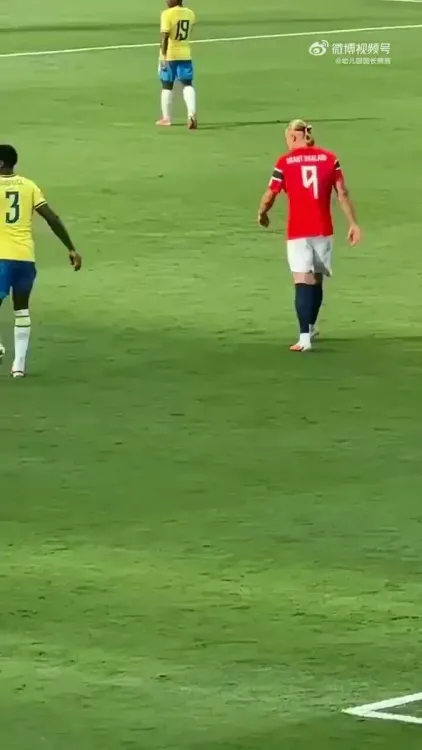
In his post, Mahindra observed that Haaland 'ambles on the field looking completely non-lethal, decoying defenders into leaving him unmarked' — before exploding into space the instant a passing lane opens. He likened this to a chess gambit, playfully suggesting Carlsen might name the manoeuvre the 'Cobra Gambit.' The post accompanied a video clip illustrating the movement in action.
The comparison is rooted in a recognisable pattern: Haaland's goal-scoring runs often appear unhurried until the decisive moment, a quality that has confounded Premier League defences repeatedly. Mahindra framed this as deliberate cognitive strategy rather than pure athleticism.
The Norway Connection
Norway has produced two of the contemporary sporting world's most celebrated strategic minds — Magnus Carlsen, a multiple-time world chess champion widely regarded as the greatest player in history, and Erling Haaland, the Manchester City striker whose goal-scoring record in the English Premier League has set new benchmarks for clinical finishing. That both excel through a combination of deception and precision made Mahindra's analogy particularly pointed.
Carlsen's style is defined by positional mastery and endgame precision — qualities Mahindra mapped directly onto Haaland's striker craft. The 'Cobra Gambit' coinage, while playful and not an established chess term, captures the essence: lure the opponent into complacency, then strike decisively.
Why the Analogy Resonates
Business and cultural figures have long drawn on chess metaphors to explain competitive strategy, and Mahindra — known for his widely-followed social media commentary — has a track record of using sport to illuminate broader ideas about intelligence and execution. The post reflects a recurring public fascination with the cognitive overlap between board games and dynamic team sports.
For football fans and chess enthusiasts alike, the framing offers a fresh lens on Haaland's movement: not raw speed alone, but calculated misdirection followed by explosive execution — a sequence that mirrors the logic of a well-prepared opening gambit.
What to Watch
As the 2026-27 Premier League season approaches, attention will focus on whether Haaland continues to confound defences with the same deceptive movement pattern Mahindra described. On the chess front, any upcoming international tournament featuring Magnus Carlsen will renew scrutiny of the strategic parallels between Norway's two global sporting icons. Mahindra's framing may well prompt wider commentary on how cognitive skills from one discipline translate to another — a conversation that spans boardrooms, sports academies, and social media in equal measure.
Point of View
Where chess analogies carry real currency. By connecting Haaland's physical movement to Carlsen's cognitive precision, Mahindra reinforces a narrative that elite performance, whether on a pitch or a board, is fundamentally about misdirection and timing. The 'Cobra Gambit' coinage is likely to circulate well beyond football circles, entering the vocabulary of coaches, managers, and strategists. It also subtly elevates Norway's soft-power profile at a moment when the country's dual sporting dominance is drawing fresh international attention.
NationPress
7 Jul 2026
Frequently Asked Questions
What did Anand Mahindra say about Erling Haaland?
Mahindra compared Haaland's on-field movement to chess strategy, saying he deceives defenders by appearing non-threatening before exploding into space with lethal precision — playfully calling it the 'Cobra Gambit' in reference to Magnus Carlsen.
What is the Cobra Gambit Anand Mahindra mentioned?
The 'Cobra Gambit' is a playful term coined by Mahindra in his post to describe Haaland's striker technique — luring defenders into leaving him unmarked, then striking decisively, much like a deceptive chess opening.
Why did Mahindra compare Haaland to Magnus Carlsen?
Both Haaland and Carlsen are Norwegian and are regarded as the best in their respective fields. Mahindra drew on their shared nationality and the strategic deception common to both chess and Haaland's movement pattern.
What club does Erling Haaland play for?
Erling Haaland plays as a striker for Manchester City in the English Premier League, where he has set records for clinical goal-scoring.
Is Anand Mahindra a football fan?
Mahindra is known for wide-ranging social media commentary that spans business, innovation, and global culture including sports. His post on Haaland reflects his broader habit of drawing strategic insights from sporting events.