Giriraj Singh unveils India's jute kit for Commonwealth Games 2026
Synopsis
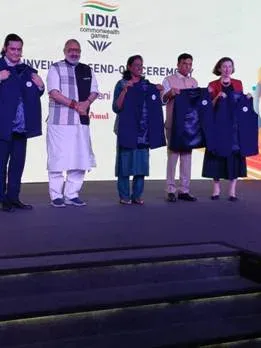
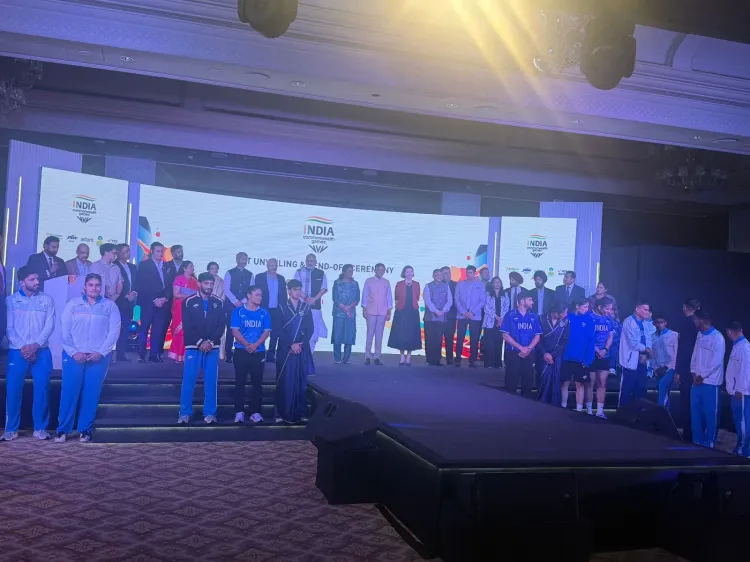
Union Textiles Minister Giriraj Singh attended Team India's send-off ceremony in New Delhi on 7 July 2026, where a first-of-its-kind 100% biodegradable jute-viscose kit — developed by the National Jute Board and designed by NIFT — was unveiled for the 2026 Commonwealth Games in Glasgow.
Key Takeaways
For the first time at a major international sporting event, India's official delegation kit is made from 100% biodegradable jute-viscose blended fibre .
The kit was developed by the National Jute Board and designed by NIFT , both bodies under the Ministry of Textiles.
The ceremony in New Delhi on 7 July 2026 was attended by Sports Minister Dr.
Mansukh Mandaviya and IOA President P.T.
The initiative links India's Make in India and Vocal for Local campaigns to global sporting visibility.
Jute farmers in West Bengal, Bihar, and Assam and textile MSMEs are the primary economic beneficiaries.
The Glasgow debut could set a precedent for jute-blended kits at future international events including Olympic cycles.
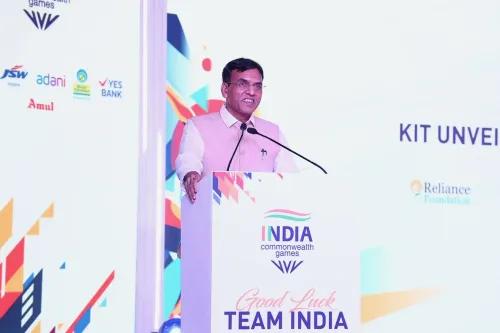
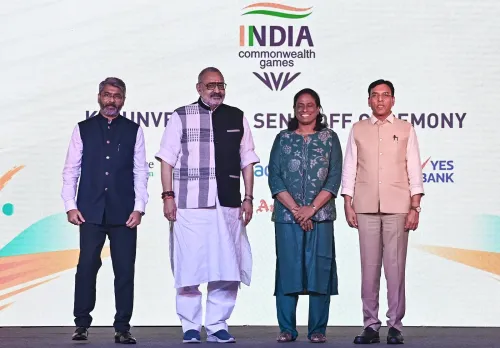
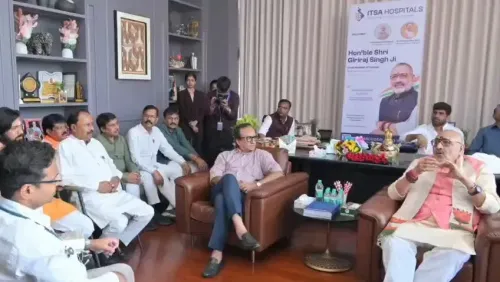
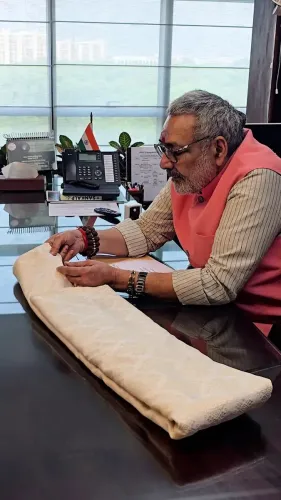
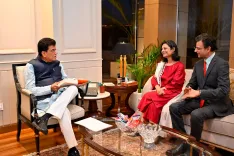
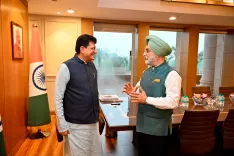
Union Textiles Minister Giriraj Singh attended the ceremonial kit unveiling and send-off ceremony for the Indian contingent heading to the 2026 Commonwealth Games in Glasgow, Scotland, in New Delhi on Tuesday, 7 July 2026. For the first time at a major international sporting event, the official kit of the Indian delegation has been made from 100% biodegradable jute-viscose blended fibre — developed by the National Jute Board and designed by the National Institute of Fashion Technology (NIFT).
Context
Singh, posting in Hindi on X, described the occasion as 'atyanth garv ka vishay' — 'a matter of immense pride' — noting that this marks the first time a major international sporting delegation from India has donned a formally unveiled kit crafted from natural, biodegradable fibre. The minister said the initiative would give India's natural fibres, innovation, and commitment to Make in India and 'Made Sustainably in India' a new identity on the global stage.
The ceremony was also attended by Union Minister of Youth Affairs and Sports Dr. Mansukh Mandaviya, Indian Olympic Association President P.T. Usha, Joint Secretary Shri Kalyan Chaubey, and other IOA officials. Singh extended his best wishes to Indian athletes, expressing full confidence that they would bring glory to the nation through outstanding performances.
Policy Backdrop
The National Jute Board is a statutory body under the Ministry of Textiles, mandated to promote and develop jute products and expand their markets. NIFT, also under the Ministry of Textiles and established in 1986, has been increasingly deployed as a design partner for government-backed textile initiatives. The collaboration between the two bodies for an international sporting kit represents a visible convergence of sustainability goals and design capability within the textiles ecosystem.
India's National Jute Policy of 2005 had aimed to diversify jute usage beyond traditional packaging. Subsequent amendments to plastic waste management rules from 2016 onward positioned jute as a preferred biodegradable alternative. The Make in India programme, launched in September 2014, explicitly included promotion of natural fibre textiles and exports as a priority sector.
Stakeholders and Impact
The most direct beneficiaries of this initiative are jute farmers, primarily concentrated in West Bengal, Bihar, and Assam, along with textile MSMEs in the jute processing and weaving sectors. By placing jute-blended fabric on an international stage at the Commonwealth Games, the Ministry of Textiles is effectively using Team India as a showcase for export-ready sustainable textiles.
For Indian athletes, the kit signals a policy alignment between sporting representation and national manufacturing goals. The Vocal for Local campaign, which the minister referenced in his post, has been a recurring theme in the Ministry's communication strategy since 2020, linking consumer choices to livelihood outcomes for artisans and farmers.
What's Next
The 2026 Commonwealth Games in Glasgow will serve as the first major international test for the jute-viscose blended kit in terms of athlete feedback, media visibility, and global reception. A positive reception could accelerate the rollout of NIFT-NJB collaborative designs for other international events, including future Olympic cycles.
Analysts will also watch whether the Union Budget 2026-27 or upcoming parliamentary sessions include specific allocations or targets for jute-based technical textiles in the sports and lifestyle segments — a sector the Textiles Ministry has been actively cultivating. The Glasgow appearance may well become a reference point in future policy documents on sustainable textile exports.
Point of View
Placing a Ministry of Textiles agenda item on one of the Commonwealth's most-watched stages. By involving both the National Jute Board and NIFT, the government is signalling institutional depth behind its sustainability claims, not just ministerial rhetoric. The move fits a broader pattern of the BJP government using high-visibility events — from G20 to now Commonwealth Games — to project 'Made in India' credentials to international audiences. Whether the strategy translates into measurable export orders or farmer income gains for the jute belt will be the harder test in the months ahead.
NationPress
7 Jul 2026
Frequently Asked Questions
What is special about India's kit for the 2026 Commonwealth Games?
India's kit for the 2026 Commonwealth Games in Glasgow is the first official delegation kit at a major international sporting event to be made from 100% biodegradable jute-viscose blended fibre, developed by the National Jute Board and designed by NIFT.
Who designed the Indian team's kit for Commonwealth Games 2026?
The kit was designed by the National Institute of Fashion Technology (NIFT) and developed using jute-viscose blended fibre by the National Jute Board, both bodies under India's Ministry of Textiles.
Where are the 2026 Commonwealth Games being held?
The 2026 Commonwealth Games are scheduled to be held in Glasgow, Scotland.
Who attended the Team India send-off ceremony on 7 July 2026?
Union Textiles Minister Giriraj Singh, Sports Minister Dr. Mansukh Mandaviya, Indian Olympic Association President P.T. Usha, and Joint Secretary Kalyan Chaubey were among those present at the ceremony in New Delhi.
What is the National Jute Board?
The National Jute Board is a statutory body under India's Ministry of Textiles, responsible for the promotion, development, and market expansion of jute products across domestic and international markets.