Giriraj Singh unveils National Fiber Mission blueprint
Synopsis
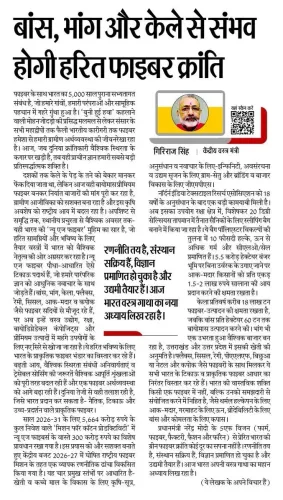
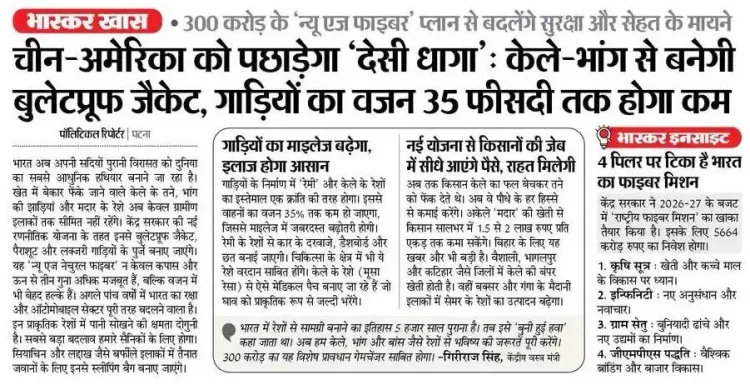
Union Textiles Minister Giriraj Singh on 2 June 2026 outlined the National Fiber Mission, a proposed ₹5,664 crore scheme to convert banana stems, hemp, and madar fibres into bulletproof jackets, automobile parts, and medical patches, framing it as a boost for farmer incomes and strategic self-reliance.
Key Takeaways
Union Textiles Minister Giriraj Singh announced the framework of the National Fiber Mission on 2 June 2026 .
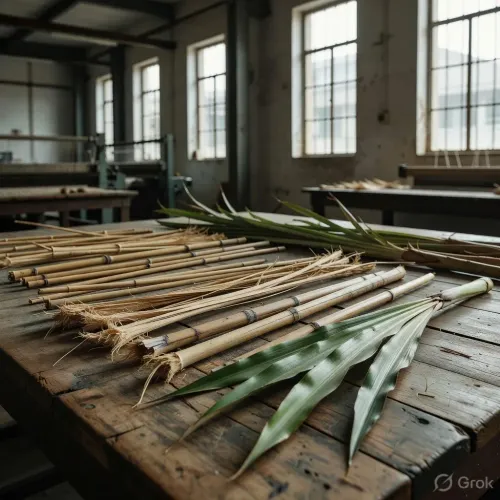
The mission proposes converting agricultural waste — banana stems, hemp, and madar fibres — into industrial products.
Target sectors include defence (bulletproof jackets), automobiles (luxury components), and medical (advanced patches).
A budget provision of ₹5,664 crore has been cited; independent confirmation of this figure was not available at publication.
Singh linked the scheme to PM Modi's Atmanirbhar Bharat vision and said it would raise farmer incomes by monetising crop residues.
Formal scheme guidelines, pilot projects, and DRDO or OEM partnerships are yet to be announced.
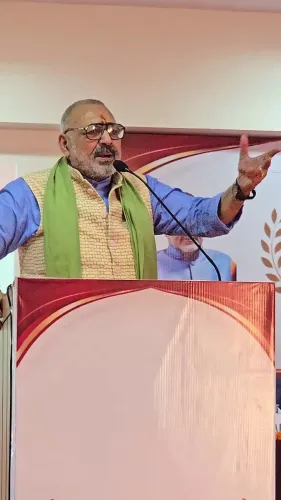
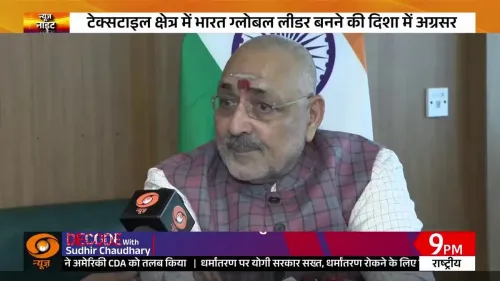
Union Textiles Minister Giriraj Singh on Tuesday, 2 June 2026 outlined the framework of the proposed National Fiber Mission, saying the scheme would harness agricultural waste fibres — including banana stems, hemp, and madar — to manufacture bulletproof jackets, luxury automobile components, and advanced medical patches.
Context
Posting on X, the minister wrote: 'देसी धागे का कमाल, दुनिया देखेगी भारत के नए युग का नवाचार!' ('The magic of indigenous threads — the world will witness India's innovation in a new era!'). He attributed the mission's vision to Prime Minister Narendra Modi and said the blueprint had already been drawn up under his guidance.
Singh described the scheme as a vehicle to make Atmanirbhar Bharat and the 'Local for Vocal' philosophy visible on a global stage. The post cited a budget provision of ₹5,664 crore earmarked for the mission, though formal parliamentary or budgetary confirmation of this figure was not independently available at the time of publication.
Policy Backdrop
Make in India, launched in September 2014, set the template for converting domestic raw materials into finished industrial goods and attracting manufacturing investment. Atmanirbhar Bharat Abhiyan, announced in May 2020, deepened that thrust by emphasising indigenous supply chains and reducing import dependence in strategic sectors.
The National Fiber Mission, as described by Singh, extends this lineage into agri-waste valorisation — a segment where India holds a large natural resource base but has historically exported raw material rather than finished technical textiles. Banana pseudo-stems, hemp stalks, and madar (calotropis) fibres are among the crop residues identified for industrial conversion.
Stakeholders and Impact
Farmers are positioned as a primary beneficiary group: Singh argued that residues currently discarded in the field would become a commercial input stream, directly raising rural incomes. The minister used the term 'annadata' (provider of grain) — a politically resonant reference to India's agricultural community — to underscore the income-support dimension.
The defence sector stands to gain if domestic fibre composites can substitute imported materials in personal protective equipment such as bulletproof jackets. The automobile industry is cited as a market for lightweight natural-fibre components, while the medical sector is flagged as a user of bio-fibre patches. Formal partnerships with bodies such as DRDO or original equipment manufacturers have not yet been announced.
What's Next
The immediate watch points are the release of detailed scheme guidelines, the notification of pilot projects, and the appearance of the stated ₹5,664 crore allocation in a Union Budget or supplementary demand for grants. Parliamentary committee scrutiny of the mission's targets and timelines will provide the next layer of accountability.
If the mission advances to implementation, India's technical textiles segment — already identified as a priority under earlier textile policy frameworks — could see a structural shift toward bio-based, domestically sourced materials, with implications for both import bills and farm-gate prices for non-food crops.
Point of View
Singh is reinforcing a familiar political narrative ahead of potential budgetary scrutiny. The ₹5,664 crore figure, if confirmed in a formal budget document, would represent a significant commitment to technical textiles — a sector that has received policy attention but limited capital deployment. The credibility of the mission will ultimately rest on verifiable pilot outcomes with defence or automotive partners, not ministerial social-media framing.
NationPress
20 Sept 2026
Frequently Asked Questions
What is the National Fiber Mission announced by Giriraj Singh?
The National Fiber Mission is a proposed central scheme outlined by Union Textiles Minister Giriraj Singh to convert agricultural waste fibres — such as banana stems, hemp, and madar — into industrial products for the defence, automobile, and medical sectors.
How much money is allocated for the National Fiber Mission?
Giriraj Singh cited a budget provision of ₹5,664 crore for the mission. This figure had not been independently confirmed through a Union Budget document or parliamentary record at the time of publication.
How will the National Fiber Mission help farmers?
The scheme aims to turn crop residues that farmers currently discard — such as banana pseudo-stems and hemp stalks — into commercial raw materials, creating a new income stream without requiring additional cultivation.
What products will be made under the National Fiber Mission?
According to Singh's announcement, the mission targets bulletproof jackets for defence, lightweight components for luxury automobiles, and advanced bio-fibre medical patches.
How does the National Fiber Mission relate to Atmanirbhar Bharat?
Singh described the mission as a practical expression of the Atmanirbhar Bharat Abhiyan, reducing India's dependence on imported synthetic fibres for strategic applications by substituting domestically grown natural fibres.