Anand Mahindra Spotlights Women Engineers Powering Chakan Plant
Synopsis
Mahindra Group chairman Anand Mahindra spotlighted three women engineers — Subhangi Mane, Sudha Kunibilli, and Manasi Rahangdale — working in core technical roles at the group's flagship Chakan auto plant, arguing they are powering, not just participating in, India's manufacturing rise.
Key Takeaways
Anand Mahindra named three women engineers at Mahindra's Chakan plant in Pune during a post on November 16, 2026 .
Subhangi Mane (BE Electrical Engineering) handles Controls and PLC; Sudha Kunibilli (B.Tech ECE) manages the Closure Fitment and Metal Finish Line; Manasi Rahangdale (Diploma, Computer Science) runs Main Body and Side Body Lines.
Chakan is Mahindra's largest and most sophisticated automotive plant, according to the chairman.
Mahindra explicitly framed the women as 'a force to be reckoned with' rather than a diversity metric to be satisfied.
The post connects to India's broader Make in India and Skill India policy context, which has driven incremental growth in women's participation in auto manufacturing since 2014–15 .
Three women. Three engineering disciplines. One of India's most sophisticated automotive plants. Mahindra Group chairman Anand Mahindra used his Monday, November 16 post on X to put names and faces to what India's manufacturing ambition actually looks like on the ground — and the picture is sharply different from the boardroom optics usually associated with 'diversity'.
Who Mahindra met at Chakan's Founders' Day
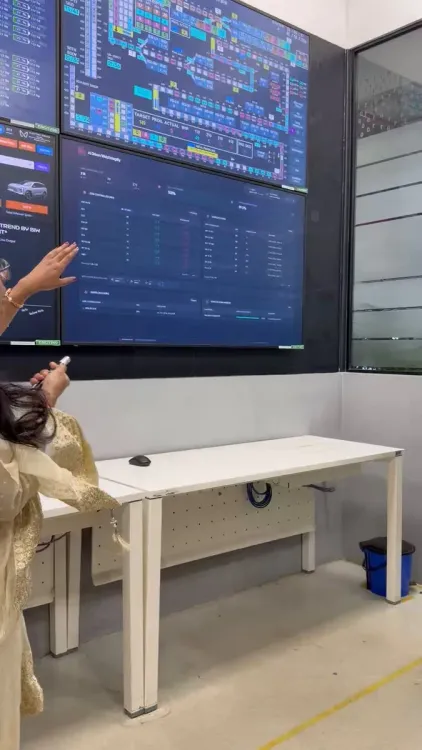
Mahindra named three engineers he encountered during Founders' Day celebrations at Mahindra's Chakan plant in Pune, Maharashtra — described by the chairman himself as the group's 'largest and most sophisticated automotive plant'. Subhangi Mane, a BE in Electrical Engineering, handles Controls and PLC systems. Sudha Kunibilli, a B.Tech in Electronics and Communication Engineering, manages the Closure Fitment and Metal Finish Line. Manasi Rahangdale, a Diploma holder in Computer Science, runs the Main Body and Side Body Lines.
These are not support or administrative roles. Controls and PLC, body-line management, and metal-finish supervision sit at the operational core of any modern auto assembly plant — the kind of positions that determine whether a vehicle rolls off the line on spec or gets flagged for rework.
The line Mahindra drew — and why it lands differently
The chairman's framing was deliberate and pointed. 'Women on the shop floor aren't a diversity target to be met,' he wrote. 'They're a force to be reckoned with.' That is a meaningful rhetorical distance from the quota-and-compliance language that typically accompanies corporate gender messaging. By leading with qualifications and specific technical responsibilities — not headcounts or percentages — Mahindra anchored the post in competence rather than charity.
He added, with characteristic lightness, that the trio 'were dressed for the celebrations' and that their everyday shop-floor attire is 'rather more industrial' — a small touch that underscores the point: these are working engineers, not photo-opportunity participants.
Women on the line: where India's auto sector stands
Indian automotive manufacturers have been incrementally raising female representation in technical and production roles since the mid-2010s, a shift that gathered pace alongside the Make in India initiative launched in 2014 and the Skill India programme announced in 2015. The emphasis from industry has increasingly moved from optics to output — framing women in manufacturing as a talent-supply answer to India's ambition of becoming a global auto-export hub.
Chakan is emblematic of that ambition. The industrial township near Pune hosts some of the country's most capital-intensive automotive infrastructure, and Mahindra's plant there is a flagship of the group's passenger-vehicle push. When the chairman of that group calls women on its shop floor 'the people powering India's manufacturing revolution', the signal travels well beyond one Monday-morning post.
Point of View
Showcasing women in PLC, body-line, and metal-finish roles signals a talent-supply strategy, not just a reputational one. The post also functions as soft employer branding at a moment when competition for technically-trained manufacturing talent is intensifying across Maharashtra's auto corridor. Watch for whether peer OEMs mirror this competence-first messaging in forthcoming diversity disclosures.
NationPress
16 Nov 2026
Frequently Asked Questions
Who are the three women engineers Anand Mahindra mentioned?
Anand Mahindra named Subhangi Mane (BE Electrical Engineering, handling Controls and PLC), Sudha Kunibilli (B.Tech Electronics and Communication Engineering, managing the Closure Fitment and Metal Finish Line), and Manasi Rahangdale (Diploma in Computer Science, running the Main Body and Side Body Lines) — all working at Mahindra's Chakan plant in Pune.
Where is Mahindra's Chakan plant and why is it significant?
The Chakan plant is located in Chakan, an industrial township near Pune, Maharashtra. Mahindra Group chairman Anand Mahindra has described it as the group's largest and most sophisticated automotive manufacturing facility, making it central to Mahindra's passenger-vehicle production ambitions.
What was the occasion for Anand Mahindra meeting these engineers?
Mahindra met the three engineers during Founders' Day celebrations at the Chakan plant, an internal company event he referenced in his November 16, 2026 post on X.
What is the state of women's participation in India's auto manufacturing sector?
Indian automotive manufacturers have incrementally increased female representation in technical and production roles since the mid-2010s, partly driven by the Make in India initiative (2014) and the Skill India programme (2015), with industry focus shifting toward placing women in core operational roles rather than ancillary positions.
Why did Anand Mahindra say women are 'not a diversity target'?
Mahindra used that phrase to emphasise that the women at his plant hold substantive technical roles — such as PLC controls and body-line management — rather than being hired to meet numerical quotas, framing their presence as a commercial and operational asset rather than a compliance exercise.