Banks collected ₹26,170 crore in minimum balance charges from FY23 to FY26

Synopsis
Indian banks quietly collected over ₹26,170 crore in minimum balance penalties over four years — and private banks, led by HDFC Bank and Axis Bank, took more than twice what public sector banks did in FY26 alone. With 10 of 12 PSBs having scrapped such charges, the data exposes a sharp and growing divide in how Indian banks treat their retail depositors.
Key Takeaways
Indian banks collected over ₹26,170 crore in minimum balance penalties across FY23 to FY26 , per data shared in the Rajya Sabha .
In FY26 alone, total collections stood at ₹7,086.63 crore ; private banks accounted for ₹4,948.71 crore versus ₹2,137.92 crore by PSBs.
HDFC Bank (₹1,798.14 crore) and Axis Bank (₹1,081.33 crore) together made up nearly 58% of private sector collections in FY26.
10 of 12 public sector banks have discontinued minimum balance penalties on savings accounts; SBI waived them since March 2020 .
Approximately 73 crore Basic Savings Bank Deposit Accounts , including PMJDY accounts, are exempt from minimum balance requirements.
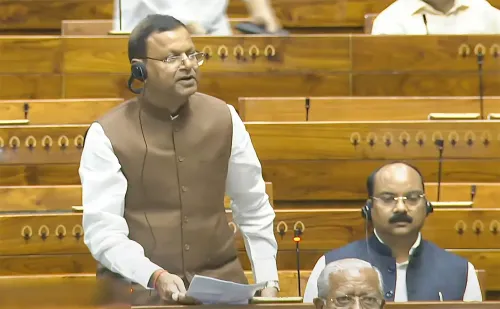
Indian banks collected more than ₹26,170 crore in penalties from customers who failed to maintain the minimum average balance (MAB) in their accounts across the four financial years from FY23 to FY26, according to data tabled in Parliament. The figures, disclosed by Minister of State for Finance Pankaj Chaudhary in a written reply in the Rajya Sabha, reveal that private sector banks extracted a significantly larger share of these charges than their public sector counterparts.
FY26 Collections: Private Banks Dominate
In FY26 alone, banks collectively levied ₹7,086.63 crore in minimum balance penalties. Of this, private sector lenders accounted for ₹4,948.71 crore — more than double the ₹2,137.92 crore collected by public sector banks (PSBs).
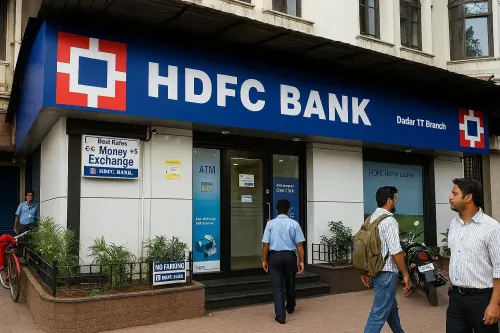
Among private lenders, HDFC Bank reported the highest collection at ₹1,798.14 crore, followed by Axis Bank at ₹1,081.33 crore. Together, the two banks accounted for nearly 58% of all minimum balance charges collected by private sector banks during the year.
Other private banks that reported collections in FY26 included ICICI Bank at ₹353.50 crore, Kotak Mahindra Bank at ₹290.65 crore, Yes Bank at ₹195.05 crore, and IDBI Bank at ₹175.15 crore.
Public Sector Banks: A Different Picture
Among PSBs, State Bank of India (SBI) reported the highest collection at ₹477.27 crore, followed by Bank of Baroda at ₹394.10 crore and Indian Bank at ₹299.17 crore. Notably, the government clarified that SBI's figure pertains exclusively to current accounts, as the bank waived minimum balance penalties on savings accounts in March 2020.
The government also noted that public sector banks have substantially scaled back such charges in recent years. Of the 12 PSBs, 10 have fully discontinued penal charges for non-maintenance of minimum average balance in savings accounts. The remaining two have rationalised their charges in line with board-approved policies and commercial considerations.
Exemptions: Jan Dhan and Basic Savings Accounts
The Finance Ministry reiterated that Basic Savings Bank Deposit Accounts (BSBDAs) — including those opened under the Pradhan Mantri Jan Dhan Yojana (PMJDY) — are fully exempt from minimum balance requirements. Approximately 73 crore BSBDAs currently do not attract any penalty for non-maintenance of balance, providing a crucial safeguard for low-income account holders.
Why This Matters
The data underscores a widening gap between the approaches of private and public sector banks toward retail customers. While PSBs have largely moved away from penalising small depositors, private banks — particularly the two largest by collection — continue to generate substantial revenue from these charges. This comes amid broader regulatory scrutiny of bank fee structures and growing calls for transparency in how minimum balance thresholds are communicated to customers. The parliamentary disclosure is likely to intensify pressure on regulators to revisit guidelines on MAB penalties across the sector.
Point of View
170 crore figure is not just a revenue statistic — it is a map of how differently Indian banks treat their depositors. Public sector banks have largely exited this revenue stream under regulatory and political pressure, while private banks, particularly HDFC Bank and Axis Bank, continue to monetise account inactivity at scale. The Reserve Bank of India has periodically flagged the need for fair and transparent MAB communication, yet enforcement has remained soft. With Parliament now holding a mirror to these numbers, the question is whether the RBI will move from advisories to binding guardrails — and whether private banks will wait to be told, or act first.
NationPress
28 Oct 2026
Frequently Asked Questions
How much did Indian banks collect in minimum balance charges from FY23 to FY26?
Indian banks collected more than ₹26,170 crore in penalties for non-maintenance of minimum average balance across the four financial years from FY23 to FY26, according to data disclosed in the Rajya Sabha by Minister of State for Finance Pankaj Chaudhary.
Which bank collected the most in minimum balance charges in FY26?
HDFC Bank reported the highest minimum balance penalty collection among all banks in FY26 at ₹1,798.14 crore, followed by Axis Bank at ₹1,081.33 crore. Together, the two private lenders accounted for nearly 58% of all private sector collections that year.
Do public sector banks still charge minimum balance penalties?
Most do not. Of the 12 public sector banks, 10 have fully discontinued penal charges for non-maintenance of minimum average balance in savings accounts. The remaining two have rationalised their charges. SBI waived savings account MAB penalties as far back as March 2020.
Are Jan Dhan and basic savings accounts exempt from minimum balance rules?
Yes. Basic Savings Bank Deposit Accounts (BSBDAs), including those opened under the Pradhan Mantri Jan Dhan Yojana, are fully exempt from minimum balance requirements. Around 73 crore such accounts currently attract no penalty for non-maintenance of balance.
Why are private banks collecting far more than public sector banks in MAB charges?
Private banks have maintained higher minimum balance thresholds and continued to levy penalties, while most public sector banks have phased out such charges under regulatory guidance and policy direction. The gap in FY26 — ₹4,948.71 crore for private banks versus ₹2,137.92 crore for PSBs — reflects this structural divergence in approach to retail depositor fees.