Bharat Tex 2026 draws 6,000 global buyers, secures ₹14,300 crore investment
Synopsis
Bharat Tex 2026 wasn't just a trade show — it was a statement of intent. With ₹14,300 crore in investment commitments, 6,000 global buyers from 130 countries, and 120 grassroots weavers sharing floor space with multinational buyers, India's flagship textile exhibition is redefining how heritage craft and industrial scale can coexist on a global stage.
Key Takeaways
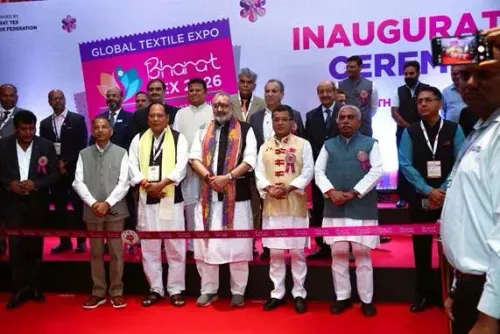
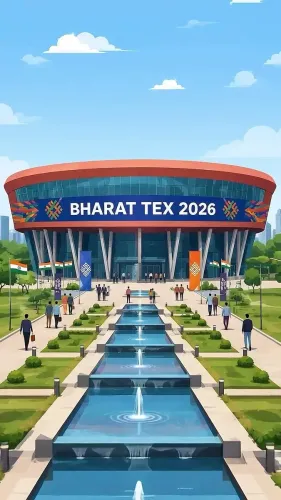
Bharat Tex 2026 was held at Bharat Mandapam , New Delhi , attracting over 6,000 international buyers from more than 130 countries .
The exhibition generated investment commitments worth over ₹14,300 crore .
More than 28,000 B2B meetings and over 100 government-to-government interactions were facilitated.
The event spanned 1.6 million square feet and featured over 20,000 textile products from more than 1,600 exhibitors .
Niryaatak Handloom Cooperative Society , representing 120 weavers , accessed global buyers via a subsidised stall under the Handloom Export Promotion Council .
Indie Haat 2026 at the National Crafts Museum ran alongside, featuring 48 artisans and 12 design-led brands .
Bharat Tex 2026, the third edition of India's flagship textile exhibition, drew more than 6,000 international buyers from over 130 countries and approximately 1.3 lakh trade visitors to Bharat Mandapam in New Delhi, generating investment commitments worth over ₹14,300 crore, according to an official government statement. The event placed traditional Indian art forms at the centre of global commerce, signalling rising international confidence in India's textile sector.
Scale and Scope of the Exhibition
Spread across 1.6 million square feet, the exhibition featured more than 20,000 textile products and over 1,600 exhibitors. It covered the full textile value chain — from fibre, yarn, fabric, and apparel to home textiles, technical textiles, handlooms, and handicrafts. More than 11,000 buyers participated, making it one of the largest textile trade gatherings India has hosted.
The event facilitated more than 28,000 business-to-business meetings, along with over 100 government-to-government and business-to-government interactions, reflecting its dual role as both a commercial platform and a policy dialogue forum.
Heritage Crafts in the Global Spotlight
Among the traditional art forms showcased was Tikuli art from Bihar, recognised for its vibrant colours and intricate enamel work. The exhibition also brought together crafts including Gulabi Minakari, Dokra, Usta Kala, Pichwai, Sozni embroidery, Blue Pottery, silver filigree, Cheriyal painting, Mata Ni Pachedi, papier-mâché, Bagru block printing, Jamdani sarees, Muga and Eri silk, and Odisha Ikat, among several others.
Notably, the Niryaatak Handloom Cooperative Society Limited, representing approximately 120 weavers, utilised a subsidised stall facilitated by the Handloom Export Promotion Council to bring home-based handloom production before an international audience — an example of how institutional support is helping grassroots artisans access global markets.
Indie Haat 2026: A Parallel Platform for Artisans
Running alongside Bharat Tex, Indie Haat 2026 at the National Crafts Museum in Delhi presented India's handloom and handicraft heritage to a wider audience. The parallel event drew 48 artisans and weavers along with 12 design-led brands, placing regional craftsmanship at the heart of the larger textile showcase.
What This Signals for India's Textile Sector
The participation of exhibitors, buyers, investors, policymakers, and industry stakeholders from India and abroad underscores growing global appetite for Indian textiles — both as a manufacturing source and a heritage product category. This comes amid India's broader push to expand its share of global textile exports, a sector that supports millions of livelihoods. The investment commitments secured at this edition are expected to flow into manufacturing capacity, technology upgrades, and export infrastructure in the months ahead.
Point of View
300 crore investment figure is headline-worthy, but the more consequential story is structural: Bharat Tex is increasingly functioning as a soft-power instrument, placing Bihar's Tikuli art and Odisha Ikat in front of 6,000 global buyers who might otherwise never encounter them. The question is whether these commitments translate into sustained export orders or remain one-edition momentum. India's textile export ambitions have historically struggled with last-mile infrastructure and quality consistency — the real test of Bharat Tex's value will be visible in the export data twelve months from now, not the press release the day after.
NationPress
16 Oct 2026
Frequently Asked Questions
What is Bharat Tex 2026?
Bharat Tex 2026 is the third edition of India's flagship textile and handicraft trade exhibition, held at Bharat Mandapam in New Delhi. It brought together over 1,600 exhibitors, 6,000 international buyers from 130 countries, and approximately 1.3 lakh trade visitors to showcase India's full textile value chain.
How much investment was committed at Bharat Tex 2026?
The event generated investment commitments worth over ₹14,300 crore, according to an official government statement. These commitments are expected to support manufacturing capacity, technology, and export infrastructure in the textile sector.
Which traditional crafts were featured at Bharat Tex 2026?
The exhibition showcased a wide range of Indian heritage crafts, including Tikuli art from Bihar, Gulabi Minakari, Dokra, Usta Kala, Pichwai, Sozni embroidery, Blue Pottery, Jamdani sarees, Muga and Eri silk, Odisha Ikat, and Bagru block printing, among others.
What is Indie Haat 2026 and how does it relate to Bharat Tex?
Indie Haat 2026 was a parallel event held at the National Crafts Museum in Delhi, running alongside Bharat Tex 2026. It featured 48 artisans and weavers along with 12 design-led brands, focusing specifically on India's handloom and handicraft heritage.
How did small weavers benefit from Bharat Tex 2026?
The Niryaatak Handloom Cooperative Society Limited, representing around 120 home-based weavers, was given access to a subsidised stall facilitated by the Handloom Export Promotion Council. This allowed grassroots artisans to present their products directly to international buyers at the global platform.