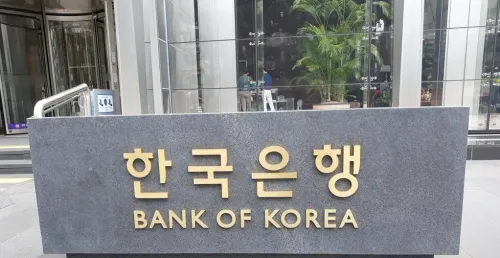
Bank of Korea's foreign asset returns hit $12.5 billion in 2025, up 32%

Synopsis
The Bank of Korea's foreign asset returns nearly doubled in two years, reaching $12.5 billion in 2025 — the highest in recent history — driven by a weak won and global equity gains. But even as the central bank books record offshore income, South Korean stocks are sliding for a third straight session under the weight of oil-driven inflation fears and Fed rate anxiety.
Key Takeaways
The Bank of Korea earned 16.9 trillion won ($12.5 billion) from foreign assets in 2025 , up 32 percent from a year earlier.
A weaker won against the US dollar and a global stock market rally were the primary drivers of the surge.
Returns had collapsed to just 3.9 trillion won in 2022 during the global rate-hike sell-off before recovering sharply.
The benchmark KOSPI fell 177.97 points (2.62%) to 6,625.93 in the latest session, its third consecutive decline .
Institutions and foreign investors sold a combined net 3.66 trillion won worth of South Korean equities.
Elevated oil prices and US Federal Reserve rate-hike signals are weighing on investor sentiment across the region.
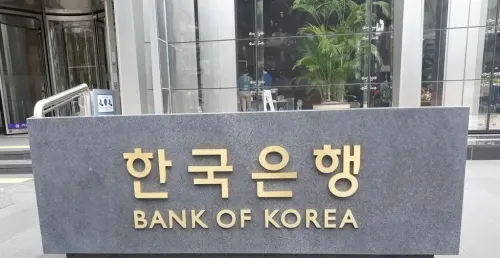
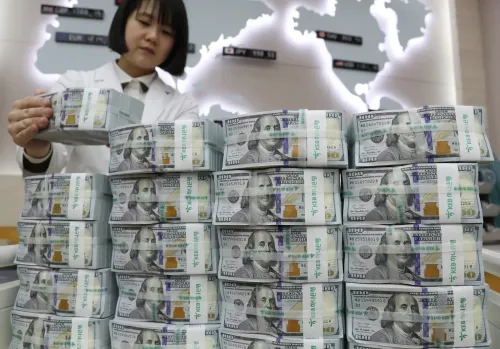
The Bank of Korea (BOK) recorded nearly 17 trillion won (approximately $12.5 billion) in returns from foreign assets in 2025, driven by a weaker won and a broad rally in global stock markets, according to data submitted to a lawmaker from the main opposition People Power Party (PPP). The figure represents a 32 percent jump compared to the previous year, marking one of the central bank's strongest performances on foreign holdings in recent memory.
What drove the surge
The BOK attributed the strong showing to two primary factors: the won's depreciation against the US dollar, which inflated the won-denominated value of foreign holdings, and a sustained rally across global equity markets. 'The won's weakness against the dollar and a rally in stock markets drove up net income linked to foreign assets,' the central bank stated in its 2025 annual report, released in March. Returns on foreign assets included won-denominated income from securities holdings, interest on bank deposits, dividends, and proceeds from stock sales.
A decade of volatile returns
The trajectory of the BOK's foreign asset returns over the past decade underscores how sensitive they are to global macro conditions. Returns hovered around 8 trillion won annually between 2016 and 2018, before rising to 13.8 trillion won in 2021 on the back of pandemic-era market tailwinds. They then collapsed to just 3.9 trillion won in 2022, as global markets sold off sharply amid aggressive rate hikes by the US Federal Reserve. A partial recovery followed, with returns rebounding to 4.9 trillion won in 2023 and surging to 12.8 trillion won in 2024, setting the stage for the 2025 peak.
Seoul stocks under pressure
Against this backdrop, South Korean equities have faced fresh headwinds. During the latest trading session, the benchmark Korea Composite Stock Price Index (KOSPI) closed down 177.97 points, or 2.62 percent, at 6,625.93, extending losses for a third consecutive session. The index had opened 0.07 percent higher before turning lower as the session progressed.
The sell-off was broad-based: institutions offloaded a net 1.67 trillion won ($1.24 billion) worth of shares, while foreign investors sold a net 1.99 trillion won. Individual investors bucked the trend, buying a net 2.9 billion won. The decline echoed overnight losses on Wall Street, where the Dow Jones Industrial Average fell 0.66 percent and the Nasdaq Composite declined 0.22 percent.
Inflation and rate concerns weigh on sentiment
Elevated oil prices have emerged as the central concern for markets, stoking fresh inflation worries across Asia. Investors are reportedly wary that higher energy costs could complicate monetary policy, particularly as the US Federal Reserve has signalled it may need to raise interest rates further this year to bring inflation under control. The Korean won, however, rose against the US dollar in the latest session — a divergence from the trend that had boosted the BOK's foreign asset returns through the year.
The interplay between currency movements, global rate policy, and equity performance will likely continue to shape the BOK's returns trajectory — and South Korea's broader financial stability outlook — in the months ahead.
Point of View
Which means the gain is partly illusory from a real-purchasing-power standpoint. What is genuinely notable is the speed of recovery from the 2022 trough, which reflects how quickly global equity markets rebounded. The current KOSPI slide, driven by oil-price anxiety and Fed hawkishness, is a reminder that the same macro forces that boosted 2025 returns can reverse sharply — and South Korea, as a small open economy heavily exposed to US rate cycles and energy import costs, has limited buffers against that volatility.
NationPress
11 Oct 2026
Frequently Asked Questions
How much did the Bank of Korea earn from foreign assets in 2025?
The Bank of Korea recorded returns of approximately 16.9 trillion won, equivalent to nearly $12.5 billion, from its foreign assets in 2025. This was a 32 percent increase compared to the previous year, according to data submitted to a People Power Party lawmaker.
What drove the Bank of Korea's strong foreign asset returns in 2025?
The BOK cited two main drivers: the won's depreciation against the US dollar, which boosted the won-denominated value of foreign holdings, and a broad rally in global stock markets. Income sources included securities holdings, bank deposit interest, dividends, and stock sales.
How have Bank of Korea foreign asset returns changed over the years?
Returns hovered around 8 trillion won per year from 2016 to 2018, rose to 13.8 trillion won in 2021, then plunged to 3.9 trillion won in 2022 during the global rate-hike downturn. They recovered to 4.9 trillion won in 2023, surged to 12.8 trillion won in 2024, and peaked at 16.9 trillion won in 2025.
Why is the KOSPI falling despite strong central bank returns?
South Korean equities are under pressure from elevated global oil prices, which are stoking inflation concerns, and signals from the US Federal Reserve that it may raise interest rates further. These factors have triggered institutional and foreign selling, with the KOSPI declining for a third consecutive session.
What happened to South Korean stocks in the latest trading session?
The KOSPI fell 177.97 points, or 2.62 percent, to close at 6,625.93, extending a three-session losing streak. Institutions sold a net 1.67 trillion won and foreign investors offloaded 1.99 trillion won in shares, while individual investors were net buyers of 2.9 billion won.