Boost wages to revive demand, says Economic Affairs Secretary at FICCI 2026
Synopsis
India's Economic Affairs Secretary told corporate leaders at FICCI's flagship convention that wage stagnation is a growth risk they can no longer ignore — and that with capital flows returning, geopolitical pressures easing, and crude prices lower, the country is in a rare window to accelerate. The message: share the gains with workers, or risk stalling the demand engine.
Key Takeaways
Economic Affairs Secretary Anuradha Thakur urged Indian companies to raise wages to support consumer demand at FICCI's Annual Convention 2026 on 19 November 2026 .
Private investment recovery has broadened across sectors since April 2026 , according to Thakur.
She called on industry to partner with the government through PPP models for infrastructure and manufacturing investments.
Thakur cited easing geopolitical tensions , returning capital flows , and lower crude oil prices as tailwinds for India's growth.
She emphasised stimulating both urban and rural demand as essential to sustaining the economic expansion.
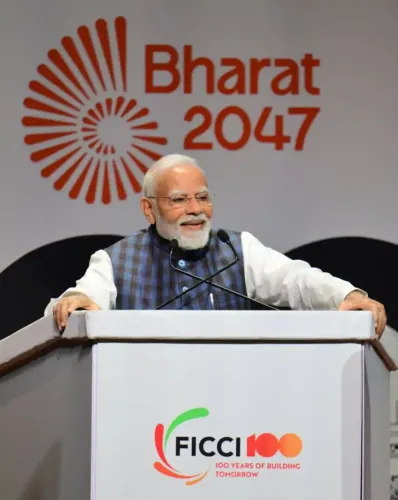
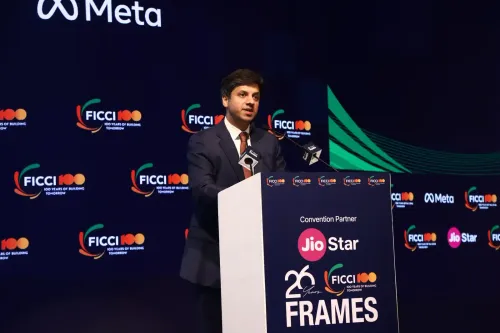
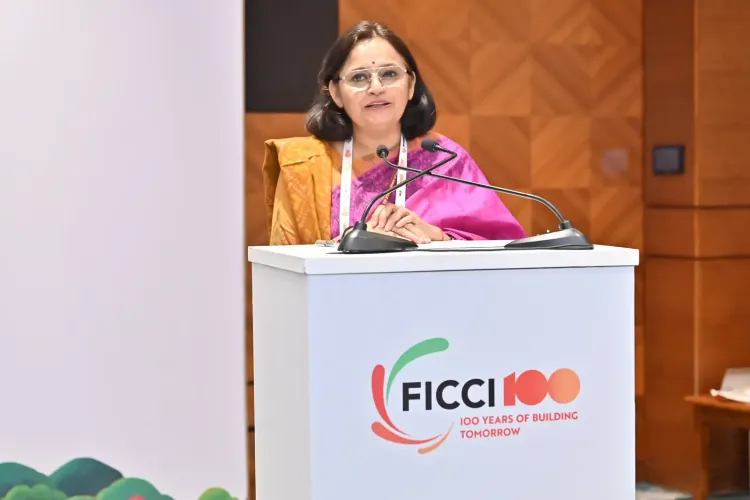
Economic Affairs Secretary Anuradha Thakur on Thursday, 19 November 2026, called on Indian companies to raise wages as a critical lever for sustaining consumer demand and reinforcing the country's growth momentum, even as private-sector investment shows broadening signs of recovery. Speaking at FICCI's Annual General Meeting and Annual Convention 2026 in New Delhi, Thakur delivered a pointed message to industry leaders: wage stagnation poses a structural risk to the demand cycle that investment alone cannot fix.
Private Investment Recovery Gaining Breadth
Thakur noted that private investment momentum had improved markedly since April 2026 and is no longer confined to a handful of sectors. Early data had suggested the revival was limited in scope, but subsequent monthly readings confirmed that the upturn had become more broad-based — a development she described as a positive signal for the wider economy.
She urged the private sector to deepen its role in infrastructure and manufacturing investments, including through public-private partnership (PPP) models, arguing that such collaboration is essential to sustaining the current cycle.
The Wage Stagnation Warning
'The other big thing which is spoken about is stagnation of wages. You all need to look into that,' Thakur told industry representatives, in remarks that placed corporate pay policies squarely in the frame of macroeconomic responsibility.
She urged businesses to view wage increases from a long-term perspective, contending that better compensation would stimulate both urban and rural demand and create the conditions for sustained economic expansion. The call reflects a wider concern among policymakers that consumption growth has remained uneven, partly because income gains have not kept pace with corporate profitability.
India's External Environment Turning Favourable
Thakur said the broader macro backdrop has grown more supportive in recent months. She pointed to easing geopolitical tensions, the return of capital flows, and lower crude oil prices as factors that have improved India's external position and created space for faster expansion.
'India is now in a good spot,' she said, adding that both domestic and external conditions are aligning to allow an acceleration in growth momentum — provided structural demand-side challenges, particularly wage growth, are addressed.
Industry's Role in Stimulating Demand
Thakur's remarks amounted to a dual ask of corporate India: partner with the government on PPP-led investment, and simultaneously make 'conditions for everyone who works for us better.' She specifically called out the need to stimulate both urban demand and rural demand, signalling that the Centre sees wage-driven consumption as complementary to — not a substitute for — public capital expenditure.
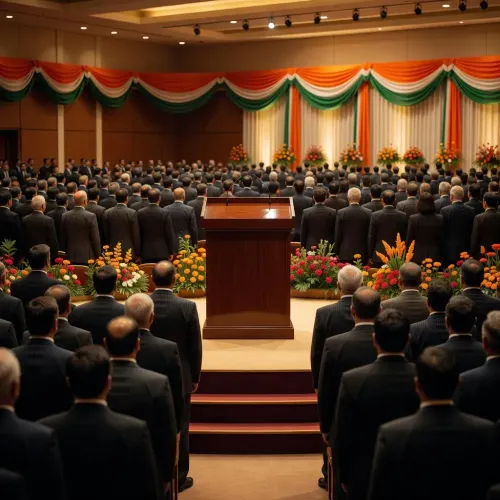
The convention, hosted by the Federation of Indian Chambers of Commerce and Industry (FICCI), brought together senior industry voices at a moment when policymakers are navigating the balance between investment-led and consumption-led growth. How industry responds to Thakur's wage call is likely to shape the demand outlook heading into the next budget cycle.
Point of View
And that gap cannot be papered over by capex alone. The PPP pitch is familiar ground, but tying it explicitly to workers' pay conditions is a subtler pressure point. Whether industry heeds the message or treats it as ceremonial convention rhetoric will be the real test.
NationPress
19 Nov 2026
Frequently Asked Questions
What did Economic Affairs Secretary Anuradha Thakur say at FICCI 2026?
Anuradha Thakur urged Indian companies to raise wages to support consumer demand and sustain economic growth at FICCI's Annual General Meeting and Annual Convention 2026 on 19 November 2026 in New Delhi. She also called on the private sector to invest more in infrastructure and manufacturing through PPP models.
Why is wage growth important for India's economy right now?
Thakur argued that wage stagnation limits consumer demand, which in turn undermines the broader investment cycle. With private investment recovery still consolidating, stronger household incomes are needed to keep both urban and rural demand robust enough to sustain GDP growth.
How has private investment in India been trending in 2026?
According to Thakur, private investment momentum improved from April 2026 onwards and has since spread across multiple sectors, moving beyond the initial recovery that was limited to a few industries. Monthly data confirmed the upturn became more broad-based.
What external factors does the government see as tailwinds for India?
Thakur highlighted easing geopolitical tensions, the return of capital flows to India, and lower global crude oil prices as factors improving India's external position. She said these conditions together put India 'in a good spot' to accelerate its growth momentum.
What role does the government want the private sector to play in infrastructure?
Thakur specifically urged industry to partner with the government through public-private partnership (PPP) models for infrastructure and manufacturing investments. She framed this as complementary to improving worker conditions and stimulating domestic demand.