CEA Nageswaran: India set to gain as AI valuation concerns redirect global capital
Synopsis
India's Chief Economic Adviser says the global AI valuation reset could be India's gain — with $11.3 billion in FPI inflows in just 18 days of November already outpacing three months of prior flows, Nageswaran's case for India as the default destination for rebalancing global capital is backed by numbers, not just narrative.
Key Takeaways
Anantha Nageswaran spoke at the 65th WFE General Assembly hosted by NSE in Mumbai on 19 November 2026 .
India received $11.3 billion in FPI inflows in the first 18 days of November , surpassing combined inflows over the previous three months .
India has sustained real GDP growth of around 7% despite global trade disruptions and geopolitical shocks.
Nearly 500 million Indians have crossed the moderate poverty threshold in recent years, with rural India seeing the sharpest gains.
Nageswaran said moderation in energy prices and AI valuation reassessment could redirect global capital toward economies with stronger growth fundamentals like India.
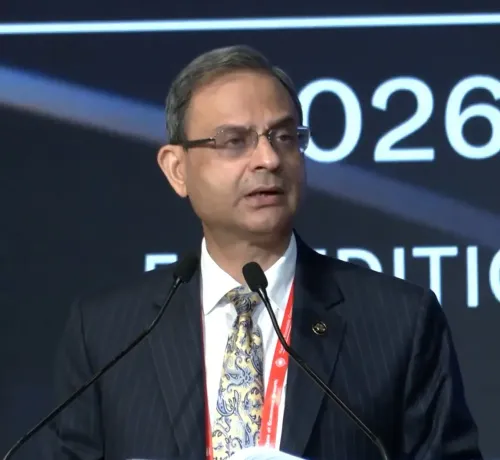
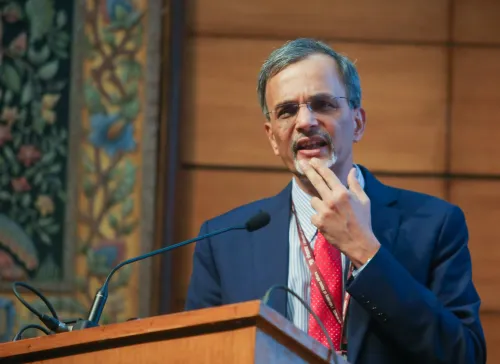
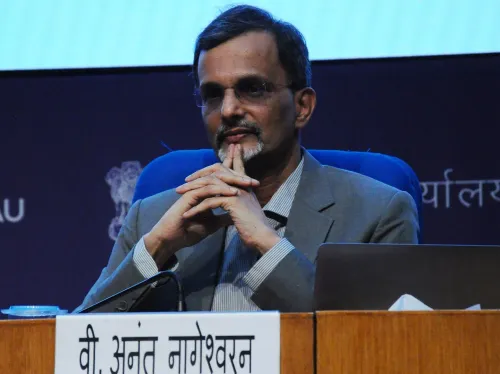
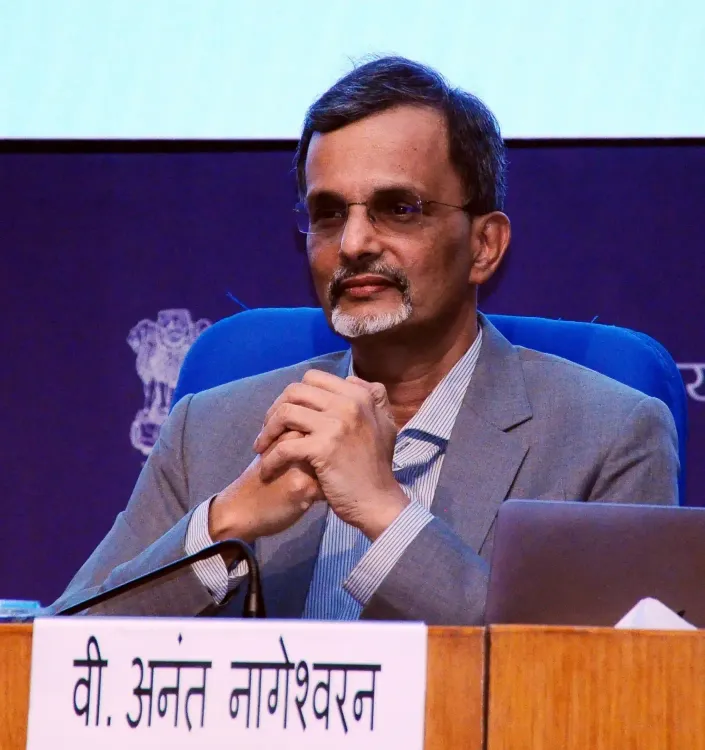
Chief Economic Adviser V. Anantha Nageswaran on Thursday, 19 November 2026, said India is well positioned to attract a larger share of global investment flows as mounting concerns over stretched valuations in the artificial intelligence (AI) sector push investors to rethink how they allocate capital across markets. He was addressing the 65th General Assembly and Annual Meeting of the World Federation of Exchanges (WFE), hosted by the National Stock Exchange (NSE) in Mumbai.
India's Macro Foundations as a Pull Factor
Nageswaran argued that India's strong macroeconomic performance, continued poverty reduction, and an evolving corporate landscape have together created durable conditions for sustained investor interest. He noted that while global capital has in recent years gravitated heavily toward AI-linked investments, a moderation in energy prices and a reassessment of AI-related valuations could redirect flows toward economies with stronger growth fundamentals.
'India is likely to be among key beneficiaries as global investors rebalance portfolios and seek opportunities backed by economic resilience and long-term growth,' the CEA said.
Record FPI Inflows Signal Early Momentum
Nageswaran pointed to concrete evidence of renewed investor confidence: the domestic market received foreign portfolio investment (FPI) inflows of $11.3 billion during just the first 18 days of November — a figure that surpassed the combined inflows recorded over the previous three months. He also said that stabilisation in capital movements, as global technology and AI themes recalibrate, could provide support to the rupee.
7% Growth Despite Global Headwinds
The CEA underscored India's resilience, noting the country has sustained real GDP growth of around 7% despite persistent challenges from global trade disruptions, geopolitical conflicts, and supply-side shocks. He attributed this performance to economic buffers built over recent years and said these foundations would help India navigate future uncertainties.
Inclusive Growth and Poverty Reduction
On social outcomes, Nageswaran said nearly 500 million Indians have moved above the moderate poverty threshold in recent years, while extreme poverty has fallen sharply over the past decade, with the gains being particularly significant in rural India. He stressed that headline growth numbers alone are insufficient. 'Growth has to be broad-based and inclusive to ensure long-term social and economic stability,' he said, adding that economic expansion must translate into better living standards for all sections of society, especially lower-income households.
The remarks come at a moment when global investors are actively reassessing tech-heavy portfolios, potentially opening a window for emerging markets with credible growth stories — a window India appears intent on capitalising on.
Point of View
Most prominently during the 2022 China-exit wave, and while flows did come, they proved volatile. The $11.3 billion November FPI figure is striking, but a single month's data should not be conflated with a structural reallocation. The more durable test is whether India's corporate earnings trajectory and regulatory predictability can hold FII attention once AI sentiment recovers — as it historically has. Poverty reduction gains are real and significant, but the CEA's framing elides persistent concerns around job quality and income distribution that could complicate the 'inclusive growth' narrative under scrutiny.
NationPress
19 Nov 2026
Frequently Asked Questions
What did CEA Nageswaran say about India and global capital flows?
CEA V. Anantha Nageswaran said India is well positioned to attract a larger share of global investment as concerns over stretched AI-sector valuations prompt investors to reassess capital allocation. He made the remarks at the 65th WFE Annual Meeting in Mumbai on 19 November 2026.
How much did India receive in FPI inflows in November 2026?
India received $11.3 billion in foreign portfolio investment inflows during the first 18 days of November 2026, which surpassed the combined inflows recorded over the previous three months, according to Nageswaran.
Why could the AI valuation correction benefit India?
According to the CEA, a reassessment of AI-linked valuations and a moderation in energy prices could redirect global capital toward economies with stronger growth fundamentals. India's sustained ~7% real GDP growth and improving social indicators make it a credible destination for such rebalancing flows.
What is India's GDP growth rate despite global headwinds?
India has sustained real GDP growth of around 7% despite global trade disruptions, geopolitical conflicts, and supply-side shocks, the CEA said. He attributed this to economic buffers built over recent years.
What did Nageswaran say about poverty reduction in India?
Nageswaran said nearly 500 million Indians have moved above the moderate poverty threshold in recent years, with extreme poverty falling sharply over the past decade. He noted the gains were particularly significant in rural India and stressed that growth must be broad-based to ensure long-term stability.