Capex cycle picks up as capacity utilisation rises, says FICCI President Anant Goenka
Synopsis
FICCI President Anant Goenka says India's private capex cycle is finally turning, with rising capacity utilisation nudging companies to invest — but crude oil near $100 a barrel is the fly in the ointment, keeping margin pressure alive even as demand improves.
Key Takeaways
FICCI President Anant Goenka said India is seeing broad-based growth with capex rising across sectors as capacity utilisation climbs.
The automobile sector is a standout performer, with its growth creating positive spillover effects across the value chain.
Rising commodity prices — particularly crude oil climbing from ~$90 to ~$100 per barrel — are sustaining margin pressure for businesses.
Companies are passing on some input costs to consumers, but Goenka warned the lag means margin pressure will continue until commodity prices stabilise .
FICCI FRAMES , now in its 26th year , was described as a key convergence point for media industry stakeholders navigating AI, multiple screens, and shifting attention spans.
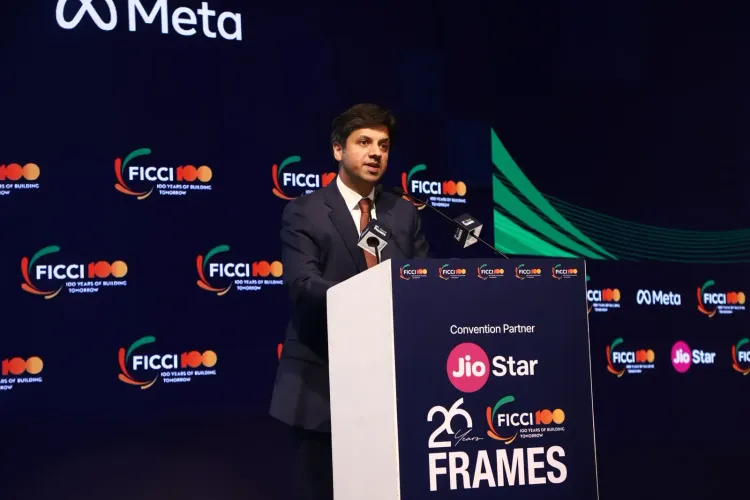
FICCI President and RPG Group Vice Chairman Anant Goenka on Tuesday, 29 September said India is experiencing broad-based economic growth, with rising capacity utilisation levels prompting companies to step up capital expenditure across sectors. He made the remarks on the sidelines of the FICCI FRAMES event in Mumbai.
Fresh Capex Cycle Gathering Momentum
Goenka said businesses are growing increasingly confident about expanding investments as demand conditions improve across industries. 'We do see overall broad-based growth. We see increased capex across the board now, as utilisation levels are going up,' he said.
He singled out the automobile sector as a standout performer, noting that its strong growth trajectory was generating positive spillover effects throughout the broader value chain. 'Certain sectors like automotive have seen substantially higher growth, and therefore, the entire value chain gets positively affected,' he added.
Margin Pressure Remains a Concern
While the investment outlook is improving, Goenka cautioned that rising commodity prices continue to squeeze profit margins. He noted that companies are passing on some of the higher input costs to consumers, but typically with a lag before the full impact shows up in final prices.
'Margin pressure will continue until commodity prices stabilise,' he said. Goenka pointed specifically to crude oil, which has reportedly climbed from around $90 per barrel to approximately $100 per barrel or higher, amplifying input cost pressures across industries.
Media and Entertainment at a Point of Dramatic Flux
Commenting on the FICCI FRAMES event — now in its 26th year — Goenka described it as one of the media and entertainment industry's most significant platforms. He highlighted the sweeping changes reshaping the sector, including multiple screens, shorter audience attention spans, artificial intelligence, and synthetic data.
'All of that converging today, it is a point of dramatic flux and change. So, FRAMES is somewhere where all these creators and users can all come together and see how the future of the media industry will unfold,' he stated.
What This Signals for India's Economy
A fresh private capex cycle has been a long-anticipated development in India's growth story, with public infrastructure spending having led the investment charge for much of the past three years. Rising capacity utilisation is a conventional leading indicator that firms are running closer to full capacity — the threshold at which fresh investment becomes economically necessary rather than optional. Notably, this aligns with recent macroeconomic data pointing to resilient domestic demand despite global headwinds. The key risk, as Goenka flagged, is that elevated commodity prices — crude oil in particular — could erode the margins that make fresh investment attractive, potentially delaying or moderating the capex upturn.
Point of View
And crude near $100 is not cooling. A private capex revival has been the missing piece in India's investment story for years — public spending alone cannot sustain 7%-plus growth forever. But if input cost inflation eats into corporate profitability before utilisation levels fully justify new capacity, the cycle could stall before it fully ignites. The automobile-led spillover thesis is real, but it is also concentrated — a broader, more durable capex turn would require services, chemicals, and capital goods to pull together, which Goenka's remarks hint at but do not confirm with data.
NationPress
29 Sept 2026
Frequently Asked Questions
What did FICCI President Anant Goenka say about India's capex cycle?
Anant Goenka said India is seeing broad-based economic growth with companies increasing capital expenditure as capacity utilisation levels rise. He made the remarks at the FICCI FRAMES event in Mumbai on 29 September 2026, citing improved demand conditions across industries.
Which sectors are driving India's current investment momentum?
The automobile sector has seen substantially higher growth, according to Goenka, and is creating positive spillover effects across the entire value chain. Broadly, he said capex is rising across sectors as utilisation levels go up.
Why are Indian companies facing margin pressure despite improving growth?
Rising commodity prices — particularly crude oil, which has reportedly climbed from around $90 to approximately $100 per barrel — are squeezing profit margins. Goenka noted that while companies are passing on some costs to consumers, there is a lag before prices fully adjust.
What is FICCI FRAMES and why is it significant?
FICCI FRAMES is an annual media and entertainment industry event organised by FICCI, now in its 26th year. Goenka described it as a platform where creators and industry stakeholders converge to discuss the future of media, including the impact of AI, multiple screens, and changing audience behaviour.
What are the key risks to India's capex recovery?
The primary near-term risk flagged by Goenka is sustained commodity price inflation — particularly elevated crude oil prices — which could keep corporate margins under pressure and delay or moderate the scale of fresh investment decisions.