Brent crude drops below $80 as US-Iran truce raises Hormuz reopening hopes
Synopsis
A US-Iran memorandum of understanding extending the ceasefire by 60 days and promising to reopen the Strait of Hormuz sent Brent crude below $80 for the first time since hostilities began in February — and handed the Indian rupee a 31-paise gain in a single session. The real question is whether a permanent truce can hold.
Key Takeaways
Brent crude fell 0.72 per cent to $78.39 per barrel on 17 June , while WTI slipped nearly 1 per cent to $75.35 .
A US-Iran memorandum of understanding extends the ceasefire by 60 days and commits to reopening the Strait of Hormuz .
Iran will be permitted to resume oil exports upon formally signing the agreement, according to a US official.
The Strait of Hormuz has been effectively closed since US and Israeli strikes on 28 February .
The Indian rupee gained 31 paise to 94.29 per US dollar , aided by falling crude and tapering FII outflows.
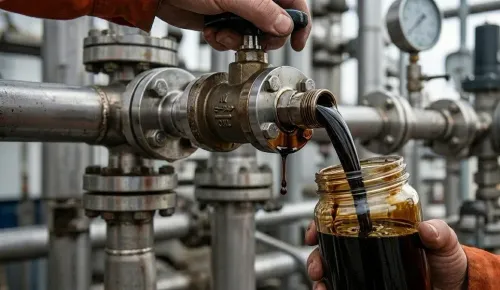
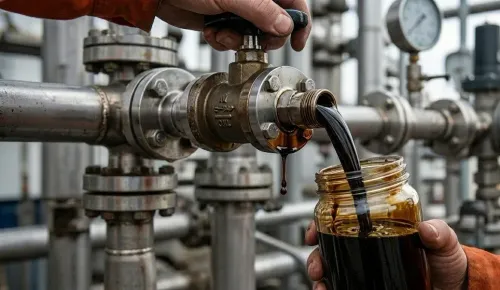
Brent crude fell 0.72 per cent to $78.39 per barrel on Wednesday, 17 June, as global oil markets retreated on growing expectations that a lasting US-Iran ceasefire could reopen the Strait of Hormuz — a critical artery for global energy shipments. US West Texas Intermediate (WTI) crude also slipped nearly 1 per cent to $75.35 per barrel.
What Drove the Selloff
The decline followed the emergence of details surrounding a US-Iran interim agreement to end the West Asia conflict. US President Donald Trump stated that Tehran would not be permitted to obtain nuclear weapons, while a senior US official confirmed that Iran would be allowed to resume oil exports upon signing the agreement.
A memorandum of understanding signed this week extends the ceasefire — first announced in April — by another 60 days, providing a negotiating window for a permanent truce. Under its terms, the US will lift its blockade of Iran's ports, while Tehran will allow oil tankers and other maritime traffic through the Strait of Hormuz, which has been effectively closed since US and Israeli strikes on 28 February.
Strait of Hormuz: Why It Matters
The Strait of Hormuz is the world's most critical oil chokepoint, through which roughly 20 per cent of global petroleum supplies transit. Its effective blockade since February had kept a risk premium embedded in crude prices. The prospect of its reopening — combined with potential Iranian oil re-entering global markets — is now pushing prices lower.
Notably, this is the first concrete diplomatic framework to emerge since hostilities escalated in late February, making it a significant de-escalation signal for energy traders.
Rupee Gains on Crude Correction
The fall in crude prices delivered a parallel boost to the Indian rupee, which gained 31 paise on Wednesday to trade at 94.29 against the US dollar, compared with 94.56 in the previous session. A lower crude import bill directly eases pressure on India's current account and supports the domestic currency.
According to market experts, a tapering of Foreign Institutional Investor (FII) outflows is adding to the positive momentum. 'The sharp correction in Brent crude to $79 and expectations of massive capital flows into India through the FCNR(B) deposit route can lead to further appreciation in the rupee, which, in turn, will further dissuade FIIs from selling,' experts noted. They added that FIIs may even turn net buyers in anticipation of further rupee appreciation, which could impart broader resilience to Indian equity markets.
What to Watch Next
The 60-day ceasefire extension is a diplomatic window, not a done deal. Permanent truce negotiations between the US and Iran are expected to be complex, and any breakdown could rapidly reverse the crude price decline. Markets will closely monitor the pace of Iranian oil re-entry, OPEC+ responses to shifting supply dynamics, and the trajectory of FII flows into India as the rupee strengthens.
Point of View
But markets may be pricing in a permanence that the diplomacy does not yet guarantee. The 60-day window is a negotiating framework, not a resolution — and US-Iran talks have collapsed at this stage before. For India, the timing is fortuitous: a sustained crude correction would compress the import bill, stabilise the rupee, and give the Reserve Bank of India room to manoeuvre on rates. But the same geopolitical fragility that spiked prices in February can reverse them just as fast if talks break down.
NationPress
19 Sept 2026
Frequently Asked Questions
Why did Brent crude fall below $80 on 17 June?
Brent crude fell to $78.39 per barrel on 17 June as details of a US-Iran interim agreement emerged, raising expectations that the Strait of Hormuz would reopen and Iranian oil exports would resume. The prospect of additional supply entering global markets eased the geopolitical risk premium embedded in prices.
What does the US-Iran memorandum of understanding involve?
The memorandum extends the ceasefire — first announced in April — by 60 days to allow negotiations toward a permanent truce. Under its terms, the US will lift its blockade of Iran's ports, and Tehran will allow oil tankers and maritime traffic through the Strait of Hormuz.
How long has the Strait of Hormuz been blocked?
The Strait of Hormuz has been effectively closed to oil tanker traffic since US and Israeli strikes on 28 February, according to reports. The strait handles roughly 20 per cent of global petroleum supplies, making its closure a significant driver of elevated crude prices.
How did the crude price drop affect the Indian rupee?
The Indian rupee gained 31 paise on 17 June, trading at 94.29 against the US dollar, supported by the fall in crude import costs and tapering FII outflows. Experts indicated that further rupee appreciation is possible if crude remains subdued and FCNR(B) capital inflows pick up.
Will Iran be allowed to sell oil under the new agreement?
According to a US official, Iran will be permitted to resume oil exports upon formally signing the interim agreement. This potential re-entry of Iranian crude into global markets is one of the key factors driving the current price correction.