CAFE-III norms notified: Auto, biofuel industry hails 5-year fuel efficiency roadmap
Synopsis
India's CAFE-III norms — the most stringent fuel-efficiency framework for passenger vehicles yet — have been officially notified, taking effect April 2027 through March 2032. With tightening annual targets, a credit-trading mechanism, and formal ethanol and flex-fuel incentives, the rules force a five-year technology reckoning on automakers and open a significant policy window for the biofuel sector.
Key Takeaways
CAFE-III norms for passenger vehicles were notified on 30 September 2026 , effective 1 April 2027 through 31 March 2032 .
The framework mandates progressively tighter annual fuel-efficiency targets with a market-based credit trading mechanism for compliance flexibility.
Ethanol and flex-fuel vehicles receive carbon-neutrality benefits and super-credit provisions under the new rules, boosting the biofuel sector.
SIAM President Shenu Agarwal called it a structured roadmap enabling long-term investment planning and technology diversification.
AIDA President Vijendra Singh urged parallel expansion of flex-fuel infrastructure and consumer awareness alongside policy incentives.
Deloitte India 's Rajat Mahajan flagged that compliance will require significant investment and careful product planning from automakers.
The government's notification of Corporate Average Fuel Economy (CAFE)-III norms for passenger vehicles has drawn broad industry welcome, with automobile and biofuel sector representatives describing the framework as a structured, long-term roadmap that delivers regulatory certainty and accelerates India's clean mobility transition. The norms, notified on 30 September 2026, will come into force from 1 April 2027 and remain in effect until 31 March 2032.
What the CAFE-III Framework Mandates
The new framework prescribes progressively tighter fuel-efficiency targets for passenger vehicle fleets across a five-year period, running from 2027 to 2032. Manufacturers are offered multiple compliance pathways, including a market-based credit trading mechanism that allows companies falling short of individual targets to offset deficits by purchasing credits from over-performers.
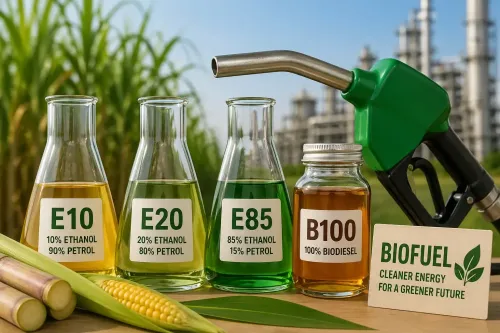
Notably, the framework extends carbon-neutrality benefits and super-credit provisions to ethanol-powered and flex-fuel vehicles — a significant policy signal for the biofuel industry that had long sought formal recognition within India's clean-transport architecture.
What the Automobile Industry Said
Society of Indian Automobile Manufacturers (SIAM) President Shenu Agarwal welcomed the regulation, calling it a structured roadmap with ambitious annual targets. Agarwal said the framework would help reduce fuel consumption across new passenger vehicle fleets while allowing automakers to pursue different technology routes and offer consumers multiple choices. He specifically appreciated the government's consultative approach in framing the regulation, saying it 'balanced various clean-technology options while providing long-term predictability for the sector.'
The long-horizon visibility embedded in the five-year framework is significant for automakers: product planning cycles in the passenger vehicle segment typically run three to five years, meaning manufacturers needed regulatory certainty at this timeline to commit capital to electrification, hybridisation, and alternative-fuel platforms.
Biofuel Sector Sees Major Policy Opening
All India Distillers' Association (AIDA) President Vijendra Singh called the notification a positive development for both the automobile and biofuel industries. Singh highlighted that the formal recognition of ethanol and flex-fuel vehicles through credit provisions provides 'greater policy visibility for biofuels and clearer planning signals for automakers.'
Singh added that the framework creates new growth opportunities for India's ethanol ecosystem and strengthens the link between domestic biofuel supply chains and the country's clean mobility ambitions. He urged a concurrent focus on expanding flex-fuel vehicle availability, fuel infrastructure, and consumer awareness — underscoring that regulatory incentives alone will not drive adoption without parallel investment in refuelling networks.
Analyst View: Significant Investment Ahead
Deloitte India Partner and Auto Sector Leader Rajat Mahajan said the norms provide clear directional guidance for the industry over the next five years and reinforce the transport sector's role in reducing urban and industrial pollution. Mahajan noted that automakers stand to benefit by accelerating adoption of electric, hybrid, alternative-fuel, and fuel-saving technologies, though he cautioned that compliance would require 'significant investments and careful product planning.'
Mahajan added that the CAFE-III framework is likely to hasten India's new-energy vehicle transition, with the credit-trading mechanism offering operational flexibility to manufacturers whose existing portfolios fall short of the prescribed annual targets.
Context and What Comes Next
India's CAFE norms trace their origin to an emissions and fuel-economy regulatory architecture introduced to align the country's automotive fleet with global efficiency benchmarks. CAFE-I and CAFE-II laid the groundwork; CAFE-III is widely seen as the most ambitious iteration yet, given the tightening annual trajectory and the formal integration of biofuel credits. This comes amid a broader push by the Centre to decarbonise the transport sector, which accounts for a substantial share of India's urban air pollution and petroleum import bill.
With the rules now notified and an 18-month runway before enforcement begins, the immediate pressure shifts to automakers to finalise product strategies, supply-chain investments, and credit-trading agreements ahead of the April 2027 deadline.
Point of View
But the industry's warm welcome should be read with care: trade bodies typically applaud norms they believe they can manage, not ones that stretch them. The real test is whether the credit-trading mechanism becomes a genuine efficiency driver or a compliance shortcut that lets legacy ICE portfolios coast through the five-year window. India's passenger vehicle fleet electrification has lagged peer markets despite years of PLI and FAME incentives, and the ethanol super-credit — while welcome — will only move the needle if refuelling infrastructure is built at pace. The government has the regulatory architecture right; execution accountability is now the missing piece.
NationPress
30 Sept 2026
Frequently Asked Questions
What are India's CAFE-III norms?
CAFE-III, or Corporate Average Fuel Economy Phase III norms, are government-mandated fuel-efficiency standards for new passenger vehicles in India. They set progressively tighter annual targets from 1 April 2027 to 31 March 2032, with a credit-trading mechanism allowing manufacturers flexibility in meeting compliance obligations.
When do CAFE-III norms come into effect?
The norms take effect from 1 April 2027 and will remain applicable until 31 March 2032, giving automakers an approximately 18-month runway to align product portfolios and investment plans from the date of notification.
How do ethanol and flex-fuel vehicles benefit under CAFE-III?
Ethanol-powered and flex-fuel vehicles receive carbon-neutrality benefits and super-credit provisions under the CAFE-III framework. This gives automakers additional compliance credits for selling such vehicles, while providing formal policy visibility to India's biofuel industry.
What is the credit-trading mechanism in CAFE-III?
The market-based credit trading mechanism allows automakers that exceed fuel-efficiency targets to earn credits, which can then be purchased by manufacturers that fall short of their individual targets. This provides compliance flexibility without diluting the overall fleet-efficiency mandate.
Who is affected by the CAFE-III norms?
All manufacturers and importers of new passenger vehicles sold in India from April 2027 onward are subject to CAFE-III. The norms will influence product planning, technology investment, and portfolio strategy across the domestic automotive industry, with downstream effects on biofuel producers and new-energy vehicle suppliers.